Key facts
- Magyar and Zelensky will meet for the first time on Oct. 16.
- The meeting follows Ukraine's passage of a law on national minority educational rights.
- Hungary previously blocked Ukraine's EU accession talks over minority rights.
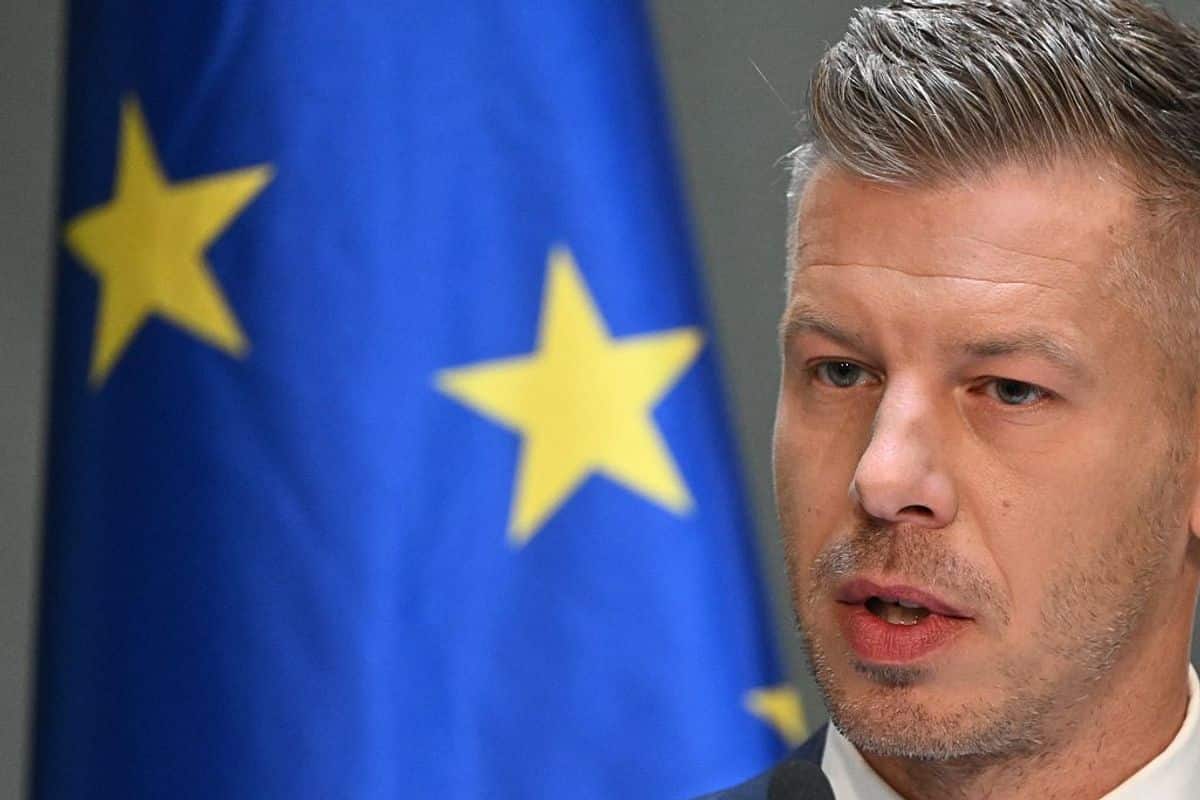
Hungarian Prime Minister Peter Magyar announced on Oct. 14 that he would hold his first official meeting with Ukrainian President Volodymyr Zelensky on the sidelines of an EU summit in Brussels on Oct. 16. Magyar shared the announcement in a post about his upcoming trip to Brussels, where EU leaders will convene on Oct. 15-16 for talks expected to focus heavily on Ukraine. Foreign Minister Andrii Sybiha said that while Kyiv is ready for such a meeting, they have not yet agreed on a time and place. Zelensky has yet to confirm the meeting. Magyar's announcement comes two days after Zelensky signed a law strengthening the educational rights of Ukraine's national minorities, a step Hungary had demanded before allowing Kyiv's EU accession talks to move forward. The law gives Ukraine's Hungarian-speaking minority and other EU-language minorities more room to use their native language in education. Ukrainian officials have said it would formalize existing education rights for national minorities rather than bring major practical changes. Roughly 80,000 ethnic Hungarians live in Ukraine's westernmost Zakarpattia Oblast. Hungary's former prime minister, the Kremlin-friendly Viktor Orban, frequently invoked the issue when blocking Ukraine's EU accession process. Magyar's election win and his pro-European Tisza party have brought more constructive dialogue with Kyiv, but he has made clear that cooperation is conditional. This summer, Hungarian and Ukrainian officials announced an agreement on the educational, linguistic, and cultural rights of Ukraine’s Hungarian minority, and Hungary lifted its veto on Ukraine’s EU accession talks. That allowed the launch of the first negotiating clusters, the thematic groups of reforms Ukraine must complete for EU membership. But Budapest later blocked the launch of additional clusters, pending Ukrainian progress on the terms of the agreement, starting with education. The new legislation cleared the way for more clusters to be opened, and the EU shared two more reform clusters with Ukraine on Oct. 13, allowing the accession process to move forward. The Foreign Ministry said on Oct. 14 that the passage of the new language law should lead to "cooperation in all areas" between Hungary and Ukraine ahead of the Brussels summit and Magyar-Zelensky meeting. "Our peoples deserve good neighborly relations," Sybiha said.