Key facts
- Shipping traffic at the Strait of Hormuz decreased at the start of the week.
- Commodity vessel transits at Hormuz totaled four on Monday, down from 10 the previous day.
- An oil tanker reportedly exploded and caught fire after colliding with mines in the Strait of Hormuz.
- Gulf Arab states postponed planned talks with Iran on agreements for the Strait of Hormuz.
- Yemen's Houthis claimed responsibility for missile and drone attacks on a Saudi Arabian military airbase.
- Commodity vessel transits in the Bab el-Mandeb strait fell to 21 on Monday from 28 the prior day.
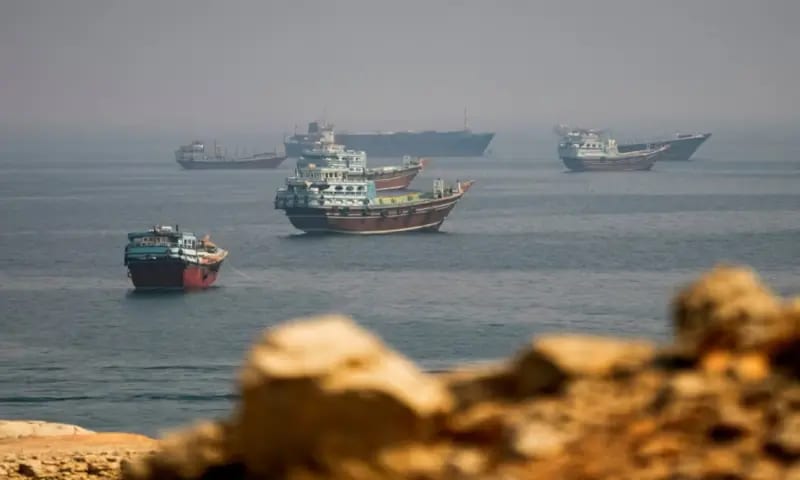
Shipping traffic through the Strait of Hormuz has decreased at the beginning of this week amid an intensification of attacks in the Middle East. Preliminary data from Kpler showed that commodity vessel transits at the waterway fell to four on Monday, down from 10 the previous day. The figures exclude vessels that may have turned off their Automatic Identification System transponders to avoid detection.
Two dry bulk carriers exited the strait on Monday, one laden and one ballast, while two oil tankers entered, both in ballast mode. The Iranian news agency Fars reported on Monday, citing Iran's Islamic Revolutionary Guard Corps, that an oil tanker exploded and caught fire after colliding with mines in the Strait of Hormuz, though the exact timing of the incident was not specified.
In a setback for diplomatic efforts to ease tensions and their impact on global oil supplies, Gulf Arab states postponed planned talks with Iran on possible agreements concerning the Strait of Hormuz. Additionally, Yemen's Houthis stated on Monday that they had fired dozens of missiles and drones at a military airbase in Khamis Mushait, southern Saudi Arabia, targeting aircraft hangars, radar systems, runways, and ammunition depots in retaliation for Saudi airstrikes in Yemen.
Traffic in the Bab el-Mandeb strait also saw a decline, with 21 commodity vessels transiting on Monday, down from 28 the previous day, according to Kpler data. Before the Iran war began on February 28, the Strait of Hormuz typically handled approximately 125 large commercial vessels daily, including tankers, gas carriers, bulkers, and container vessels, representing about 20% of the world's daily crude oil and liquefied natural gas supply.