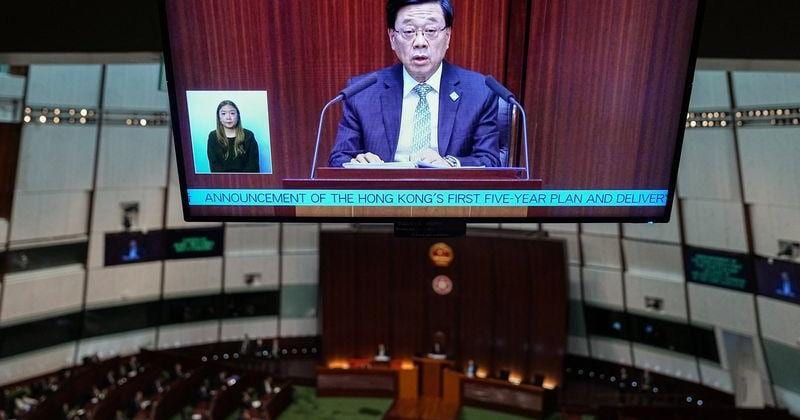
Hong Kong leader John Lee unveiled the city's first five-year plan on Wednesday, aiming to boost residents' livelihoods and cement its position as a global financial hub, while strengthening technology ties with the mainland. The plan, which follows two months of government consultations, spans economic, job, education, and health sectors.
Lee promised to add 196,000 public housing units within five years and encourage upward mobility and home ownership among young people. The strategy also involves speeding up the development of the 30,000-hectare Northern Metropolis near the mainland China border, intended to serve as a new growth engine and bolster technological links.
Lee stated that the completed Northern Metropolis would be ideal for living, work, and travel, further boosting Hong Kong's competitiveness and sustainable development. This initiative follows Beijing's approval of a national five-year plan in March.
Key objectives include solidifying Hong Kong's financial, maritime, and trade sectors, accelerating information and technology efforts, and strengthening its role as a global offshore renminbi hub. Hong Kong aims to act as a "super connector" and integrate with China's Greater Bay Area, with a focus on technology areas such as AI, robotics, microelectronics, new energy, advanced manufacturing, and new materials. The city also plans to enhance its services for international legal and dispute resolution.
The Northern Metropolis, first unveiled in 2021, aims to house about 2.5 million people and establish a new business district, with authorities projecting it will add around 650,000 jobs upon full development. The plan comes as Hong Kong grapples with post-COVID economic malaise and a declining property market.
In financial services, Lee announced that Hong Kong will officially launch its first central clearing and settlement system for gold in the first quarter of 2027. The Hong Kong Monetary Authority also plans to implement central bank digital currency settlement by the end of this year.