Key facts
- Professor Lam Hon-ming's team sent soybean seeds and rhizobia into space.
- The research aims to develop new soybean strains with improved nitrogen-fixing efficiency and stress tolerance.
- This is the first Hong Kong agricultural research project launched into space.
- The project involves collaboration with Chinese space agencies and research institutes.
- Three stress-tolerant soybean cultivars (Longhuang 1, 2, 3) were developed by Lam's team.
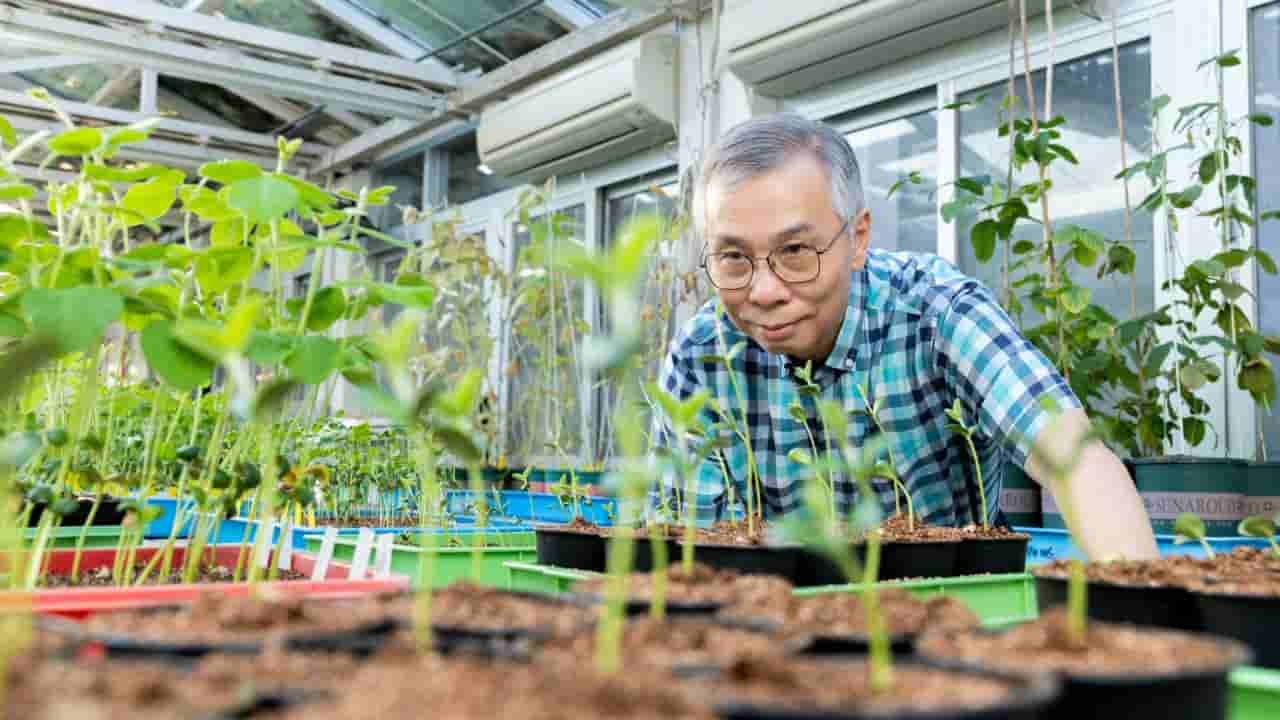
Professor Lam Hon-ming, a scientist at The Chinese University of Hong Kong (CUHK), has sent soybean seeds and rhizobia specimens into space as part of a pioneering agricultural research project. The initiative, supported by the China Manned Space Agency and in collaboration with the China Resources Research Institute of Science and Technology (CRRIST) and Shenzhou Space Biotechnology Group (SBG), marks the first time a Hong Kong agricultural research project has been launched into space.
Rhizobia, essential bacteria for soybean nitrogen fixation, were sent aboard the Tianzhou-6 cargo spacecraft, which launched on May 10, and have arrived at the Chinese space station Tiangong. The research aims to study changes in these symbiotic bacteria under spaceflight conditions and screen for new strains that can improve nitrogen-fixing efficiency. This could reduce reliance on chemical fertilizers and improve soil conditions, contributing to environmental sustainability.
Following the rhizobia launch, soybean seeds, including three stress-tolerant cultivars developed by Professor Lam's team – Longhuang 1, Longhuang 2, and Longhuang 3 – were sent into space on the Shenzhou-16 crewed spacecraft on May 30. These cultivars have been distributed to farmers in Gansu province since 2016. The project seeks to investigate induced mutagenesis in soybean seeds under space conditions, aiming for breakthroughs in agricultural technology and the development of new germplasm resources.