Key facts
- Middle Eastern crude oil exports are estimated to be around two-thirds of pre-war levels, despite increased "dark crossings" to avoid Iranian attacks.
- Brent crude futures surpassed $100 per barrel, and U.S. diesel prices reached an all-time high.
- Goldman Sachs estimates total Gulf oil exports, including covert shipments, at 15-16 million barrels per day.
- Vortexa reported August exports at 15 million bpd, with 8 million bpd moving through the Strait of Hormuz.
- U.S. Energy Secretary Chris Wright clarified that a peak of 18 million bpd was recorded for a single 24-hour period, with a running average of 9 million bpd.
- Covert shipments over the last 90 days are estimated to be at least 500 million barrels, valued at over $40 billion.
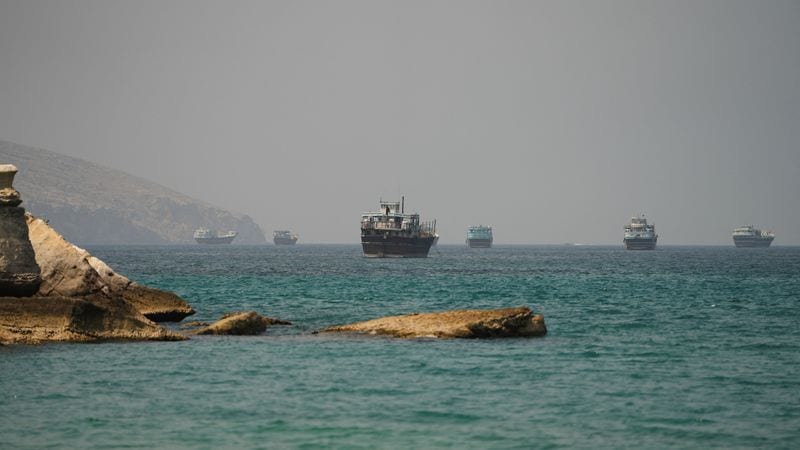
Estimates of Middle Eastern crude oil flows have varied significantly since tankers began conducting "dark crossings" through the Strait of Hormuz, turning off their transponder signals to evade potential Iranian attacks. These clandestine shipments have bolstered supplies, but the uncertainty surrounding their volume has contributed to a risk premium in international oil prices.
On Wednesday, Brent crude futures rose above $100 per barrel for the first time since July, while U.S. diesel prices reached an all-time high last week. U.S. Energy Secretary Chris Wright indicated that shipments were nearing pre-war levels before February 28 attacks on Iran, which initiated a conflict disrupting energy flows.
However, data analyzed by Reuters suggests the industry consensus places current export volumes closer to two-thirds of pre-war levels. This assessment includes oil shipped via vessels with turned-off Automatic Identification System transponders, described by analysts and trading sources as the world's largest clandestine tanker operation, reportedly supported by U.S. military.
Goldman Sachs analysts estimated in a September 2 note that total Gulf oil exports, including "dark crossings," were approximately 15 million to 16 million barrels per day, representing about two-thirds of pre-war levels. Similarly, Vortexa, a London-based analytics firm, estimated total oil exports from the Gulf region reached 15 million bpd in August, still down by 10 million bpd from pre-war figures. Vortexa also reported that crude and refined products volumes transiting the Strait of Hormuz on a seven-day moving-average basis were around 8 million bpd.
Clarifying figures, U.S. Energy Secretary Chris Wright told Fox News that the 18 million bpd figure was for a single 24-hour period last week, with the running average across all "waterborne routes" representing 9 million bpd, which is closer to industry consensus. Analysts also note a distinction between peak daily flows and sustained exports. Figures from Kpler and an industry source indicate that Gulf crude exports reached as much as 14 million bpd on some days in early September, accounting for secret tanker flows and Saudi Red Sea exports that bypass the Strait of Hormuz. On other days, exports were considerably lower, depending on the intensity of Iranian tanker attacks.
The covert shipments have become a consistent factor, enabling crude from Iraq, Kuwait, Qatar, Saudi Arabia, and the United Arab Emirates to continue reaching global markets. Reuters calculations, based on an average oil price of $80 per barrel and a conservative estimate of 6 million barrels per day (equivalent to six large tankers) over the past 90 days, suggest that dark shipments amounted to at least 500 million barrels between June and August, with a value of at least $40 billion.

Discussion