Key facts
- Goldman Sachs Asset Management sees significant buyout opportunities in Japan, South Korea, and Australia.
- The firm is preparing to launch its first dedicated Asia Pacific private equity fund with a target of $2 billion.
- Japan's corporate buyout activity is considered to be in its early stages, with the stock market poised for consolidation.
- Asian investors are seeking strategic flexibility and resilience amid a fragmented global order, rather than passively balancing between the US and China.
- Temasek plans to increase its AI investment exposure to 15% in five years and invest in hard assets less disrupted by AI.
Goldman Sachs Asset Management sees significant buyout opportunities in Japan, South Korea, and Australia, with the firm preparing to launch its first dedicated Asia Pacific private equity fund targeting $2 billion. Japan's corporate buyout activity is considered to be in its early stages, with its stock market poised for consolidation.
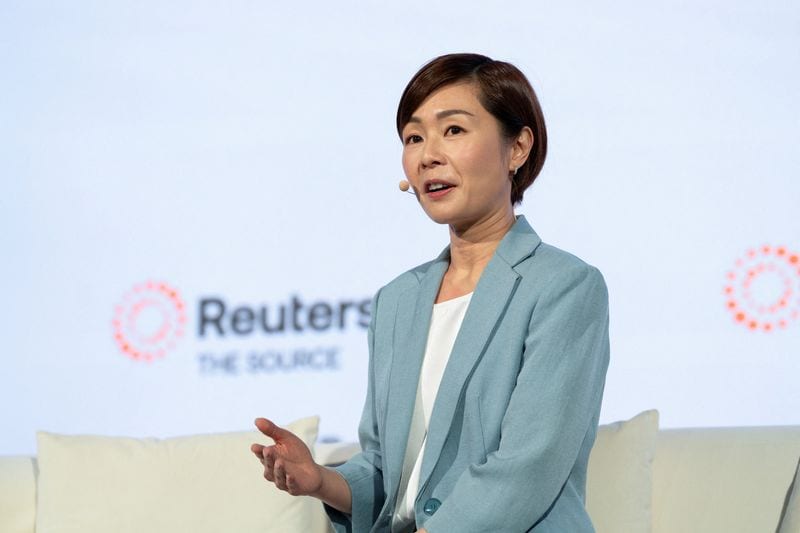
Asian policymakers, investors, and business leaders are increasingly portraying themselves as active participants in navigating a more fragmented global order, seeking to build resilience rather than passively balancing between the United States and China. This message emerged repeatedly during discussions at the Reuters NEXT Asia event in Singapore.
Thai Vice Finance Minister Santitarn Sathirathai stated that Thailand seeks to be a trusted connector in this fragmented world and prioritizes projects based on technology transfer, skilled jobs, and stronger domestic supply chains, rather than aligning with any one power. Hong Kong Investment Corporation Chief Executive Clara Chan noted that geopolitical uncertainty creates opportunities for patient capital and that investors ultimately care more about policy clarity, long-term vision, and a level playing field than geopolitical headlines.
Temasek's chief investment officer Rohit Sipahimalani advised investors to focus on building resilient portfolios centered on businesses with large domestic markets, self-sufficient supply chains, and technology capabilities that can withstand geopolitical fragmentation. Stephanie Hui, Goldman Sachs' head of Asia private equity, highlighted that Asia is expected to have two-thirds of the middle class by 2030 and 60% of global growth is projected to come from the region, leading to diversification into Asia. Primavera Capital founder Fred Hu added that Asia accounts for half of global GDP, about 40% of global trade and foreign direct investment, and remains the world's indispensable manufacturing base.
Bain Capital's Satoshi Ueyama cited Japan's corporate reforms, India's demographic and infrastructure-driven growth, China's continued innovation, and Southeast Asia's role in supply-chain diversification as key strengths providing great opportunities in the region.