
Key facts
- Over 3,000 startups were founded in Germany in the first half of 2026, a record high.
- Around a third of new German companies are AI-focused.
- German industry lost approximately 400,000 jobs between 2019 and 2025.
- German startups raised €8 billion in venture capital between January and September.
- The German government adopted a new Startup and Scaleup Strategy in July with 152 measures.
Germany's startup sector is experiencing a significant boom, driven by artificial intelligence and increased capital availability, even as its traditional industrial base faces a severe downturn. More than 3,000 startups were founded in the first half of 2026, an all-time record and a 52% increase from the previous six months, with approximately one-third of these new companies focusing on AI.
The weakness in Germany's industrial sector, which has lost around 400,000 jobs between 2019 and 2025 due to competition from China, has also led talented individuals to seek opportunities in startups. Companies like Volkswagen and Mercedes, along with heavy industry giants such as Thyssenkrupp, have been particularly affected.
AI-based solutions are emerging as a key area for new startups, offering ways for established companies to cut costs and automate processes. Langdock, a Berlin-based company specializing in AI adoption software, has grown to 60 employees and generated €50 million in revenue since its founding three years ago.
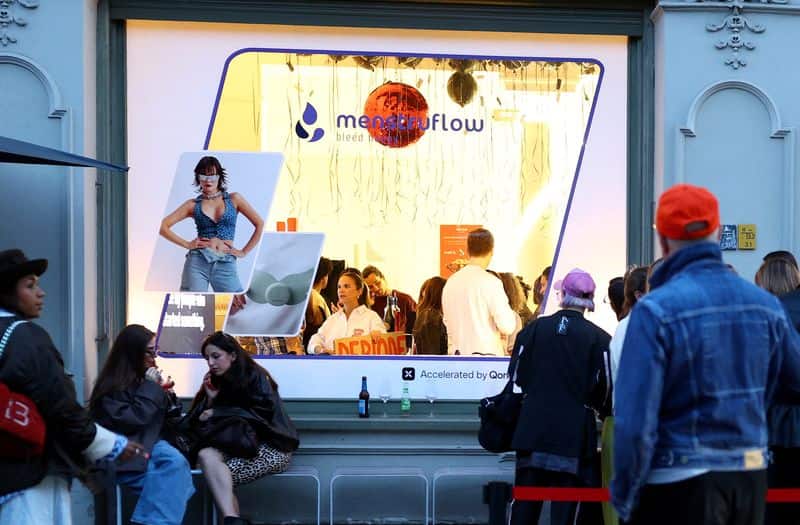
While software remains the dominant sector for new startups at 28%, other areas like healthcare (9%) and food (6%) are also seeing growth. Polina Sergeeva's healthcare company, Menstruflow, which sells a device for menstrual pain relief, saw its sales rise 300% year-on-year in the first quarter.
Funding for German startups has also seen a significant increase, with €8 billion raised in venture capital between January and September, surpassing the total for all of 2025. This environment has encouraged individuals like Paulina Lutz, formerly of a venture capital fund, to launch new companies, such as the lingerie brand Nghty Berlin.
To sustain this momentum, the German government has introduced a new Startup and Scaleup Strategy, comprising 152 measures aimed at reducing bureaucracy and attracting more private capital for technology, biotechnology, and defense sectors. This initiative seeks to prevent innovative companies from seeking funding elsewhere and creating value in other countries.