Key facts
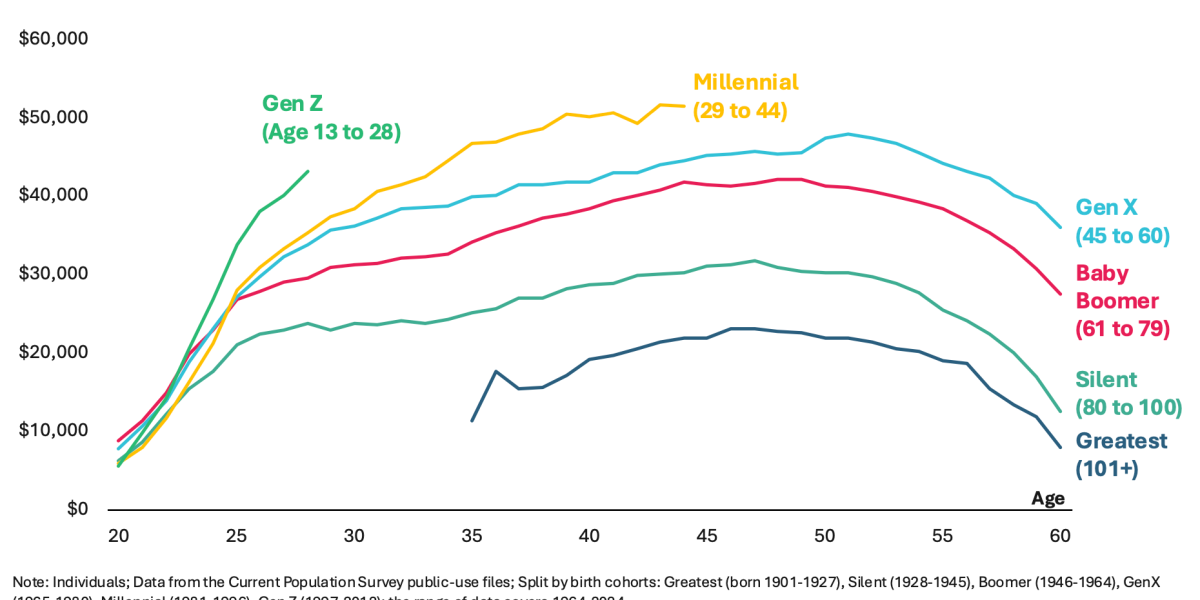
- Gen Z workers aged 28 earn a median of $42,000 in constant dollars, 25% more than Millennials and 50% more than Boomers at the same age.
- Millennials at age 34 have an average net worth of $331,000, compared to $251,000 for Gen X and $229,000 for Boomers at the same age.
- A SoFi/YouGov survey found 62% of Gen Z and Millennials aspire to retire comfortably, but only 46% believe they will.
- The BCG report acknowledges that student debt is real and housing is expensive.
Gen Z is financially better off than previous generations at the same age, yet expresses greater pessimism about their economic future, according to a new report from the BCG Center for Macroeconomics. The report, titled "The Kids Are Alright: The Timeless Angst Over Young People and Money," challenges the common narrative of a struggling younger generation.
Economists Philipp Carlsson-Szlezak, Paul Swartz, and Henry Rubin argue that data shows Gen Z is richer than Millennials, Gen X, and Baby Boomers were at comparable ages. The oldest Gen Z workers, at 28, earn a median of $42,000 in constant dollars, which is 25% more than Millennials and 50% more than Baby Boomers earned at that age. While Gen Z is still too young for direct wealth comparisons, when combined with Millennials, the younger cohort shows higher average net worth. Millennials at 34 have an average net worth of $331,000, compared to $251,000 for Gen X and $229,000 for Boomers at the same age.
Despite these financial gains, sentiment surveys indicate Gen Z feels worse about money than any generation on record. Historically, older Americans were more pessimistic about the economy, but this trend reversed around 2025. A recent SoFi/YouGov survey found that while 62% of Gen Z and Millennials aspire to retire comfortably, only 46% believe they will. The BCG authors suggest that Gen Z may be overlooking their relative financial well-being due to factors like the "smartphone revolution" and a disconnect between online narratives and reality. The report acknowledges that issues like student debt and high housing costs are real challenges.