Key facts
- Around 700,000 students have missed out on formal education since 2023.
- 350,000 students are attending public schools and 150,000 in UNRWA schools.
- 98% of schools in Gaza have been damaged, with 80% directly hit.
- Many schools have been turned into shelters for displaced Palestinians.
- Students attend classes on a rotational schedule, three days a week.
- Private schools have high tuition fees, making them inaccessible for many.
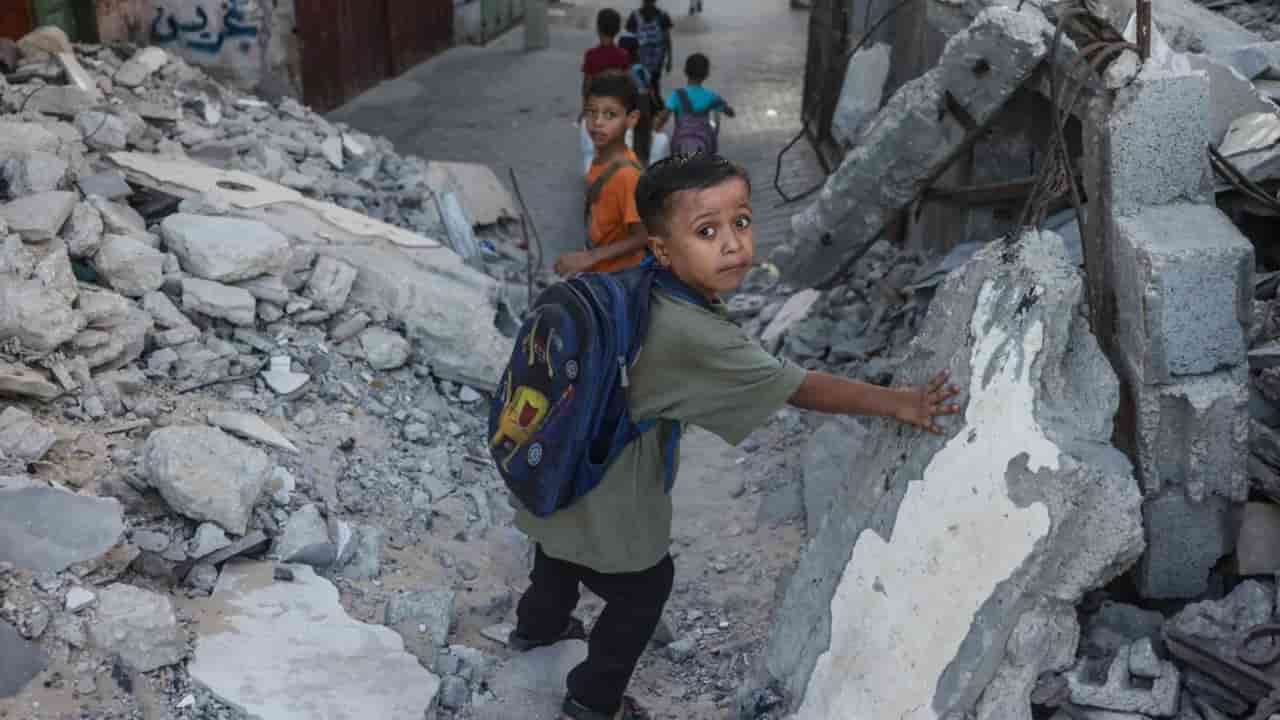
Students in Gaza have returned to makeshift classrooms, many in tents, for the first time since 2023, marking the start of the 2026 school year. The conflict has severely impacted the education system, with approximately 700,000 students having missed formal schooling. According to Unicef, about 98% of schools in the Gaza Strip have been damaged, and 80% were directly hit by the Israeli army. Many remaining school buildings have been repurposed as shelters for displaced Palestinians.
The Ministry of Education, in collaboration with partners like Unicef and Unrwa, has established limited classrooms within shelters and tents. These temporary learning spaces often lack basic amenities such as desks, chairs, and adequate sanitation. For families like that of 13-year-old Akram Helles, the return to education, even in these conditions, is a significant relief after years of disruption.
Enrollment remains a challenge for many. Parents like Osama Ayta are struggling to find places for their children in free public schools due to proximity and safety concerns, while private school fees are prohibitive. The Ministry of Education has implemented a rotational system, with students attending only three days a week, to manage the overwhelming demand and limited capacity. Schools are also facing severe water shortages and are preparing for winter conditions, which could lead to flooding and lack of electricity in the tent classrooms.