All NewsEducationTV
Equities & FundsCrypto & Digital AssetsAI & TechnologyBusiness & CorporateUS Politics & PolicyGeopolitics & Global RiskMacro, Rates & FXCommodities & EnergyEuropean Politics & MarketsAsia-PacificReal Estate & Property
All NewsHome
← Back to Geopolitics & Global Risk

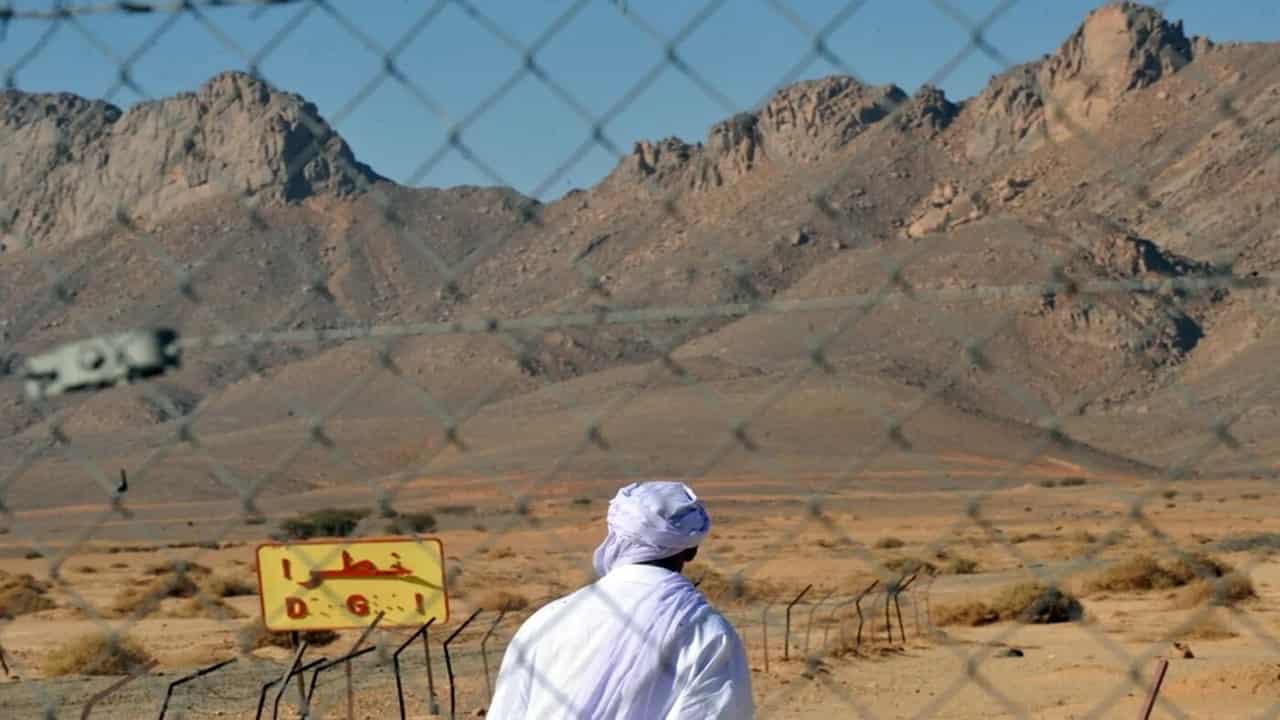
France's nuclear tests in Algeria: A colonial legacy that still radiates 60 years later

Created at 29 Aug · 8:31 AM1 source↑ Market-relevant
IN SHORT

France conducted 17 nuclear tests in Algeria between 1960 and 1966, leaving behind radioactive waste and health consequences. Paris has yet to acknowledge the full extent of the fallout or provide maps of contaminated sites, citing military secrecy and potential financial and moral reparations.

Key Numbers

60 yearstime since France's first nuclear test in Algeria
13 February 1960date of the first French atomic bomb test in Reggane
30-year-oldage of engineer Mokhtar Benabdelkader
1,500kmdistance from Adrar to Algiers
70-kilotonyield of the Gerboise Bleue bomb
four timespower of Gerboise Bleue compared to Hiroshima bomb
200km wide and 100km longarea affected by radioactive fallout
17total number of French nuclear experiments in Algeria
1966year the French nuclear experiments in Algeria ended
2008year a heritage law created non-declassifiable archives
2021year a law further restricted classified 'secret defence' archives
10 to 20 timespower of bombs used compared to Hiroshima and Nagasaki
40,000 to 20,000 inhabitants
population drop in the Reggane region

Who's Involved

Mokhtar Benabdelkader
Algerian engineer living in Adrar, whose grandfather witnessed French nuclear tests
Mohamed Benabdelkader
Mokhtar's grandfather, who shared stories of the French nuclear tests
Samia Henni
Algerian historian and author of 'Colonial Toxicity'
Patrick Bouveret
Member of the International Campaign to Abolish Nuclear Weapons (Ican)
Jean-Marie Collin
President of Ican and co-author of a study on radioactive waste
Abderahma
Founder of El Geith El Kadem, a charitable organization helping the sick in Adrar
Abdelmadjid Tebboune
President of Algeria
Said Chengriha
Algerian army chief of staff
France's nuclear tests in Algeria: A colonial legacy that still radiates 60 years later

↳ Why This Matters

France's nuclear tests in Algeria represent a significant colonial legacy with ongoing health and environmental consequences for the Saharan population, highlighting issues of accountability, transparency, and reparations for past actions.

Key facts

  • France conducted 17 nuclear tests in Algeria between 1960 and 1966.
  • The first test, Gerboise Bleue, in 1960, was four times more powerful than the Hiroshima bomb.
  • Radioactive fallout spread across a vast area, causing health issues and environmental contamination.
  • France has not provided maps of contaminated sites or acknowledged the full extent of the fallout.
  • French laws restrict access to military archives related to nuclear weapons.
  • Algerian authorities are seeking French cooperation for the rehabilitation of contaminated areas.

Sixty years after France's first nuclear test in Algeria, the legacy of these colonial-era experiments continues to radiate, impacting the health and environment of the Saharan population. The 70-kiloton Gerboise Bleue bomb, detonated on February 13, 1960, in Reggane, was four times more powerful than the one dropped on Hiroshima, spreading radioactive fallout across a vast area. This was followed by 16 more nuclear tests conducted by France in Algeria until 1966, leaving behind contaminated sites and a population suffering from increased rates of cancer and other radiation-related illnesses.

Algerian engineer Mokhtar Benabdelkader recounts his grandfather Mohamed's vivid memories of the blinding light and earth-shattering sound of the first explosion, and the subsequent years of battling liver cancer, a disease that afflicted many in his village. The French army has refused to provide Algeria with maps detailing the locations of buried equipment and waste, a move historian Samia Henni describes as part of a "colonialist project" that obscures the violence and long-term reach of colonial toxicity. Henni notes that the population in the Reggane region has halved since the tests.

France maintains that its nuclear archives are subject to strict military secrecy, with laws enacted in 2008 and 2021 further restricting declassification. This secrecy prevents the release of information that could lead to financial and moral reparations. A study by Ican members has identified significant radioactive waste in the Algerian Sahara, prompting Algerian authorities, including President Abdelmadjid Tebboune and army chief of staff Said Chengriha, to call for French cooperation in rehabilitating the contaminated areas. However, France has consistently evaded these requests, with potential reasons including domestic political sensitivities and a reluctance to undermine its nuclear deterrence doctrine.

Meanwhile, charitable organizations like El Geith El Kadem in Adrar report a worrying resurgence in cancer, birth defects, and infertility, with diseases linked to radioactivity reportedly being passed down through generations.

Frequently asked questions

France conducted its first nuclear test, Gerboise Bleue, on February 13, 1960, and a total of 17 nuclear experiments in Algeria until 1966.

The tests spread radioactive fallout, leading to health problems such as cancer, birth defects, and infertility, as well as environmental contamination. The population in the Reggane region reportedly halved.

France cites military secrecy and the potential for financial and moral reparations as reasons for withholding information. Laws enacted in 2008 and 2021 further restrict the declassification of nuclear-related military archives.

Algerian authorities are calling on France to cooperate in rehabilitating the contaminated areas and to address the issue of nuclear testing fallout.

What Happens Next

01Algerian authorities continue to call on France to cooperate in rehabilitating contaminated areas.
02France's stance on releasing nuclear test archives and providing reparations remains a point of contention.

How It Developed

France conducted its first nuclear test, Gerboise Bleue, in Reggane, Algeria, on February 13, 1960.
The 70-kiloton bomb spread radioactive fallout across a 200km by 100km area.
Algeria experienced 16 additional underground and atmospheric nuclear experiments until 1966.
France has not acknowledged the health and environmental consequences of these tests.
The French army has refused to provide Algeria with maps of buried waste and equipment locations.
Historian Samia Henni described the scattered radioactive waste as polluting and infringing on the dignity of the Saharan people.
Henni stated that France's refusal to identify the consequences is part of a colonialist project.
France obtained authorization to use Saharan territory for nuclear tests for five years after Algeria's independence in 1962.

Sources

T1
France's nuclear tests in Algeria: A colonial legacy that still radiates 60 years laterMiddle East Eye

Related Stories

Fifa, Uefa backing Israeli settlement clubs despite Palestinian league shutdown
28 Aug · 11:06 AM
South Africa Accuses Israel of Violating ICJ Gaza Orders
29 Aug · 1:50 AM
Rwandan genocide suspect sentenced to life in prison in the Netherlands
28 Aug · 11:04 AM
Israel may delay Lebanon talks before elections
28 Aug · 12:11 PM
Israel to expel Gaza residents over children's kites
28 Aug · 12:26 PM