Key facts
- New York Fed President John Williams stated the central bank's monetary policy implementation system is effective and adaptable.
- Williams indicated the Fed's rate-control framework can be adjusted to changing market conditions.
- Fed Vice Chair Philip Jefferson said enhancements to the discount window make it easier for financial institutions to use.
- Jefferson noted the discount window serves as a shock absorber during periods of market stress.
- Market participants favor the Treasury periodically investing some of its cash into private money markets.
- The Treasury General Account (TGA) currently holds just under $1 trillion.
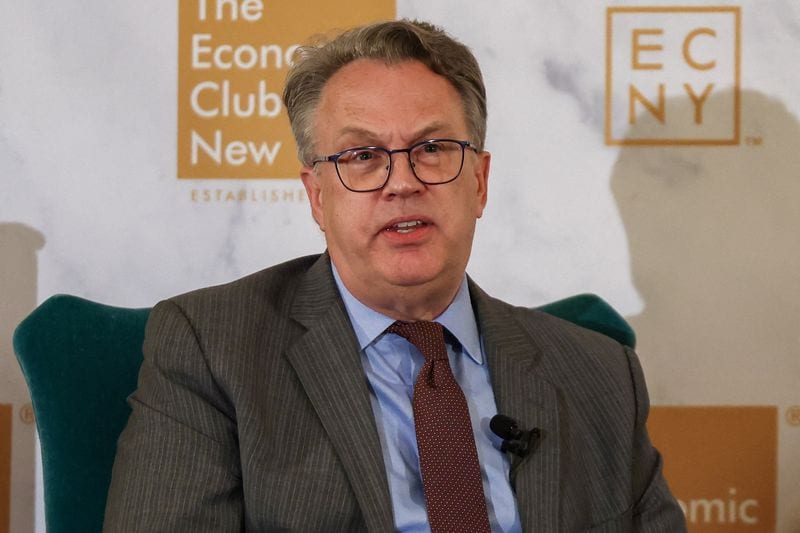
New York Fed President John Williams defended the US central bank's monetary policy implementation system on Tuesday, asserting that its current tools for managing short-term interest rates are highly effective and can be adjusted to evolving financial market conditions. Williams stated that supplying "ample" reserves to the financial system has proven effective at delivering interest rate control and supporting the smooth functioning of core financial markets.
Separately, Federal Reserve Vice Chair Philip Jefferson said on Tuesday that recent improvements to the central bank's emergency lending facility make it easier for financial institutions to use, supporting market liquidity, financial stability, and monetary policy implementation. Jefferson noted that by providing banks with a reliable source of liquidity, the discount window serves as a shock absorber during periods of market stress by reducing the risk of forced sales of Treasury securities. He added that the Fed has made a number of enhancements to the lending facility in recent years, including the introduction of a self-service portal that now handles 60% of discount window loans and allows banks to communicate with their regional Fed bank electronically instead of by phone. Banks say the system makes it easier, faster, and more efficient to borrow from the central bank, Jefferson said.
Williams emphasized that while the framework has worked well, it is not static and must adapt to changes in financial market structure. He indicated that there should be little to no opportunity cost to holding reserves at the central bank, as a high opportunity cost is inefficient and creates distortions, and that the Fed will adjust the supply of reserves if the underlying demand shifts. Williams did not comment on the outlook for monetary policy or interest rates. Jefferson did not address the economic or monetary policy outlook in his prepared remarks.
Separately, market participants at a Federal Reserve Bank of New York panel favored the idea of the U.S. Treasury periodically investing some of its cash from its Treasury General Account (TGA) into private money markets, rather than keeping it parked at the Fed. Richard Chambers, a partner at Goldman Sachs’ banking and markets group, stated that reinvesting into repo makes sense from a debt sustainability perspective and helps stabilize the money market sector. Frank Gutierrez, head of portfolio management and trading at BNY Investments Dreyfus, added that new cash entering the market provides ballast. Jill Funk, a managing director at J.P. Morgan, noted that such a policy shift could be an important stabilizer for the market. Panelists suggested that Treasury operations should be predictable and conducted early in the day.