Key facts
- A pullback in Fed communications could increase interest rate and inflation volatility, according to St. Louis Fed President Alberto Musalem.
- Musalem stated that a predictable, explained framework is crucial for central bank legitimacy and public understanding.
- Fed Chair Kevin Warsh is forming a task force to recommend changes to the central bank's communications.
- Musalem warned that a lack of explanation leads to uncertainty premiums and self-reinforcing economic spirals.
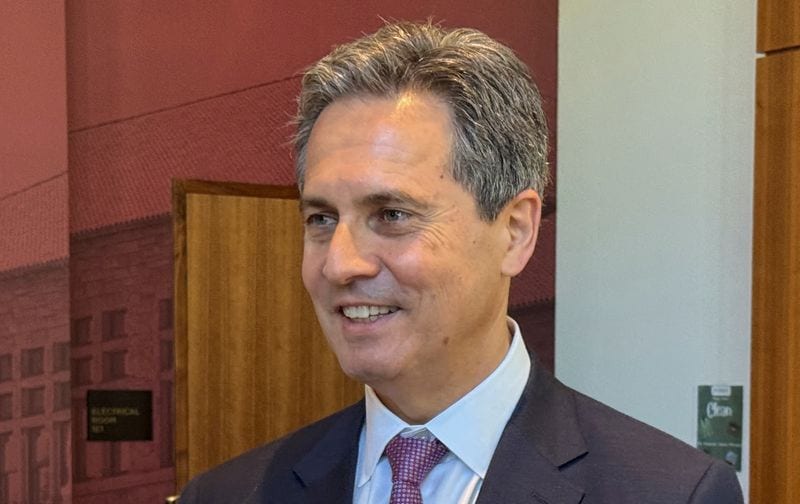
St. Louis Federal Reserve President Alberto Musalem said on Tuesday that a significant reduction in the US central bank's communications could result in higher and more volatile interest rates and inflation. In remarks prepared for a London School of Economics event, Musalem argued that while central banks need not make specific rate promises, they should not cease communication entirely. Instead, he suggested providing a framework that allows households and businesses to understand how policymakers will react to evolving economic conditions.
Fed Chairman Kevin Warsh, who assumed leadership in May, has initiated a task force to develop recommendations for the central bank's communications, which he believes have become too unfettered. Warsh's principles include the idea that a more reserved and purposeful approach to communication would lead to better monetary policy.
Musalem elaborated that a central bank that fails to explain its policy decisions forces the public to speculate, leading to increased premiums for uncertainty. This, he warned, could ultimately drive up interest rates for businesses and consumers and increase the risk of self-reinforcing inflationary or deflationary cycles. He also pointed out that insufficient communication can undermine the Fed's democratic accountability, emphasizing that a clear, explained framework is not a limitation but a component of legitimacy for an institution led by unelected officials.