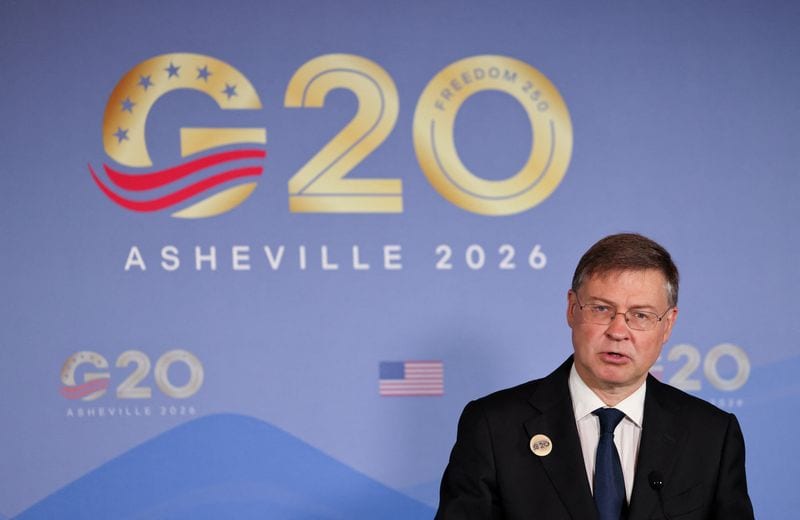
A recent agreement to reduce Chinese hybrid car imports into Europe necessitates a broader rebalancing of trade across other sectors and improved market access for the European Union, according to Valdis Dombrovskis, European Economic Commissioner. Dombrovskis stated that the EU's trade deficit with China, which reached an unsustainable €1 billion per day last year, is not confined to the automotive industry but spans a wide range of sectors.
Speaking on the sidelines of the International Monetary Fund meetings in Bangkok, Dombrovskis emphasized the need for tangible results from ongoing discussions with Beijing, warning that the EU would consider other measures if progress is not made. While specific sectors were not named by Dombrovskis, EU officials close to the negotiations have pointed to chemicals, furniture, industrial machinery, steel, and wind-turbine components as areas requiring attention.
Dombrovskis highlighted a growing consensus among EU policymakers to transition from prolonged discussions with Beijing to concrete policy actions. EU leaders are scheduled to convene in Brussels to address the bloc's competitiveness and its trade relationship with China. Discussions are also expected to cover a proposal, supported by France and Germany, for the European Commission to develop a more agile trade defense instrument, potentially modeled after the US Section 301 of the Trade Act.
Meanwhile, Chinese Vice Premier He Lifeng conveyed to French diplomat Emmanuel Bonne in Beijing that China is prepared to collaborate with the EU to foster greater stability and positive momentum in their economic and trade relations, as reported by the official Xinhua news agency.