All NewsEducationTVBrokers
Equities & FundsCrypto & Digital AssetsAI & TechnologyBusiness & CorporateUS Politics & PolicyGeopolitics & Global RiskMacro, Rates & FXCommodities & EnergyEuropean Politics & MarketsAsia-PacificReal Estate & Property
All NewsHome
← Back to US Politics & Policy

DP leader calls for stronger security, suggests 'freeze-first' N.K. nuclear approach

Created at 7 Sep · 4:39 AM1 source↑ Market-relevant
IN SHORT

South Korean ruling Democratic Party leader Kim Min-seok urged strengthening independent security capabilities, citing a potential 'freeze-first' approach to North Korea's nuclear program. He emphasized Seoul's need to facilitate U.S.-North Korea dialogue and adapt to changing relations, stating South Korea can no longer solely depend on the U.S.

Key Numbers

Sept. 7, 2026date of policy address

Who's Involved

Kim Min-seok
Leader of the ruling Democratic Party
Donald Trump
U.S. President
Kim Jong-un
North Korean leader
Cho Jeong-sik
National Assembly Speaker
DP leader calls for stronger security, suggests 'freeze-first' N.K. nuclear approach

↳ Why This Matters

The statements highlight a potential shift in South Korea's security strategy and its approach to North Korea, emphasizing greater self-reliance amidst evolving U.S.-North Korea relations and domestic political considerations regarding constitutional reform.

Key facts

  • Ruling Democratic Party leader Kim Min-seok called for strengthening South Korea's independent security capabilities.
  • Kim suggested a potential 'freeze-first' approach to North Korea's nuclear weapons program.
  • He stated that South Korea can no longer solely depend on the United States for security.
  • Kim also suggested considering North Korean leader Kim Jong-un's 'two-state' policy for peaceful coexistence.
  • President Donald Trump previously expressed openness to meeting Kim Jong-un and scaled back a joint military exercise with South Korea.
  • Kim pledged to pursue constitutional revision reflecting public consensus and prioritize livelihoods and regional development.
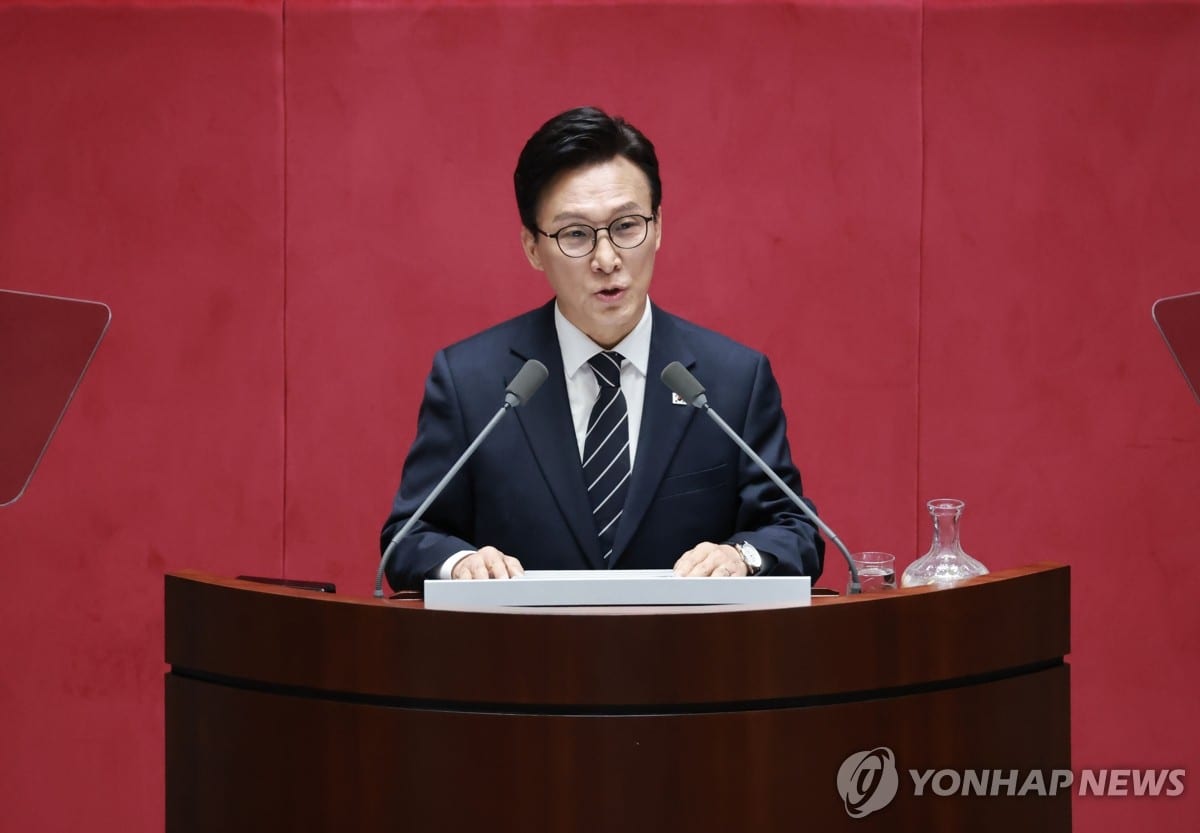
  • The leader of South Korea's ruling Democratic Party, Rep. Kim Min-seok, has called for enhanced independent security capabilities, suggesting a possible shift to a 'freeze-first' strategy regarding North Korea's nuclear program. Speaking at the National Assembly on September 7, 2026, Kim emphasized that Seoul must proactively facilitate dialogue between the United States and North Korea and be prepared for potential changes in their relationship.

    Kim stated that South Korea's era of complete reliance on the U.S. is over, noting that Washington is adopting a tougher negotiating stance. He also proposed that Seoul should consider North Korean leader Kim Jong-un's 'two-state' policy not as a dismissal, but as a potential avenue for peaceful coexistence.

    These remarks follow recent actions by U.S. President Donald Trump, who expressed his intention to meet Kim Jong-un and ordered a reduction in a major South Korea-U.S. military exercise. Trump cited his positive relationship with Kim and the high cost and potentially provocative nature of the drills.

    On domestic matters, Kim Min-seok pledged to pursue a constitutional amendment that aligns with public sentiment, focusing on people's livelihoods and balanced regional development. His comments came after National Assembly Speaker Cho Jeong-sik indicated that the eligibility of an incumbent president for a second term under a revised constitution would be decided by the public, sparking questions about President Lee Jae Myung's potential for a second term.

    Frequently asked questions

    The 'freeze-first, resolve-later' approach suggests prioritizing the halting of North Korea's nuclear weapons development and testing before addressing denuclearization comprehensively.

    The DP leader cited the changing relationship between the U.S. and North Korea and the U.S.'s perceived shift towards a tougher negotiating stance, suggesting South Korea can no longer solely depend on its alliance with the U.S.

    While not fully detailed in the article, the 'two-state' policy likely refers to North Korea's view of itself as a separate, sovereign entity, potentially seeking recognition and coexistence with South Korea rather than reunification under one system.

    What Happens Next

    01South Korea to strengthen independent security capabilities.
    02Seoul to facilitate U.S.-North Korea dialogue.
    03Consideration of North Korea's 'two-state' policy.
    04Pursuit of constitutional revision reflecting public consensus.

    How It Developed

    Ruling Democratic Party leader Kim Min-seok called for strengthening South Korea's independent security capabilities.
    Kim suggested a potential 'freeze-first, resolve-later' approach to North Korea's nuclear weapons program.
    He stated that South Korea can no longer depend solely on the United States for security.
    Kim also suggested considering North Korean leader Kim Jong-un's 'two-state' policy for peaceful coexistence.
    President Donald Trump previously expressed openness to meeting Kim Jong-un and scaled back a joint military exercise with South Korea.
    Kim pledged to pursue constitutional revision reflecting public consensus and prioritize livelihoods and regional development.

    Sources

    T1
    DP leader calls for stronger security capabilities, says 'freeze-first' approach to N.K. nukes possibleYonhap News Agency

    Related Stories

    Lee reaffirms commitment to promote N. Korea-U.S. dialogue
    7 Sep · 4:38 AM
    Police seek arrest warrant for ex-ruling party lawmaker over corruption allegations
    7 Sep · 7:26 AM
    Ex-senior prosecutor tapped as inaugural head of new investigation agency
    7 Sep · 7:56 AM
    Justice minister nominee denies illegal COVID-19 treatment lobbying allegations
    7 Sep · 4:38 AM
    President Lee's approval rating falls to new low of 37.4%
    7 Sep · 4:38 AM