All NewsEducationTV
Equities & FundsCrypto & Digital AssetsAI & TechnologyBusiness & CorporateUS Politics & PolicyGeopolitics & Global RiskMacro, Rates & FXCommodities & EnergyEuropean Politics & MarketsAsia-PacificReal Estate & Property
All NewsHome
← Back to Commodities & Energy

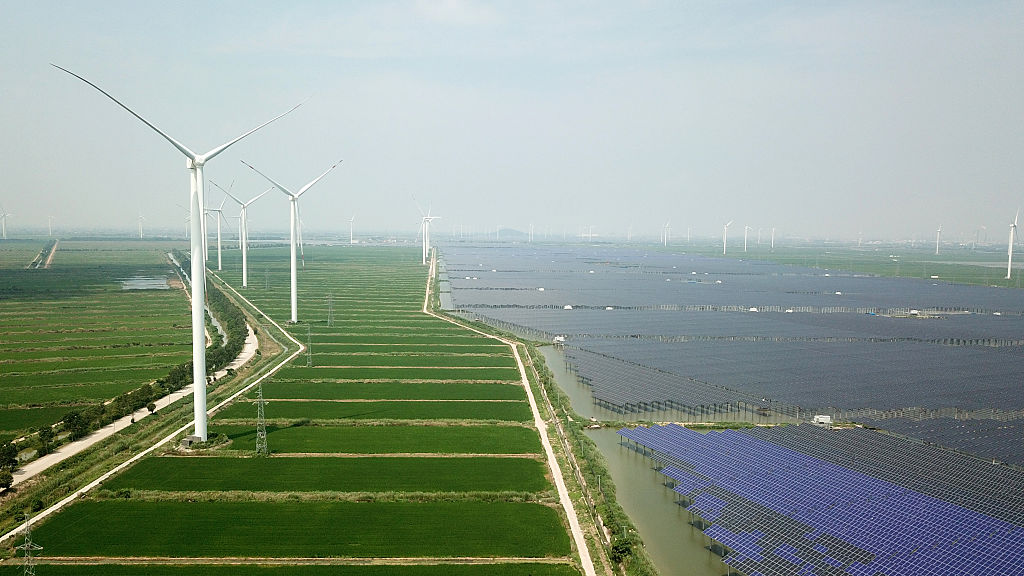
Clean energy booms despite Trump's efforts to curb it

Created at 24 Aug · 2:51 PM1 source↑ Market-relevant
IN SHORT

Despite efforts by Donald Trump to curb clean energy development, the sector is experiencing significant growth. This expansion is driven by rising electricity demand from data centers and electrification, coupled with the cost-effectiveness and rapid deployment of solar and wind power.

Key Numbers

39 percentprojected US power consumption growth by 2035
2 yearslead time for new solar and wind sites
$38 per megawatt-hourbreak-even price for solar power
$37 per megawatt-hourbreak-even price for wind power
$48 per megawatt-hourminimum break-even price for gas power
40 to 120 percentexpected rise in electricity prices after IRA subsidies expire
45 percentincrease in clean energy spending in Q2 2026 from previous quarter
21 percentincrease in clean energy spending in Q2 2026 from Q2 2025

Who's Involved

Ethan Zindler
head of country and policy research at BloombergNEF
Hannah Hess
director with Rhodium's energy and climate practice
Cliff Graham
chief executive at clean energy company Avantus
Donald Trump
whose administration's efforts to curb clean energy have been challenged
Clean energy booms despite Trump's efforts to curb it

↳ Why This Matters

The growth of clean energy, despite political headwinds, highlights its economic viability and increasing necessity driven by demand from sectors like data centers and consumer adoption of EVs and home storage, signaling a significant shift in the energy landscape.

Key facts

  • US power consumption is expected to grow 39% by 2035, driven by data centers and electrification.
  • New solar and wind energy projects can be developed in under two years, compared to at least three years for gas projects.
  • Solar and wind power can be sold for as little as $38 and $37 per megawatt-hour, respectively.
  • Consumer investment in residential solar, batteries, and EVs rose 45% in Q2 2026.
  • US courts have blocked multiple attempts by the Trump administration to halt wind project construction.

Despite efforts by the Trump administration to curb clean energy development, the sector is experiencing significant growth, driven by increasing electricity demand and the cost-effectiveness of renewable sources. Consultancy ICF projects US power consumption to rise 39 percent by 2035, fueled by energy-intensive data centers and the electrification of transportation and appliances. This marks a significant shift after a decade of steady demand.

Solar and wind power are emerging as the quickest and most economical options for grid expansion. According to RMI, new solar and wind sites can be developed in under two years, considerably faster than the three-year minimum for gas projects. Investment bank Lazard indicates that producers can achieve break-even selling solar and wind power for as little as $38 and $37 per megawatt-hour, respectively, compared to at least $48 per megawatt-hour for gas. However, these figures do not encompass system upgrade and battery costs needed to manage intermittency.

Renewable power developers are poised to benefit further, with electricity prices expected to increase by 40 to 120 percent once subsidies from the Inflation Reduction Act expire. Ethan Zindler, head of country and policy research at BloombergNEF, noted that it is a favorable time for developers due to the urgent need for power by data centers.

Extreme weather events and geopolitical tensions, such as the conflict involving Iran, have also contributed to the sector's expansion. In the second quarter of 2026, consumer investment in residential solar panels, batteries, and zero-emission vehicles led clean energy spending, increasing by 45 percent from the previous quarter and 21 percent from the same period in 2025, according to researcher Rhodium Group. Hannah Hess, a director at Rhodium's energy and climate practice, highlighted that residents in areas prone to hurricanes are installing home batteries, and higher fuel prices due to the Iran conflict are driving purchases of electric and hybrid vehicles.

US courts have largely thwarted the Trump administration's attempts to impede green energy projects. A district court judge in Oregon recently ordered the Pentagon to cease blocking onshore wind development, and all five of the administration's efforts to halt construction of wind projects off the US East Coast have been blocked by the courts. Developers have also found some success lobbying the administration directly, with individuals connected to the administration advocating for specific projects. A key argument used is that these projects will not displace fossil fuels, which are preferred by the Trump administration. Cliff Graham, chief executive at clean energy company Avantus, stated that the administration has been pragmatic regarding permits, noting that large, undeveloped areas are well-suited for solar-plus-storage solutions.

Frequently asked questions

US power consumption is expected to grow significantly by 2035, driven by energy-intensive data centers and the electrification of household appliances and transport.

New solar and wind sites can be developed quickly, and their power can be sold at lower break-even prices compared to gas projects, according to industry analysis.

US courts have blocked multiple attempts by the Trump administration to halt wind project construction and ordered the Pentagon to cease blocking onshore wind development.

Growth is driven by rising electricity demand, the cost-effectiveness of renewables, consumer investment in solar and EVs, extreme weather events, and geopolitical tensions affecting fuel prices.

What Happens Next

01Electricity prices are expected to rise 40 to 120 percent once Inflation Reduction Act subsidies expire.
CME Headlines
  • Gold futures hit May highs as fiscal concerns offset yields.
    21 Aug · 9:05 PM
  • Gold futures hit May highs as fiscal concerns offset yields.
    21 Aug · 9:05 PM
  • RBOB Gasoline futures reach highest levels since June as volume rolls.
    21 Aug · 8:29 PM

How It Developed

US power consumption is projected to grow 39 percent by 2035.
New solar and wind sites have lead times under two years, faster than gas projects.
Solar and wind power can be sold at lower prices than gas.
Renewable power developers anticipate higher profits as electricity prices are expected to rise.
Consumer investment in residential solar panels, batteries, and EVs increased significantly in Q2 2026.
Extreme weather and geopolitical events have contributed to clean energy growth.
US courts have blocked Trump administration attempts to halt wind project construction.
Developers are lobbying the administration, arguing projects do not displace fossil fuels.

Sources

T1
Trump tried to curb clean energy. It’s booming anyway.Ars Technica

Related Stories

Underwater Volcanoes: Geothermal Energy's Next Frontier
23 Aug · 5:11 PM
Sinopec profit jumps 19.3% amid Middle East conflict, expects easing headwinds
24 Aug · 11:00 AM
Super El Niño Threatens Global Food, Water, and Trade
23 Aug · 7:35 PM
Norway to drill Arctic oil and gas despite EU opposition
24 Aug · 5:13 AM
Japan Power Prices Surge to Highest Since January 2023
24 Aug · 11:36 AM