Key facts
- China's yuan reached its strongest level against the dollar since February 2023 this week.
- The gap between US Treasury yields and Chinese government bond yields widened to a record 317 basis points on September 10.
- China's trade surplus reached $119.1 billion in August.
- Chinese exports to the US rose 34.4% year-on-year in August.
- The People's Bank of China set its official yuan fixing stronger than traders expected.
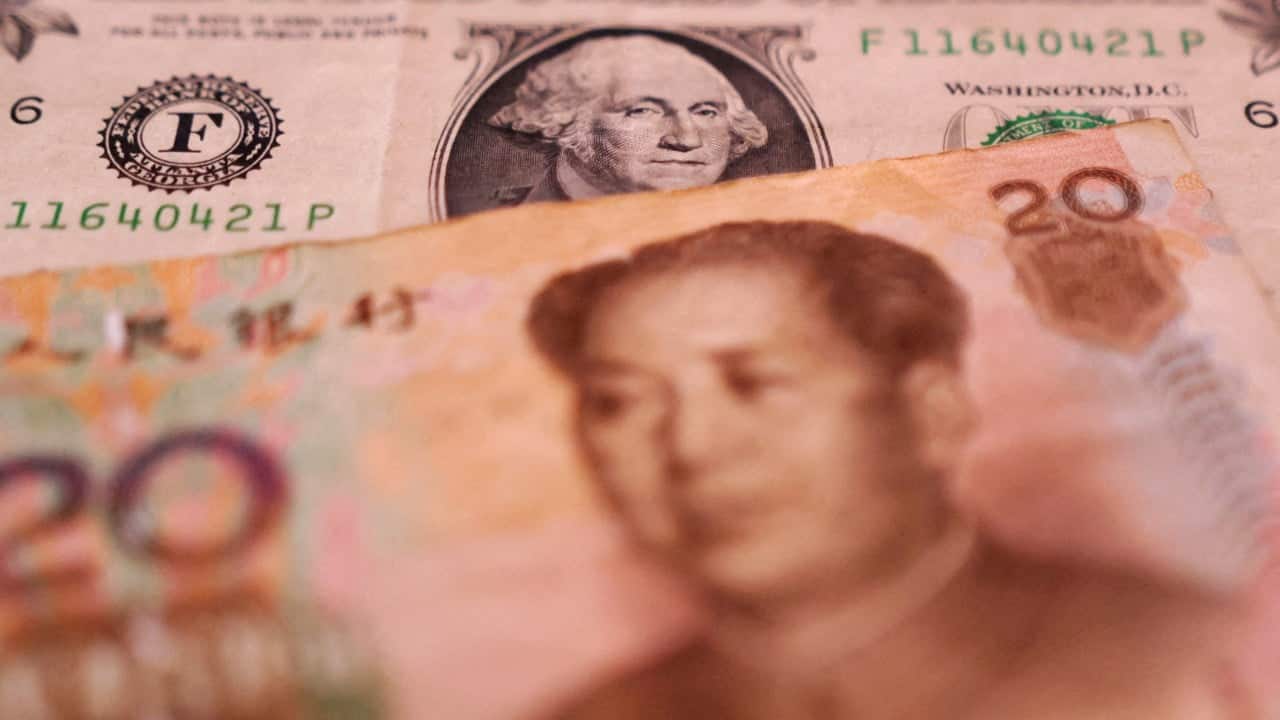
China's yuan has strengthened to its highest level in roughly four years against the dollar, defying conventional currency logic that suggests a widening interest rate differential should weaken it. The offshore yuan traded at 6.6956 per dollar on Monday, while the onshore rate touched 6.6983, its strongest since January 2023.
The record gap between US Treasury yields and Chinese government bonds, which stood at 317 basis points on September 10 and has continued to widen, should theoretically pull capital toward higher-yielding assets. However, China's robust trade performance has become a dominant factor.
In August, China reported a trade surplus of $119.1 billion, an increase from July's $112.5 billion. Exports rose 25% year-on-year, with significant jumps in semiconductor and auto shipments. The bilateral trade surplus with the US alone reached $29.2 billion in August, as Chinese goods sold to American buyers increased by 34.4% to $42.5 billion.
Exporters converting their dollar earnings into yuan create mechanical demand for the currency, overriding the impact of interest rate differentials. The People's Bank of China (PBOC) has also signaled comfort with a stronger yuan, setting its official fixing stronger than traders anticipated, suggesting a deliberate strategy to manage the currency's appreciation without causing rapid fluctuations.
This divergence highlights the growing influence of trade fundamentals and capital flows over monetary policy in determining exchange rates. It also complicates the dollar's broader narrative, as it gains against most currencies but loses ground specifically to the yuan, indicating China-specific factors at play.