Key facts
- China's crackdown on cross-border securities trading could strengthen Hong Kong's financial role.
- Beijing's investigation into Futu Securities, Tiger Brokers, and Long Bridge was partly driven by concerns over foreign exchange 'leakage'.
Hong Kong's finance chief Paul Chan stated that Beijing's crackdown on cross-border trading, including an investigation into three brokerages, aims to curb capital outflows and protect retail investors. He believes these actions could ultimately strengthen Hong Kong's role as an international financial and offshore yuan hub.
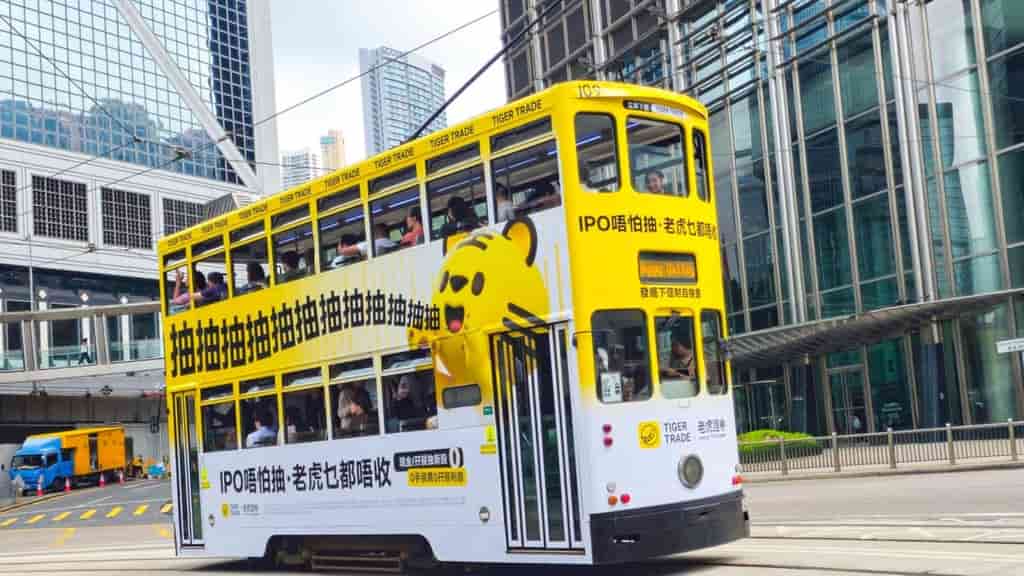
Beijing's efforts to control capital flows and channel them through official mechanisms like Hong Kong's connect schemes could reshape the city's role as a global financial hub, potentially increasing its importance for offshore yuan transactions.
China's recent crackdown on cross-border securities trading is expected by economists to bolster Hong Kong's position as a financial center, rather than diminish it. Diana Choyleva, founder and chief economist at Enodo Economics, stated that Beijing's actions are aimed at curbing illegal capital outflows while simultaneously increasing regulated capital flow through Hong Kong's established connect schemes.
Choyleva noted that these moves reinforce the city's status as an offshore yuan hub. She explained that authorities are making it clear that illegal outflows will be penalized, but they are also widening the connect schemes to allow more capital to flow through Hong Kong via official channels.
These comments follow actions by the China Securities Regulatory Commission last month, which penalized Futu Securities, Tiger Brokers, and Long Bridge for illegally providing domestic investors with access to overseas trading. This action had raised concerns about capital controls and Hong Kong's future as a wealth hub.
Choyleva further elaborated that Hong Kong's role is evolving from a conduit for foreign investment into mainland China to a central hub where China's domestic wealth is intermediated with the rest of the world, operating on China's terms.
At a closed-door C-suite round table organised by the South China Morning Post on Wednesday, Financial Secretary Paul Chan Mo-po said Beijing was overall “supportive” of Hong Kong’s role as an international financial centre. But he added that the central government still needed to be cautious about potentially destabilising capital outflows and investor losses. "Beijing wants Hong Kong to succeed, but at the same time, they have to do this carefully," Chan said. He noted that on the mainland, investors are mainly retail investors, while in Hong Kong, it’s mainly institutional investors.
Pick the topics you care about. Get only what matters, on your cadence.