Key facts
- China's central bank governor Pan Gongsheng said slower loan growth is becoming the new normal.
China's central bank governor Pan Gongsheng stated that slower loan growth is becoming the new normal for the country's economy. This shift is driven by declining credit demand in the property and local government sectors, which emerging industries have not yet fully compensated for. Pan indicated that maintaining previous rates of overall credit growth would be difficult and unnecessary, emphasizing a move towards higher-quality lending.
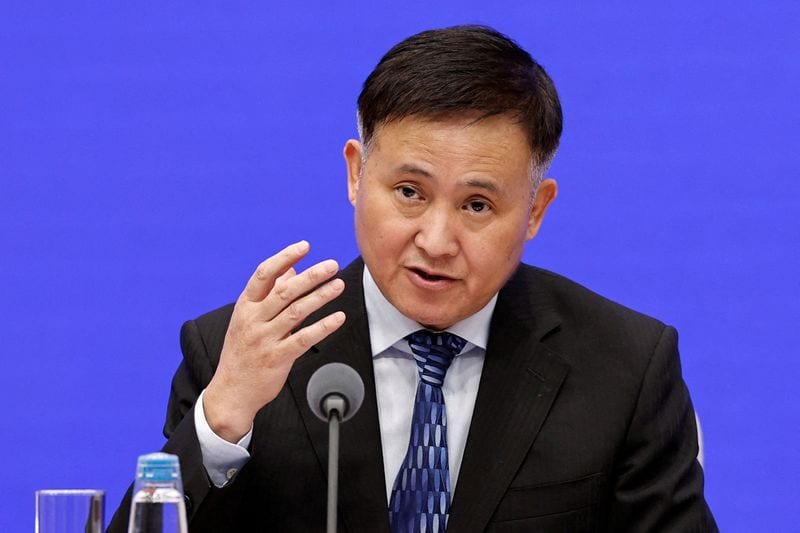
The shift towards slower, higher-quality loan growth signals a potential recalibration of China's economic strategy, moving away from debt-fueled expansion towards more sustainable development. This could impact the availability and cost of credit for various sectors, influencing investment decisions and overall economic growth trajectory.
China's central bank governor Pan Gongsheng stated that slower loan growth is becoming the new normal for the country's economy, driven by declining credit demand in the property and local government sectors. He noted that emerging industries are not yet fully compensating for this gap. Pan's comments, published in the Communist Party's theoretical journal Qiushi, suggest that maintaining previous rates of overall credit growth will be difficult and unnecessary, as the economy shifts towards higher-quality lending.
Despite weaker credit demand, financing conditions remain accommodative, and borrowing needs are being met, Pan added. Much of China's outstanding loans, exceeding 280 trillion yuan ($41.73 trillion), are tied to property and local government financing vehicles, sectors that are now shrinking. In contrast, fast-growing industries like high-tech manufacturing and green technology, which contributed over 40% of economic growth in the first half of 2026, are less dependent on bank lending as they rely more on technology, data, and intellectual property.
The central bank is increasingly downplaying bank loans as the sole gauge of credit conditions, highlighting the growing role of bond issuance and other funding channels in China's more diversified financial system. In 2025, loans accounted for 45% of the increase in total social financing, while bond and equity financing combined made up 47%, surpassing loans for the first time. Pan also warned that excessive financial expansion could inflate leverage, trap funds in speculative circulation, and delay the exit of inefficient firms, ultimately undermining economic efficiency.