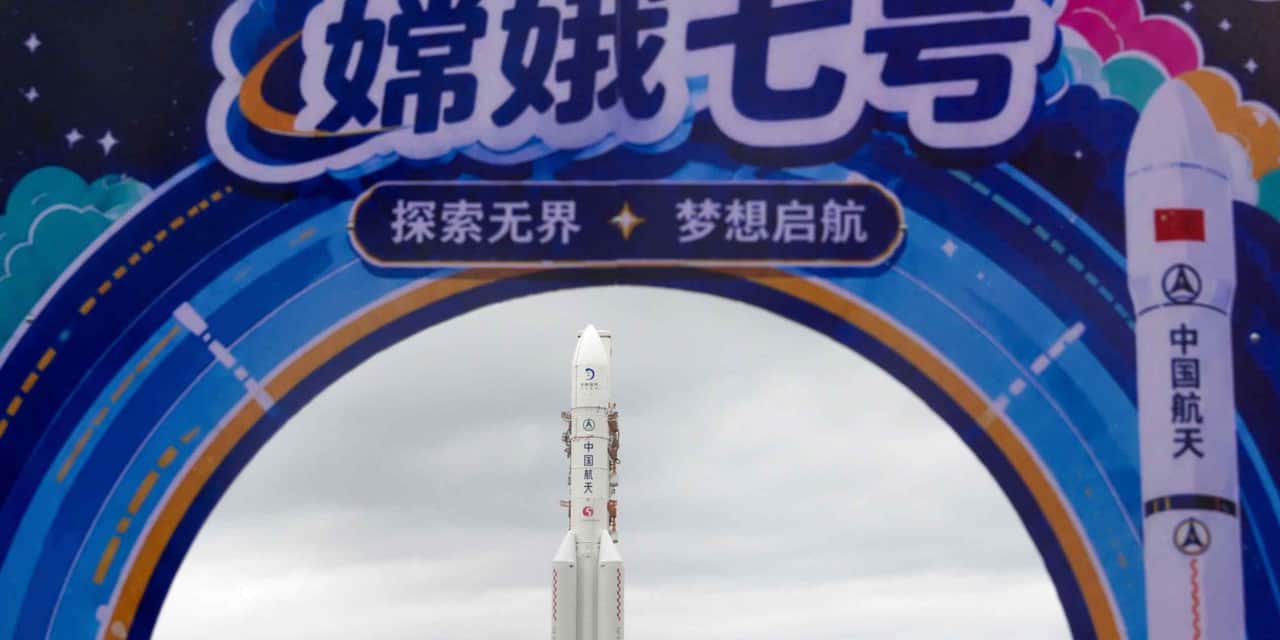
China's ambitious Chang'e 7 mission to land on the lunar south pole has been postponed, potentially ceding an advantage to the United States in the race for lunar water resources. The mission, already on the launchpad at the Wenchang Spacecraft Launch Site, was delayed due to a tropical storm, with the China National Space Administration announcing the postponement sine die.
While weather delays are typically short-term, the Chang'e 7's destination at the lunar south pole requires specific lighting conditions for a safe landing. The low angle of the sun in this region exaggerates terrain contrasts, meaning trajectory calculations may need to be redone for early 2027. Some specialists also suggest that the spacecraft might not have been in perfect condition, particularly following the August 10 explosion of a Long March 7 rocket from the same launch center.
This setback provides an opportunity for U.S. space companies. Blue Origin's Lunar Base 1 mission, featuring the Blue Moon Mark 1 Endurance lander, is now slated for launch in the first quarter of 2027. Both missions are targeting the area around the Shackleton crater, a challenging region with shadows and hazardous topography where no soft landing has yet been achieved. The first to successfully deploy vehicles and robots in this area could gain a significant strategic advantage in accessing vital resources.