Key facts
- China's national GDP growth slowed to 4.7% in the first half of 2026.
- Provinces focused on high-tech manufacturing, such as Guangdong and Zhejiang, saw accelerated growth.
- Regions reliant on traditional industries and property experienced slower economic expansion.
- Anhui province's economy grew significantly, driven by electric vehicles and electronics manufacturing.
- President Xi Jinping has urged major provinces to lead technological innovation and industrial upgrading.
China's economic performance in the first half of 2026 reveals a significant regional divergence, with high-tech manufacturing hubs accelerating while traditional industry and property-reliant provinces lag. National GDP growth eased to 4.7% from 5.0% in 2025, indicating an uneven economic transition.
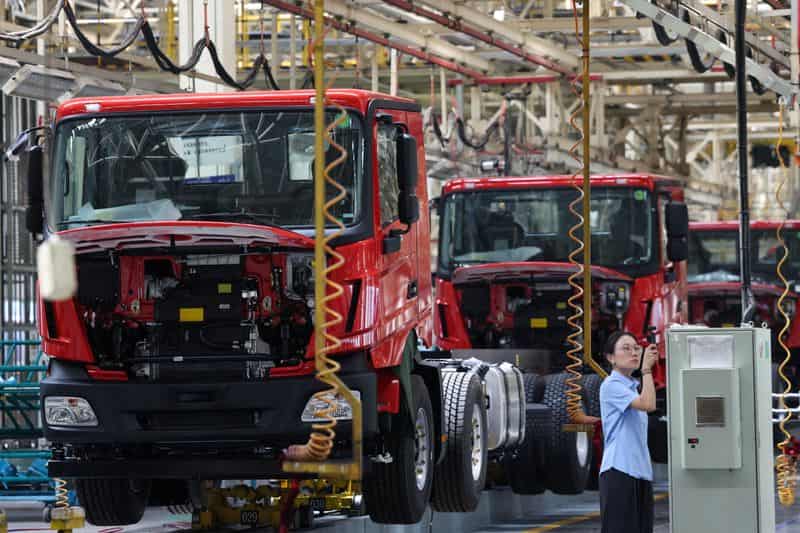
Provinces like Guangdong, Zhejiang, Shanghai, Anhui, and Shandong showed accelerated growth, driven by sectors including semiconductors, electric vehicles, robotics, and artificial intelligence. Zhejiang led with a 5.7% expansion, followed by Shandong, Anhui, and Shanghai at 5.6%. Anhui's GDP reached 2.74 trillion yuan ($404.9 billion), boosted by a 44.6% surge in high-tech manufacturing and a 29% rise in auto manufacturing, with high-tech exports soaring 78.3%.
Conversely, regions heavily exposed to the property market and traditional industries, such as Hunan, Jilin, Shanxi, and Liaoning, experienced much slower growth, ranging from 2.1% to 2.7%. Consumption and investment remained weak across much of the country, with retail sales growth exceeding 2% in only four of the top 10 richest regions, and fixed-asset investment declining in at least 18 provincial economies.
President Xi Jinping has urged major provinces to lead in innovation and industrial upgrading, emphasizing the development of 'new productive forces.' Economists anticipate local governments will accelerate planned investment projects to meet the national growth target of 4.5% to 5%. However, analysts note that GDP rankings are no longer the sole measure of local government performance, with debt resolution, social welfare, and environmental goals also becoming critical assessment criteria.