
Key facts
- China's U.S. Treasury holdings dropped to $618 billion in July, the lowest since 2008.
- China's Treasury holdings were over $1.3 trillion in 2013.
- President Xi Jinping aims for the renminbi to become a global reserve currency.
- The dollar's share in central bank reserves is at a two-decade low.
- The dollar accounts for 57% of global currency reserves.
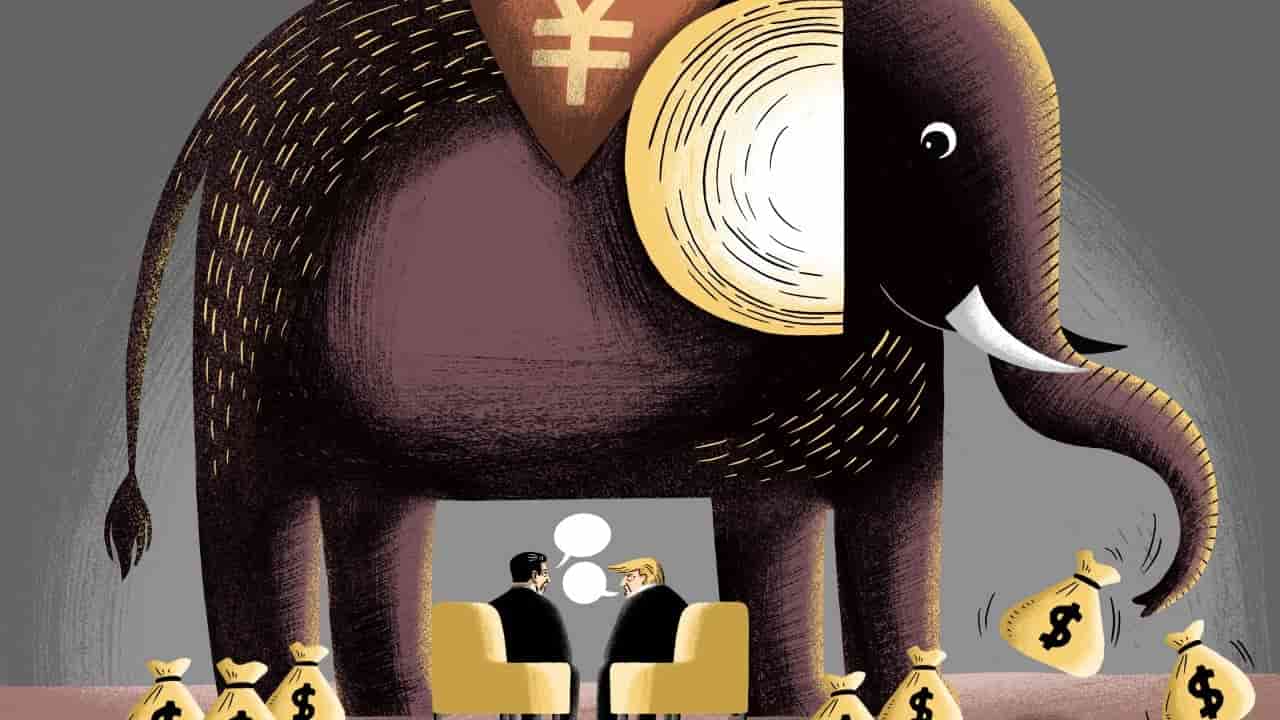
China is gradually reducing its exposure to U.S. Treasury debt, a move that could have significant implications for global financial markets. While President Xi Jinping and U.S. President Donald Trump discussed tariffs, agricultural quotas, and critical minerals at a recent summit, the "elephant in the room" was China's ongoing diversification away from dollar assets.
Beijing's reported holdings of U.S. Treasuries fell to $618 billion in July, the lowest level since 2008, a stark contrast to the peak of over $1.3 trillion in 2013. This shift is influenced by China's desire to hedge against potential U.S. sanctions, a lesson learned from the immobilization of Russian reserves. Policymakers are considering the financial and political vulnerabilities of holding such assets.
President Xi Jinping has publicly stated his ambition for the renminbi to become a "powerful currency" and potentially replace the dollar as the global reserve currency. While the renminbi currently accounts for less than 2% of global reserves compared to the dollar's 57%, the dollar's value has declined and its share in central bank reserves is at a two-decade low. Factors contributing to this include U.S. tariffs, foreign policy, and domestic polarization, creating uncertainty around the dollar's dominance.