Key facts
- China showcased dancing robots at National Day events in Angola and Congo.
- Humanoid robotics integrates AI, machine perception, sensors, and advanced manufacturing.
- China's military is exploring humanoid robots for reconnaissance, logistics, and hazardous environments.
- Chinese manufacturers supplied about 95% of global humanoid-robot shipments in 2025.
- Africa imports significant arms from China, the US, Russia, and France.
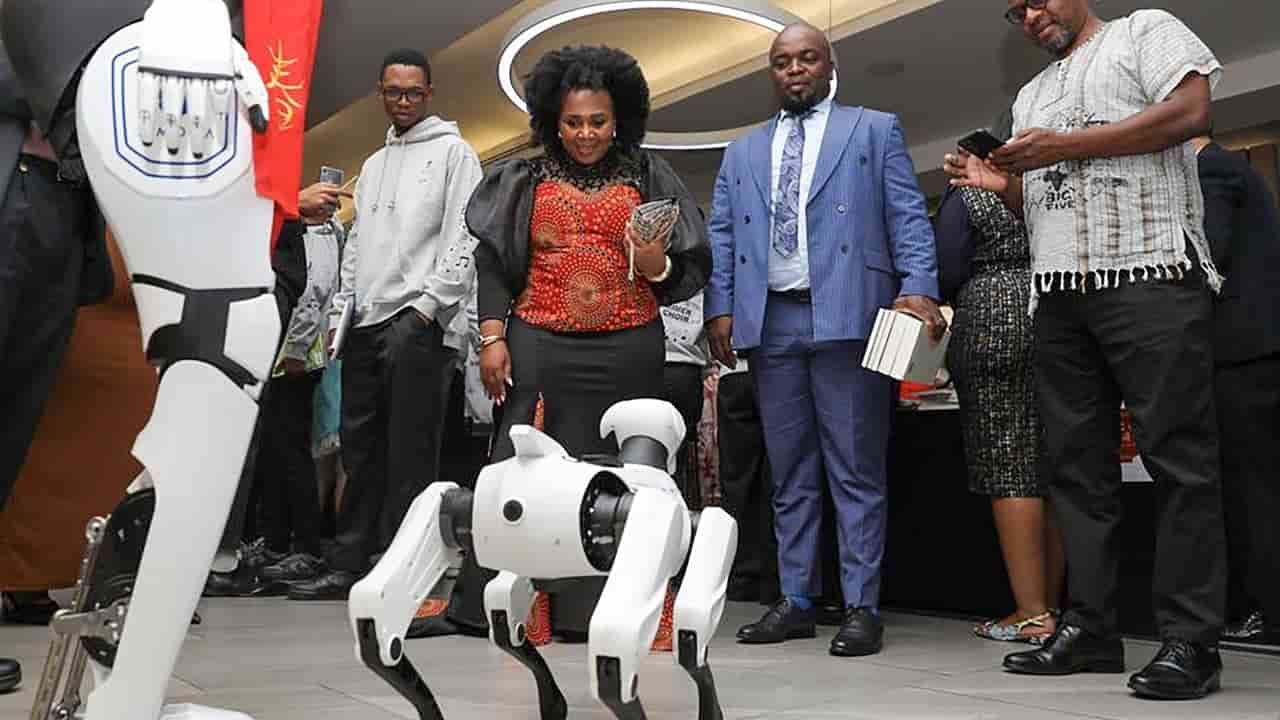
China's recent National Day celebrations across Africa, including events in Luanda, Angola, and Brazzaville, Congo, featured advanced robotics as a form of entertainment. Dancing robots and robot dogs amused guests, with Angolan ambassador Zhang Bin highlighting the industry as a reflection of China's economic shift towards innovation and higher-quality development.
Beyond their entertainment value, these humanoid robots represent a dual-use technology with significant implications for African nations. The convergence of artificial intelligence, machine perception, sensors, and advanced manufacturing within these systems means they can be developed for civilian purposes and subsequently adapted for military applications. This rapid transition from commercial to military relevance is a key concern for African policymakers, who already operate within global technology and defense supply chains dominated by external suppliers, including China.
China's military interest in humanoid robots is substantial, with research focusing on applications such as reconnaissance, logistics, hazardous environments, and urban operations. While armed humanoid robots have not been deployed with active PLA units, and technical constraints like energy consumption remain, China's vast commercial robotics ecosystem provides a strong industrial base for military development. Chinese manufacturers accounted for approximately 95% of global humanoid-robot shipments in 2025, according to BofA Global Research figures cited by Reuters.
Africa's existing technological and defense dependence is exacerbated by this trend. Data from SIPRI indicates that the US, China, Russia, and France collectively supplied nearly 60% of Africa's major arms imports between 2021 and 2025. The emergence of humanoid robots as potential logistics, inspection, industrial, or disaster-response systems entering the African market means that the next generation of military-relevant technologies may bypass traditional defense procurement channels, further complicating governance and security for African states.