Key facts
- China's C919 passenger jet completed its first scheduled international commercial flight on August 12.
- The flight landed in Ulaanbaatar, Mongolia.
- The C919 is manufactured by China's Commercial Aircraft Corporation of China (Comac).
- The aircraft has been flying on domestic routes since 2023.
- This flight marks the C919's entry into regular international commercial passenger operations.
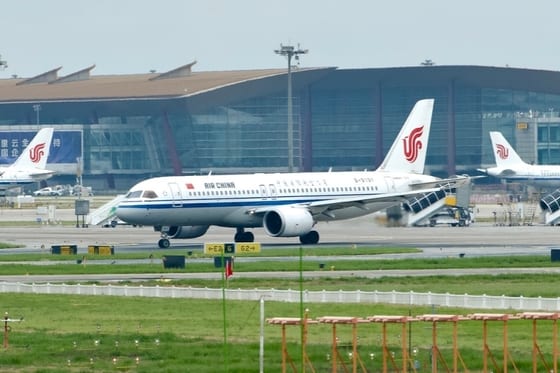
China's C919 passenger jet completed its first scheduled international commercial flight on August 12, landing in Ulaanbaatar, Mongolia. This inaugural overseas service marks a significant milestone for Commercial Aircraft Corp. of China Ltd. (COMAC) as it aims to expand the narrow-body jet's international presence and build an operating record.
The aircraft departed from Beijing Capital International Airport and was met with a water salute ceremony upon arrival at the new Ulaanbaatar airport. Passengers were greeted with traditional Mongolian performances. This flight signifies the C919's official transition into regular international commercial passenger operations, having successfully passed the verification of bilateral international civil aviation operating standards. The route, operated under flight numbers CA723/CA724, will feature daily scheduled flights connecting Beijing and Ulaanbaatar. The C919 has previously operated successfully on domestic routes, gaining market recognition for its performance, cabin comfort, and safety standards.
Despite this milestone, analysts suggest it will take generations for Chinese aircraft to meaningfully challenge the global dominance of Boeing and Airbus. The C919, similar in size to the Boeing 737, is manufactured by the state-owned COMAC. While it has flown domestically since 2023, Wednesday's flight to Ulaanbaatar represents its first commercial international route. Experts note that the plane is years overdue, relies on Western components, and is less efficient than its counterparts. A 2020 analysis indicated that over half of the C919's suppliers were in the US. Building large passenger jets is significantly more complex than producing electric vehicles, requiring advanced science, engineering, and global supply chain coordination.
COMAC reportedly delivered only 15 C919 units last year, falling short of its target. The aircraft has not yet received approval from European or American regulators. The US has previously suspended exports of certain products to COMAC for use in the C919 amid trade restrictions. China views developing its own commercial aircraft as a national security priority, but experts emphasize there is still a long road to commercial success and building international trust. Some argue it is misleading to call the C919 a Chinese plane due to its imported parts, with a low likelihood of COMAC becoming a serious challenger to Boeing and Airbus even in the distant future.