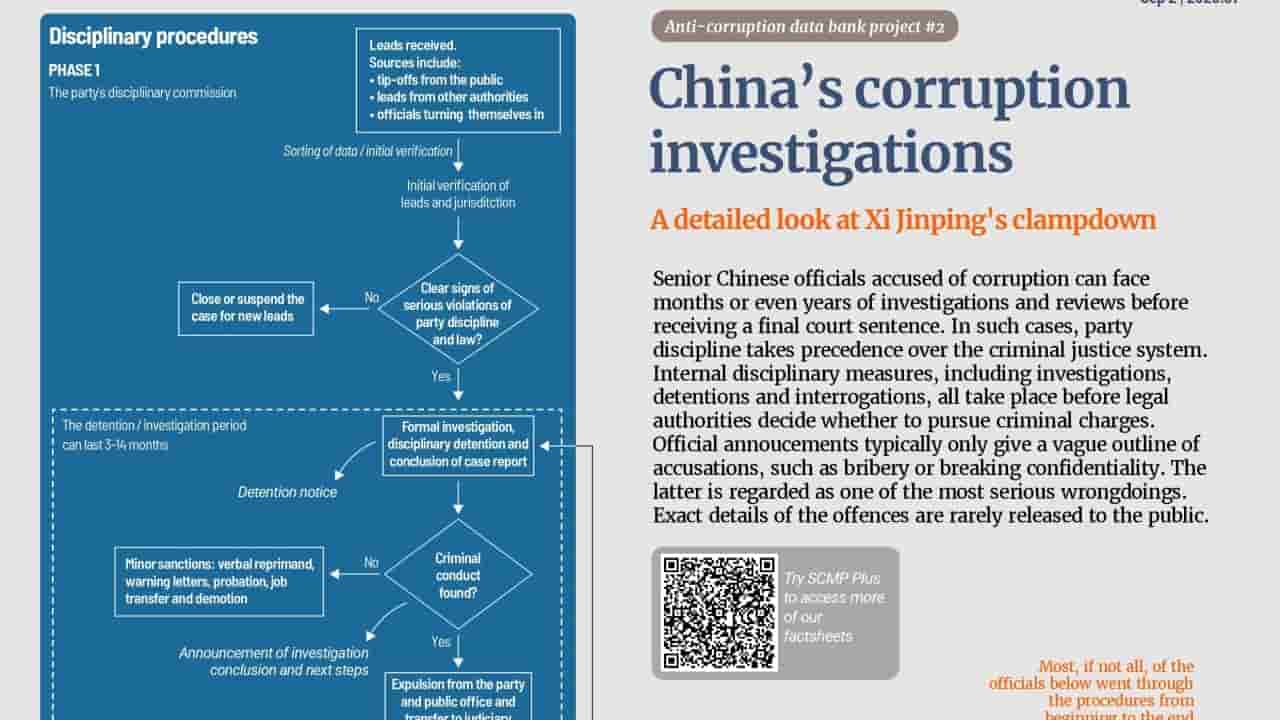
Key facts
- China's revised Supervision Law, effective June 1, 2025, grants expanded powers to supervisory commissions.
- The revised Anti-Unfair Competition Law, effective October 15, 2025, increases penalties for bribery.
- In 2025, over 1 million investigations were launched into government officials for corruption.
- Thousands were prosecuted for providing bribes, with a 7.6% year-on-year increase in prosecutions.
- Over 430 cases of severe violations were transferred for further investigation and prosecution.
China's anti-corruption efforts continued with significant legislative and enforcement actions throughout 2025. The revised Supervision Law, effective June 1, 2025, strengthened the authority of government supervisory commissions, which regulate the conduct of public officials and state-owned enterprise (SOE) managers. This law also introduced measures such as restricting individuals' movement for up to 24 hours to ensure cooperation with investigations, while also emphasizing the protection of enterprises' property rights.
Further bolstering the anti-corruption framework, the revised Anti-Unfair Competition Law (AUCL) took effect on October 15, 2025. Enforced by the Administration for Market Regulation, the AUCL now places greater emphasis on punishing both the payor and payee of bribes, increases maximum fines, and expands individual liability for corporate personnel involved in bribery.
Enforcement statistics underscore the intensified campaign. Data from the Central Commission for Discipline Inspection (CCDI) revealed that over 1 million investigations were initiated into government officials for corruption-related issues in 2025. Additionally, from January to November 2025, the Supreme People's Procuratorate (SPP) prosecuted 2,982 individuals for providing bribes, marking a 7.6% increase from the previous year. This reflects a continued focus on penalizing both sides of corrupt transactions.
In December 2025, the National Audit Office released a report detailing the remediation of issues identified in the previous year's audit of central budget execution. This report highlighted that over 430 cases of severe violations of disciplinary regulations and laws had been transferred to relevant authorities for further investigation, with corruption and bribery in key sectors like finance, state-owned property management, and public welfare programs being central to these findings.
Model enforcement cases were also published to guide corporate behavior. In July 2025, the Ministry of Public Security (MPC) shared five criminal cases of internal corporate corruption, urging private companies to enhance their internal controls. Subsequently, in November 2025, the Supreme People's Court (SPC) and SPP jointly published six model cases.