Key facts
- Lushun Prison in Dalian, China, has removed most Korean-language labels from its exhibits.
- Korean independence fighter Ahn Jung-geun was executed at the prison in 1910.
- South Korean tour guides are reportedly no longer permitted to provide commentaries.
- A new Chinese law on ethnic unity and progress may be influencing historical narratives.
- The prison reopened in late April following renovation work.
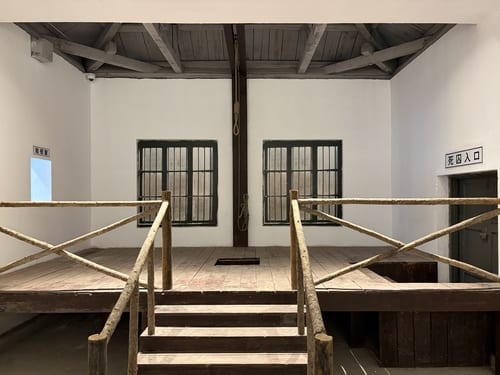
Lushun Prison in Dalian, China, has reportedly scaled back the prominence of Korean independence fighters in its exhibits, removing most Korean-language labels and barring South Korean narrators from providing commentaries. This change follows the prison's reopening in late April after renovations.
Ahn Jung-geun, a revered Korean independence fighter executed at the prison in 1910 for assassinating Japan's first resident-general in Korea, Ito Hirobumi, is featured in a special exhibit. Previously, the prison offered exhibit labels in both Chinese and Korean. However, most Korean labels have been removed.
Experts cautiously suggest that China's new law on ethnic unity and progress, which came into effect on July 1, may be influencing the shift. This law aims to strengthen a sense of community among all Chinese people and allows authorities to hold external actors accountable for undermining ethnic unity. Kang Jun-young, a professor at Hankuk University of Foreign Studies, believes the law certainly had an impact, stating that locations relevant to the Korean race could be subject to the law if their narrative conflicts with China's national unity or interests.
However, Kim Wol-bae, a professor at the Harbin Institute of Technology who researches Ahn, sees no direct link, attributing the measures to internal museum guidelines. He noted that Korean guides can still provide commentaries after official registration and approval.
Park Hwan, a historian and former professor, expressed surprise and disappointment at not being allowed to provide narrations to students during a recent tour program. A 17-year-old student participant also voiced disappointment over the lack of Korean information at the prison where Ahn was incarcerated.