All NewsEducationTVBrokers
Equities & FundsCrypto & Digital AssetsAI & TechnologyBusiness & CorporateUS Politics & PolicyGeopolitics & Global RiskMacro, Rates & FXCommodities & EnergyEuropean Politics & MarketsAsia-PacificReal Estate & Property
All NewsHome
← Back to US Politics & Policy

Canadians struggle to avoid US goods amid trade war

Created at 31 Aug · 12:11 PM1 source↑ Market-relevant
IN SHORT

Some Canadians are attempting to boycott American products due to the escalating US-Canada trade war, but finding suitable local alternatives proves challenging and often more expensive. The trade dispute, marked by retaliatory tariffs, has prompted businesses to label Canadian goods more clearly.

Key Numbers

50%US tariff on Canadian goods
$20 billionvalue of Canadian goods targeted by US tariffs
February 2025start of new US tariffs
spring 2025Canadian businesses began labeling products

Who's Involved

Donald Trump
US President imposing tariffs
Sarah Chudleigh
Montreal content marketer prioritizing Canadian goods
Alice Wu
Senior PR associate who shifted to local shopping
Emilie Brillon
Travel blogger focusing on domestic Canadian travel
Canadians struggle to avoid US goods amid trade war

↳ Why This Matters

The US-Canada trade war is impacting consumer choices and business practices, highlighting the difficulties and costs associated with prioritizing domestic goods over imported ones. This trend reflects broader geopolitical tensions influencing everyday purchasing decisions.

Key facts

  • US imposed 50% tariffs on approximately $20 billion in Canadian goods in February 2025.
  • Canada responded with 'dollar-for-dollar' retaliatory tariffs.
  • Canadian businesses started using 'Made in Canada' labels in spring 2025 to encourage local purchasing.
  • Consumers find it difficult to find direct replacements for many US products.
  • Choosing local alternatives can be more expensive and requires effort.
  • Some Canadians are shifting travel focus from the US to domestic destinations.

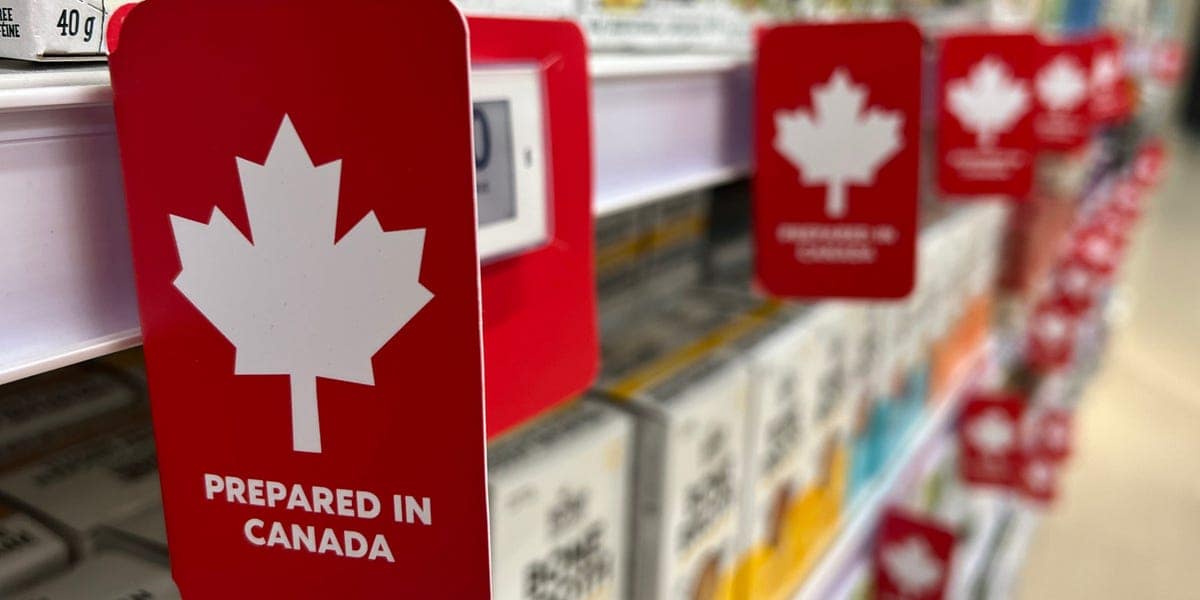
As the trade dispute between the United States and Canada intensifies, some Canadian consumers are making a conscious effort to reduce their reliance on American products. This shift, prompted by escalating tariffs and a desire to support domestic businesses, presents significant challenges. Canadian businesses have responded by prominently displaying 'Made in Canada' labels, encouraging shoppers to seek out local alternatives.

However, consumers like Sarah Chudleigh in Montreal note that direct swaps for familiar American goods are not always available. While she has discovered Canadian brands such as Ungava Gin and Romeo's Gin, she still prefers some American produce, like oranges, for quality and proximity. The effort to find and purchase local alternatives often comes at a higher price point.

Alice Wu, a senior PR associate, began shopping more locally in early 2025 and found it opened up new experiences, leading her to discover more local vendors and farms. She noted that seasonal produce, like peaches from her local farmers market, tastes fresher and costs less than imported US versions. While some substitutions, like switching from General Mills cereal to Canadian Nature's Path, have been successful, others, such as replacing Oreos with Dare cookies, required more trial and error.

For some, avoiding American influence extends beyond shopping. Travel blogger Emilie Brillon, who previously focused on international travel including the US, has shifted her business to promote domestic travel within Canada. She now documents family road trips across the country and has updated her website to a Canadian domain, highlighting the diversity within Canada itself.

Frequently asked questions

The trade war officially began in March 2025, with significant escalations occurring in February 2025.

Challenges include the lack of direct product substitutions, higher costs for local alternatives, and the effort required to find and purchase them.

Some Canadian businesses are promoting locally made products and using 'Made in Canada' labels to encourage consumers to choose domestic goods.

What Happens Next

01Further escalations in US-Canada trade tariffs are possible.
02More Canadian businesses may adopt 'Made in Canada' labeling.

How It Developed

The US-Canada trade war escalated in February 2025 with 50% tariffs on Canadian goods.
Canada enacted retaliatory tariffs in response to US tariffs.
Canadian businesses began labeling products as 'Made in Canada' in spring 2025.
Some Canadian consumers are prioritizing local products and seeking alternatives to US goods.
Consumers report difficulty finding direct swaps for familiar American products.
Shopping locally can be more expensive and requires effort to find suitable alternatives.
Some Canadians are also reducing US travel and focusing on domestic tourism.

Sources

T1
What it takes to live an America-free lifestyle in Canada. Spoiler: It's not easy.Business Insider

Related Stories

US-Canada trade dispute impacts provinces, swing states
31 Aug · 12:16 AM
Toyota, Honda Face Tariffs on Canadian-Built Cars
30 Aug · 4:06 PM
Trump pushes Apple to rename Lake Ontario 'Lake America' amid trade dispute
30 Aug · 2:51 PM
US Officials Warn of Security, Economic Risks From Chinese EVs
31 Aug · 9:11 AM
Arkansas Farmer Turned Senate Candidate Bets on Farm Woes to Flip Red State
31 Aug · 11:48 AM