Key facts
- Brent crude futures surged to over $108 a barrel on September 10, 2026.
- Houthi forces seized the Yemeni port city of Mokha, threatening the Bab al-Mandeb Strait.
- The Strait of Hormuz is also under strain due to US-Iran conflict.
- This marks the first time both chokepoints face simultaneous, credible physical pressure.
- US diesel prices climbed to a record $6.23 per gallon.
- Saudi Arabia's crude oil production fell by 1.9 million barrels a day in August 2026.
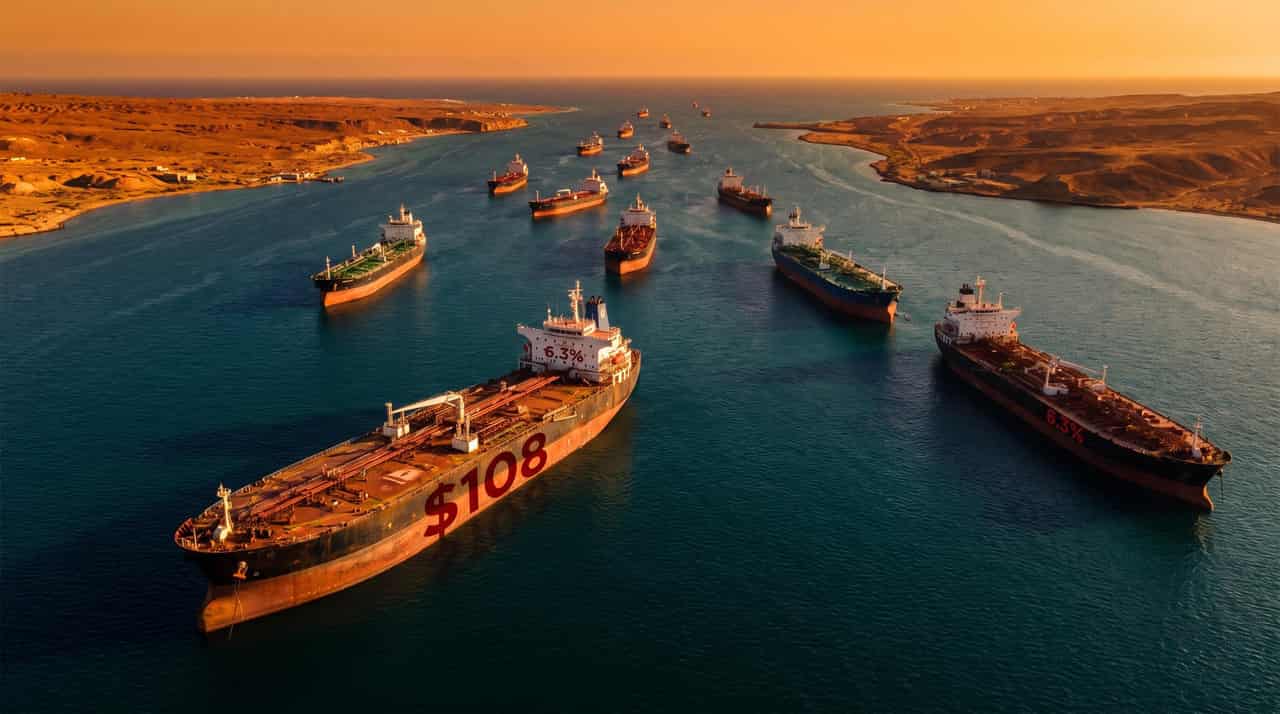
Brent crude futures surged past $108 a barrel on September 10, 2026, as escalating Middle East hostilities intensified concerns over global crude supplies. The price jump was driven by Houthi forces seizing the Yemeni port city of Mokha, positioning them within 75 kilometers of the Bab al-Mandeb Strait, a critical maritime corridor through which approximately 4-6 million barrels of oil and gas move daily. This move, coupled with ongoing tensions around the Strait of Hormuz, through which about 21 million barrels of oil and gas pass daily, marks the first time both chokepoints face simultaneous, credible physical pressure.
The market's reaction shifted from pricing a geopolitical risk premium to a credible physical supply delivery threat, as shipping operators began changing their behavior. Brent crude touched an intraday high of $108.65 before settling at $107.63, while West Texas Intermediate (WTI) closed at $102.48, a 6.7% gain. US diesel prices also climbed to a record $6.23 per gallon.
Saudi Arabia's crude oil production fell by around 1.9 million barrels a day in August 2026, reaching its lowest level since 1990. The US reported hitting 10 Iranian tankers, while Iran claimed strikes on US warships and tankers in the Persian Gulf. US crude inventories fell by 300,000 barrels in the week ended September 4th.
President Donald Trump has stated he is not pursuing negotiations with Iran, expecting elevated prices to persist through the November midterm elections. This stance is part of the administration's "maximum pressure" campaign aimed at reducing Iranian oil exports. With both sides declining to engage, diplomatic channels for de-escalation appear closed.