Key facts
- U.S. Treasury Secretary Scott Bessent predicts the Strait of Hormuz will be a "worthless piece of water" in two years.
- Bessent attributes this shift to oil being transported via land-based pipelines.
- Gulf producers are accelerating pipeline buildouts to bypass the Strait of Hormuz.
- Saudi Arabia utilizes its East-West pipeline to the Red Sea.
- The UAE plans to expand Fujairah export capacity.
- Iraq and Kuwait are also pursuing pipeline routes to bypass the Strait of Hormuz.
- Bessent indicated airlines, the maritime industry, and digital assets could be targets in efforts to pressure Iran's economy.
- Bessent warned against supporting Iran, stating it prolongs the conflict.
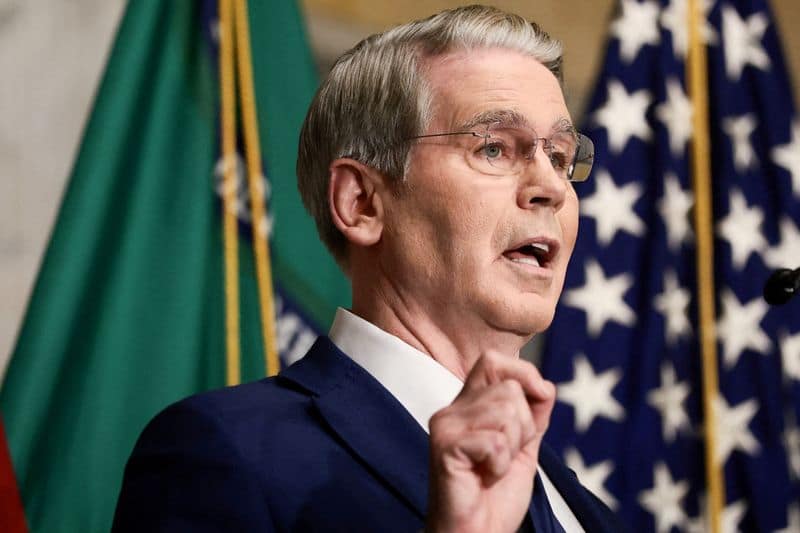
U.S. Treasury Secretary Scott Bessent has predicted that the Strait of Hormuz will become a "worthless piece of water" within two years, as Gulf oil producers increasingly rely on pipelines to bypass the critical shipping lane. Bessent made these remarks during a discussion with Larry Kudlow at the G20 financial meetings.
Gulf producers are accelerating pipeline construction to circumvent the Strait of Hormuz. Saudi Arabia has already demonstrated this capability by channeling approximately 7 million barrels per day through its East-West pipeline to the Red Sea during previous Hormuz shutdowns, using Yanbu as an alternative export point. The United Arab Emirates' ADNOC plans to expand its export capacity through Fujairah, which is located outside the Strait, from 1.8 million barrels per day to 3.6 million barrels per day with its West-East 1 Pipeline project, expected to be operational in 2027.
Iraq is also exploring pipeline options, including a potential $15 billion project through Syria to the Mediterranean that could take four years to build, as well as repairs to an older Syrian pipeline and increased shipments via the Kirkuk-Ceyhan system into Turkey. Kuwait has also discussed integrating its oil infrastructure with Saudi Arabia and the UAE to gain access to ports like Fujairah or Red Sea terminals. Japan, a significant importer of Middle Eastern crude, has agreed to financially participate in these Gulf pipeline projects.
Bessent also stated that airlines, the maritime industry, and digital assets could be possible targets as the U.S. administration continues its efforts to squeeze Iran's economy. He warned "everyone" against backing Tehran, stating that "the fastest way for the conflict to end is for no one to provide any support to this regime." Bessent added that the administration could also target airline leasing companies and that more Iran bank sanctions could come this week.