Key facts
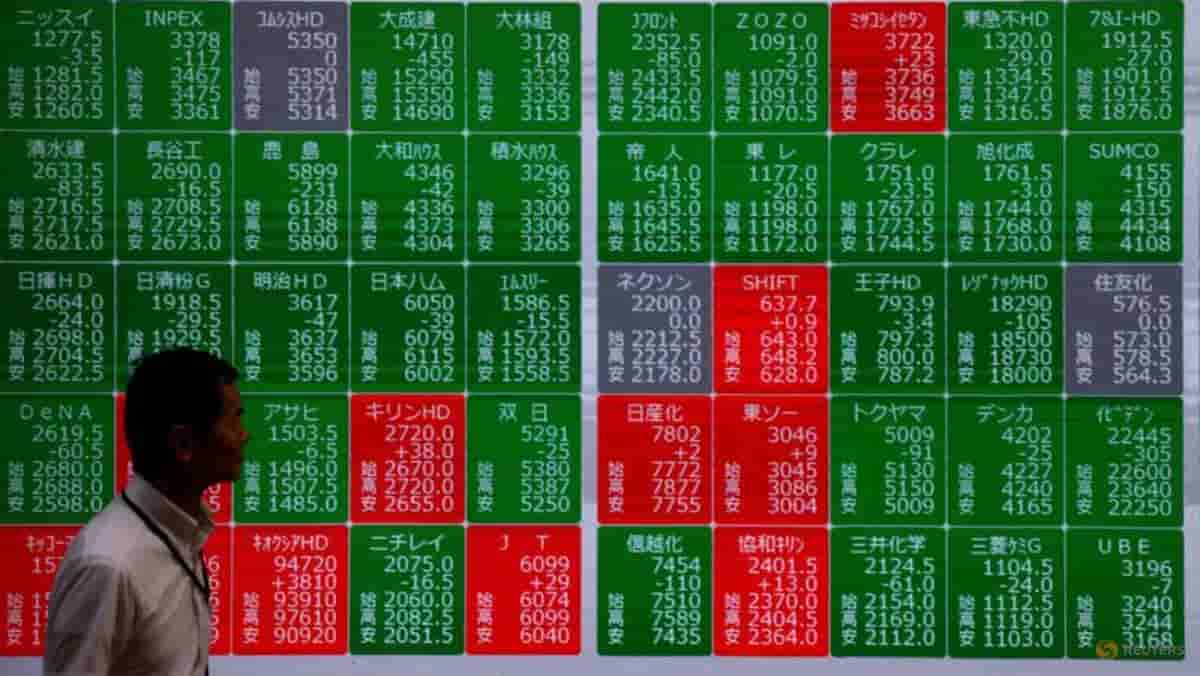
- Asian stock markets edged higher on Monday, driven by chipmakers.
- Oil prices eased due to reports of increased Middle Eastern supply.
- US 2-year Treasury yields rose to 4.7604% amid hawkish Federal Reserve guidance.
- Investors are wary of potential Bank of Japan intervention in currency markets.
- Brent crude fell 2.1% to $101.63 a barrel, and US crude dropped 2.1% to $98.15.
Asian share markets edged higher on Monday, with technology stocks, particularly chipmakers, leading the gains due to sustained demand driven by artificial intelligence. Oil prices eased as reports indicated a greater flow of supply from the Middle East than previously anticipated, despite ongoing conflict in the Gulf. Trade volumes were thin as Japan observed its Silver Week holiday.
Investors remained cautious about potential intervention by the Bank of Japan in currency markets, especially given the dollar's position at 156.67 yen. The yen had previously jumped after Japanese authorities conducted rate checks, according to Nikkei newspaper.
Bond markets showed tension following a significant sell-off that pushed US 2-year Treasury yields up by 36 basis points over two weeks to 4.7604%, levels not seen since mid-2024. Hawkish guidance from the Federal Reserve has led to expectations of a 56% chance of another rate hike in October, with a year-end increase considered likely. Analysts at BofA noted that tightening cycles are typically front-loaded and the Fed is unlikely to stop after a single hike, citing strong consumer spending as a reason for the Fed to restrain demand.
Central banks in the EU, UK, Japan, Australia, and New Zealand are also expected to tighten policy by year-end. Policy meetings are scheduled for the Swiss National Bank, Sweden's Riksbank, and Norges Bank on Thursday, with no immediate policy changes anticipated.
Concerns over deficits have also impacted bond markets, with the risk premium on French debt widening significantly. German debt could face pressure after the conservative party's poor election results. The euro remained flat against the dollar at $1.1480 after a notable decline the previous week.
Oil prices fell despite new threats exchanged between Iran and the United States, and a Houthi attack on Saudi Arabia's capital. Brent crude decreased by 2.1% to $101.63 a barrel, and US crude dropped by 2.1% to $98.15. Data from Kpler indicated that Saudi Arabian exports had recovered to over 4 million barrels per day in September, a significant increase from August. Reports also suggested Saudi Arabia aimed to quickly restart flows through its east-to-west pipeline. Vivek Dhar, head of commodities at CBA, noted that the pipeline closure has materially altered the oil market, potentially depleting global inventories in 5 to 10 weeks, which could increase pressure on Washington to negotiate with Iran. US President Donald Trump is scheduled to attend the United Nations General Assembly this week, ahead of a meeting with Chinese President Xi Jinping.