Key facts
- Asian stocks rebounded on Thursday after a sharp sell-off driven by oil price spikes.
- The MSCI's broadest index of Asia-Pacific shares outside Japan fell 4.2% on March 4.
- Brent crude oil prices eased to $81.40 after briefly exceeding $84.
- Higher oil prices raise concerns about inflation and could delay Federal Reserve easing.
- The U.S. is forecast to pump a near-record 13.6 million barrels of crude oil per day in 2026.
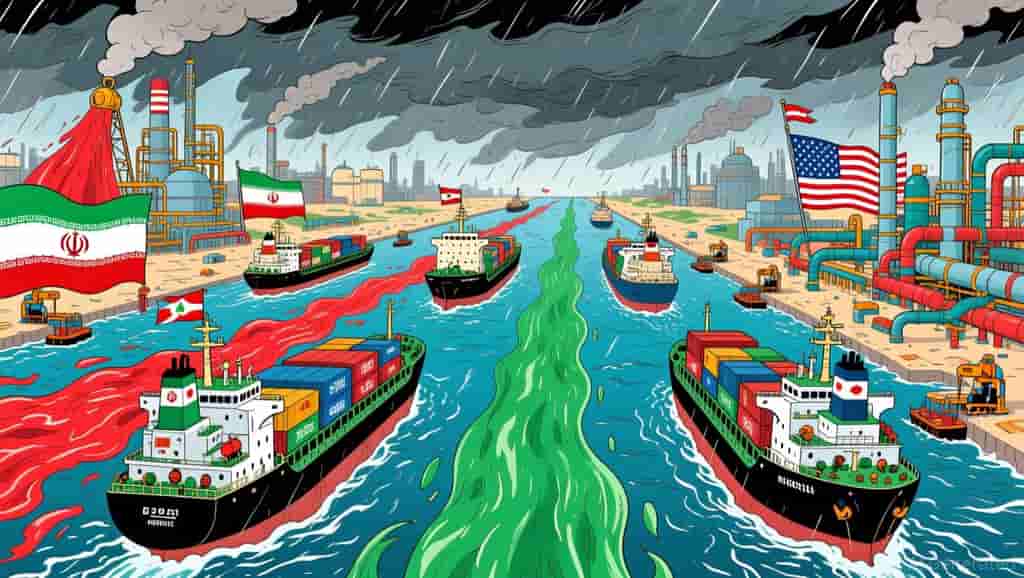
- Disruptions to the Strait of Hormuz, through which about 20% of the world's oil flows, pose a significant supply risk.
Asian stocks rebounded on Thursday, recovering from a sharp sell-off earlier in the week that was triggered by fears of a Middle East oil shock. The MSCI's broadest index of Asia-Pacific shares outside Japan fell 4.2% on March 4, with the Korean benchmark experiencing a significant decline. This broad risk-off move was attributed to foreign outflows from crowded tech positions and a rapid de-risking from high-beta names.
The immediate catalyst for the market's reversal was a moderation in oil prices. Brent crude settled at $81.40 a barrel after briefly topping $84, providing an immediate reason for a global risk-on shift that lifted Asian bourses and Wall Street.
However, the episode highlighted the market's sensitivity to energy price shocks. For oil-importing economies like South Korea and Japan, rising crude prices directly threaten inflation resilience and could delay monetary policy easing by the Federal Reserve. This dynamic creates a headwind for cyclical and tech stocks. The recent sell-off was seen as a bet on delayed rate cuts as much as a reaction to geopolitical risk.
The U.S., as the world's largest crude producer, has a significant supply cushion, forecast to pump a near-record 13.6 million barrels per day in 2026. This capacity can offset Middle East disruptions by incentivizing U.S. shale producers to increase output when prices are high. However, this cushion is not absolute, as prices are ultimately set by the most constrained supply. The Strait of Hormuz, through which about 20% of the world's oil flows, remains a critical chokepoint. Prolonged disruptions there, as demonstrated by recent events involving Iran, can create tangible supply shocks that the U.S. cannot instantly replace, leading to global price surges.
Sustained high oil prices act as a broad-based tax on the global economy, impacting corporate earnings and global growth. For net oil importers, this directly threatens inflation resilience and the timing of monetary policy easing, which was a key driver of the recent market sell-off.