
Key facts
- Asian markets were slightly weaker on Wednesday, with MSCI's broadest index of Asia-Pacific shares excluding Japan down 0.3%.
- US stocks touched new highs, with the S&P 500 up about 0.6% and the Nasdaq gaining 0.45% on Tuesday.
- Oil prices rose as investors weighed supply constraints from a storm and Houthi attacks against increased Middle East crude supplies.
- US crude oil rose 1.05% to $90.38 a barrel, and Brent crude rose 1.06% to $101.65 per barrel.
- Ten-year US Treasuries rose back to 5.3% in Asian morning trade.
- The dollar index rose 0.03% to 101.94.
Asian markets traded lower on Wednesday, despite US stocks reaching new record highs, as oil prices climbed due to a storm approaching the Gulf of Mexico and heightened tensions between Saudi Arabia and Yemen's Iran-backed Houthis. The MSCI's broadest index of Asia-Pacific shares excluding Japan fell 0.3%, though it remains up 1.5% for the month.
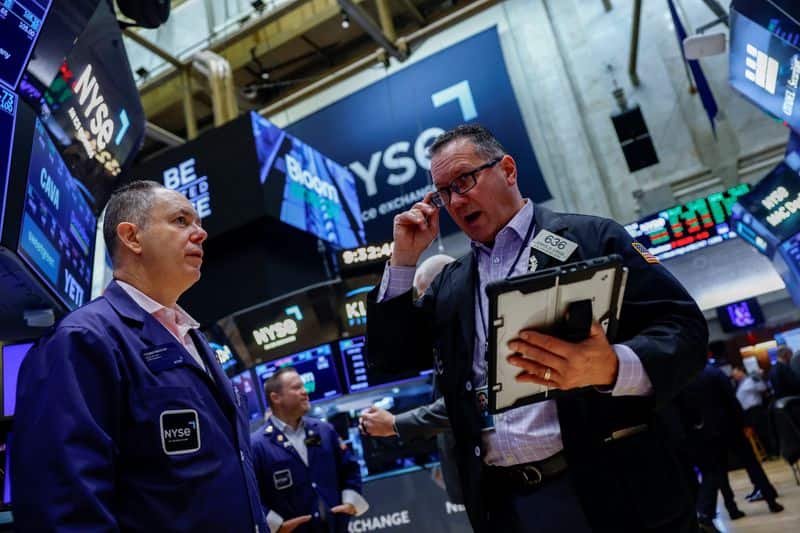
US equities had closed higher on Tuesday, with the S&P 500 up 0.6%, the Nasdaq gaining 0.45%, and the Dow Jones Industrial Average rising 0.5%. This positive sentiment followed a stabilization in global bond yields.
Oil prices saw an increase, with US crude up 1.05% to $90.38 a barrel and Brent crude up 1.06% to $101.65 per barrel. Investors were considering supply constraints from the storm and Houthi attacks against increased Middle East crude supplies. Vitol CEO Russell Hardy noted that significant volumes of crude oil and refined products have recently departed the Middle East.
In European debt markets, French yields fell more than 11 basis points, and the spread between French OATs and German bunds narrowed to 132 basis points, after far-right presidential candidate Marine Le Pen pledged spending cuts. Analysts noted that higher yields are making investors less tolerant of fiscal vulnerabilities. This helped the euro recover slightly to just above $1.1250, with French, Italian, and Greek bonds outperforming.
Ten-year US Treasuries rose back to 5.3% in Asian trading, with longer-dated yields edging higher ahead of upcoming auctions. US longer-dated yields had reached a 24-year high earlier in the week due to inflation and debt concerns.
Australian shares were flat, while Japan's Nikkei stock index fell 0.86%. Hong Kong's Hang Seng Index was down 0.63%, influenced by a 4% decline in its biotech index. Mainland China's financial markets were closed for a holiday.
The dollar index increased by 0.03% to 101.94, while the Japanese yen weakened 0.19% to 158.43 per dollar, and sterling dipped 0.08% to $1.3262. Analysts attributed the pressure on the dollar to the stabilization in oil prices, the euro's recovery, and shifts in US Treasury yields.
Traders have reduced expectations for a Federal Reserve rate increase this month to 19%, down from about 50% a week prior. The Fed is set to release minutes from its September policy meeting.