Key facts
- A federal appeals court rejected the Trump administration's bid to keep a $100,000 fee on new H-1B visas in place.
- The 1st US Circuit Court of Appeals declined to pause a lower court ruling that blocked the fee.
- The court found the government failed to demonstrate it was likely to succeed in arguing the president had the authority to impose the charge.
- US District Judge Leo Sorokin previously ruled the fee was a tax, which requires congressional authorization.
- The H-1B program issues around 65,000 visas annually, plus 20,000 for advanced degrees.
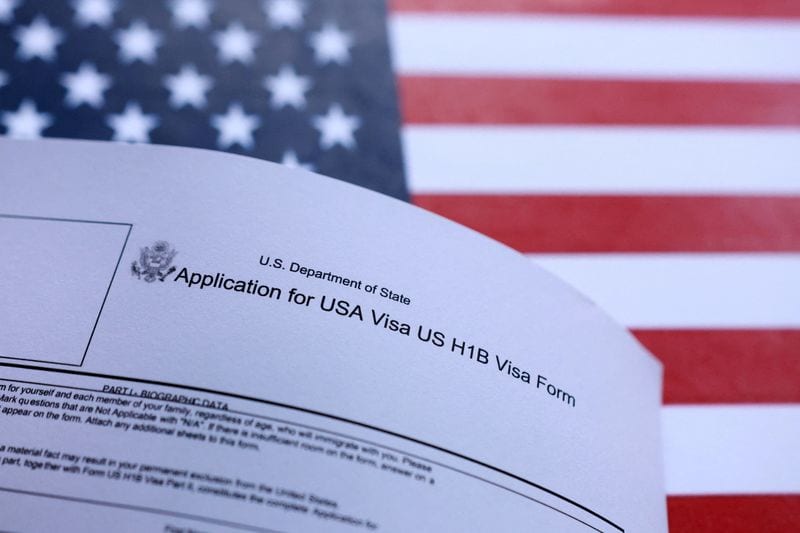
A federal appeals court has rejected the Trump administration's attempt to reinstate a $100,000 fee on new H-1B work visas, marking another legal obstacle for the administration's immigration policies.
The Boston-based 1st US Circuit Court of Appeals declined to pause a lower court's ruling that blocked the fee while the administration pursued an appeal. A three-judge panel determined that the government had not sufficiently demonstrated it was likely to prevail in its argument that the president possessed the authority to levy such a charge.
This decision upholds a June ruling by US District Judge Leo Sorokin, who concluded that the fee constituted a tax, an authority reserved for Congress. Sorokin stated, "Here, the substance and application of the $100,000 payment reveal that it is a tax, regardless of what the payment is called."
President Trump had announced the fee in September 2025 as part of a broader immigration crackdown, asserting that the H-1B program was being exploited to replace American workers with cheaper, less-skilled labor. Brian Hunt, an immigration policy lawyer, noted that the impact on individuals might be limited as many H-1B workers are already in the U.S., though some job offers previously at risk may now proceed.
The H-1B program typically issues about 65,000 visas annually, with an additional 20,000 for those with advanced degrees, and is a key route for tech companies to hire international talent. Prior to this policy, employers generally paid between $2,000 and $5,000 in visa-related fees. Court filings indicated a sharp reduction in demand for the visas following the fee increase, with US Citizenship and Immigration Services receiving minimal payments by mid-February. The lawsuit challenging the fee was initiated by 20 Democratic state attorneys general.