Key facts
- Amazon operates over 1 million robots in its warehouses.
- Amazon employs more than 1.5 million human workers.
- Amazon plans to more than double its fleet of robotic arms this year.
- The company is building new factories to produce more robots.
- The injury and illness rate in the US warehouse sector is more than double the average across all industries.
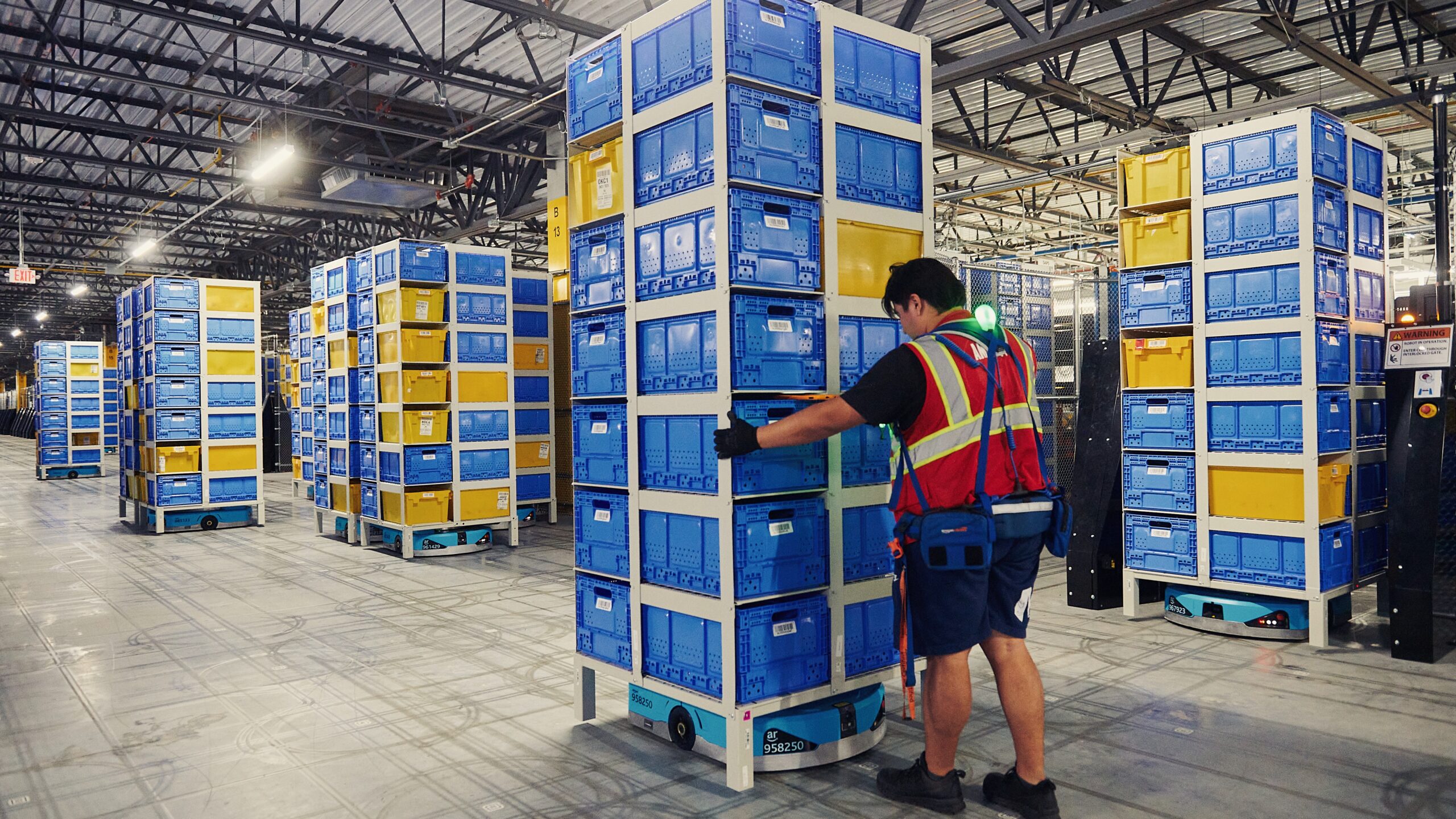
Amazon, the world's second-largest corporate employer, is significantly expanding its fleet of robots, which already number over 1 million and operate around the clock in its warehouses. These robots are crucial for enabling the company's rapid delivery services for its 200 million Prime subscribers.
While Amazon executives state that the growing robot workforce alleviates the physical strain and injury risks for human employees by taking on the most demanding fulfillment center tasks, labor advocacy groups and independent researchers express concerns. They point to evidence suggesting that AI-driven automation in warehouses may not solely benefit human workers, particularly with the rise of collaborative robots that operate in close proximity and can dictate work pace.
Amazon's investment in robotics began with the pivotal acquisition of Kiva Systems in 2012, which pioneered mobile robots that bring inventory to workers. Renamed Amazon Robotics, the division now primarily manufactures robots in-house, with plans to open new production facilities in Texas and Indiana. The company's fleet includes wheeled mobile robots like Sequoia, Hercules, and Titan, as well as the Proteus robot designed to operate safely around humans. Amazon is also deploying an increasing number of robotic arms, such as the Robin and Cardinal systems, to handle individual items and packages.
The company's CFO, Brian Olsavsky, indicated on a July earnings call that Amazon expects to more than double its existing fleet of robotic arms this year. Scott Dresser, vice president of Amazon Robotics, described the current number of deployed robotic arms as being in the single-digit thousands.