Key facts
- Banks and asset managers are scrutinizing community opposition and political concerns when financing U.S. data center projects.
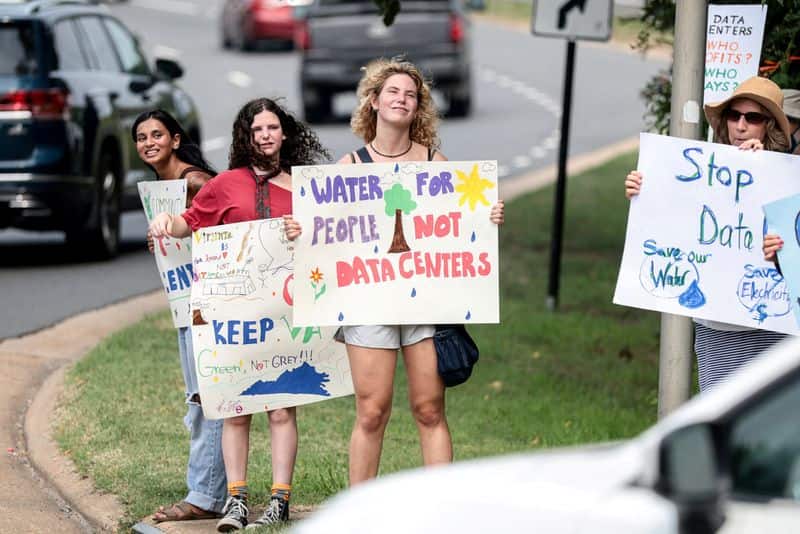
- Data center projects face opposition due to noise, appearance, high power bills, and heavy water use.
- Lenders are concerned about project delays and cancellations stemming from community opposition.
- At least 75 data center projects valued at approximately $130 billion faced local opposition in the first quarter of 2026.
- Major financial institutions like JPMorgan, Morgan Stanley, and Bank of America are involved in advising on and financing these projects.
The rapid expansion of U.S. data centers, driven by demand for cloud storage and AI compute, is introducing new risks for lenders and financiers, primarily stemming from growing political and community opposition.
Banks and asset managers are now conducting more rigorous due diligence, scrutinizing not only the technical and financial viability of projects but also local sentiment, permitting processes, and potential environmental impacts such as noise and water usage. This heightened scrutiny is a response to several projects facing roadblocks, delays, or outright bans in various cities and states.
Senior bankers indicate a preference for projects in regions more amenable to data center development. The significant capital investment required for these facilities means that potential delays or cancellations due to community concerns can lead to wasted time and resources for financiers. Goldman Sachs forecasts that Big Tech companies will spend over $6 trillion on AI through 2030, underscoring the sector's growth potential despite these challenges.
Several high-profile projects are already experiencing this friction. For instance, a $12.3 billion bond sale managed by JPMorgan and Morgan Stanley for a BlackRock-Meta data center in El Paso, Texas, faces local opposition. Similarly, a data center project in Virginia was terminated due to strong local pushback, and another in Illinois is encountering resident opposition. Despite these hurdles, some projects, like a $16 billion data center campus in Michigan, are proceeding.