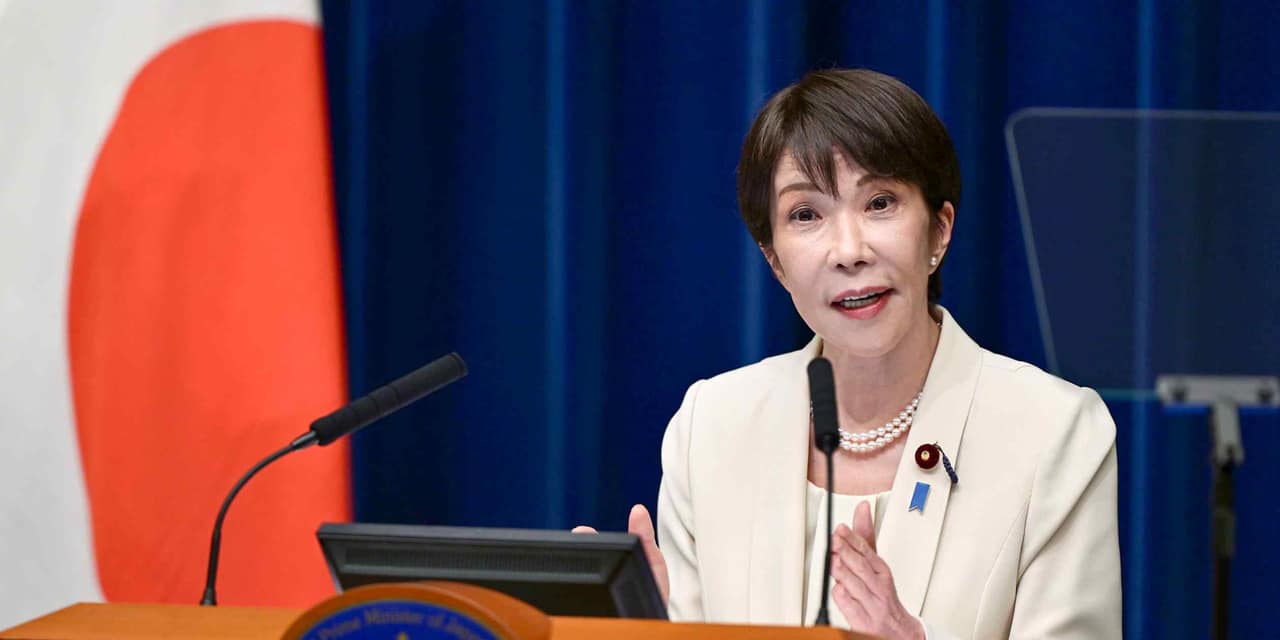
Key facts
- Japanese Prime Minister Sanae Takaichi's cabinet approval rating was 61% in a recent Mainichi Shimbun poll.
- The approval rating had previously dropped significantly in January but recovered after the Feb. 8 House of Representatives election.
- A majority of respondents favored a consumption tax cut, with 76% in favor.
- The Takaichi Cabinet's measures against rising prices were popular, with 44% approving.
- Concerns exist in the domestic bond market about rising interest rates due to potential expansionary fiscal policies.
The domestic bond market is experiencing upward pressure on interest rates due to concerns about expansionary fiscal policies potentially being implemented by Prime Minister Sanae Takaichi's administration to bolster its image amid fluctuating approval ratings. A recent Mainichi Shimbun poll showed Takaichi's Cabinet approval rating at 61%, a 4-point increase from the previous survey, with a disapproval rating of 25%. This recovery follows a significant drop in January but precedes the February 8 House of Representatives election, which the ruling Liberal Democratic Party (LDP) dominated.
Respondents prioritized measures against high prices (72%) and economic measures (48%). A significant majority (76%) favored a consumption tax cut, though 47% stipulated that funding must be secured first. The primary reason for supporting the Cabinet was "high hopes for the prime minister's leadership," cited by 59% of respondents.
An earlier Asahi Shimbun survey indicated an even higher approval rating of 69%, with 44% approving of the Cabinet's measures to combat rising prices. Takaichi's administration plans include abolishing the additional gasoline tax and distributing rice coupons. Her performance at the Japan-U.S. summit also received high marks, with 67% approval.
Despite the recent uptick, the political landscape shows nuances, with 39% of respondents not viewing the LDP's strong electoral performance positively. The election strategy appeared to hinge on voters deciding whether to support Prime Minister Takaichi herself, a strategy that seems to have succeeded in the short term.