Key facts
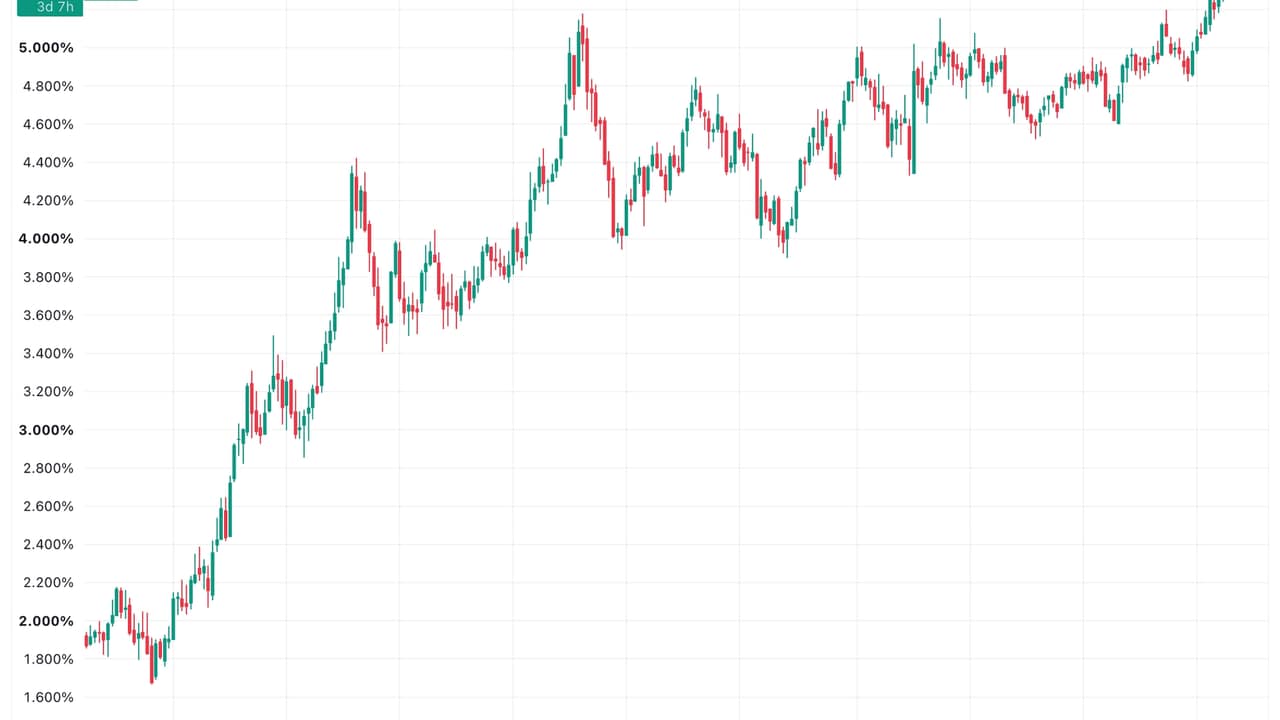
- The 30-year U.S. Treasury yield has climbed to 5.33%, its highest level since 2007.
- U.K. gilt yields are approaching 6%, and French borrowing costs are at their highest since 2008.
- Investors are concerned about debt supply and refinancing risk, particularly for AI infrastructure buildouts.
- Gold has rallied 10% this month, indicating a potential hedge against weakening sovereign credibility.
- Bitcoin has underperformed risk assets and remains in a low-volatility state.
Global bond markets are experiencing a significant sell-off, with long-term government yields surging to levels not seen in decades. The 30-year U.S. Treasury yield has climbed to 5.33%, its highest point since 2007, reflecting growing investor concerns about sovereign finances and a substantial increase in debt issuance. This trend is mirrored in other major economies, with U.K. gilt yields approaching 6% and French borrowing costs reaching their highest since 2008, while Japan's long-term yields continue to set records. The sell-off in bonds, which causes yields to rise as prices fall, has led to an all-time low for the TLT ETF, which tracks long-duration U.S. Treasuries. The rising cost of borrowing is particularly relevant for the technology sector, where hyperscalers are issuing significant amounts of debt to finance AI infrastructure buildouts. Goldman Sachs projects total issuance to reach $400 billion this year, with every basis-point increase in yields raising refinancing costs. While higher bond yields typically make risk assets less attractive, the market's primary concern appears to be shifting from inflation to debt supply and sovereign credibility. Inflation expectations have remained relatively stable. Gold has seen a notable rally of 10% this month, suggesting investors are increasingly viewing the bond sell-off as a sign of waning confidence in government fiscal health. In contrast, Bitcoin, which is often touted as a hedge against such risks, has underperformed for nine months and is currently experiencing a period of low volatility above $64,000, failing to fulfill its potential hedge narrative.