Key facts
- Federal Reserve Chair Kevin Warsh reiterated a firm commitment to the 2% inflation target.
- Warsh stated the central bank would "disappoint" expectations of comfortable inflation above 2%.
- He emphasized the Federal Reserve's long-standing independence.
- Warsh indicated a reluctance to provide forward guidance on monetary policy or economic outlook.
- He suggested a future shift towards using real-time data for policy decisions.
- Warsh acknowledged the potential impact of AI on the job market and economic prosperity.
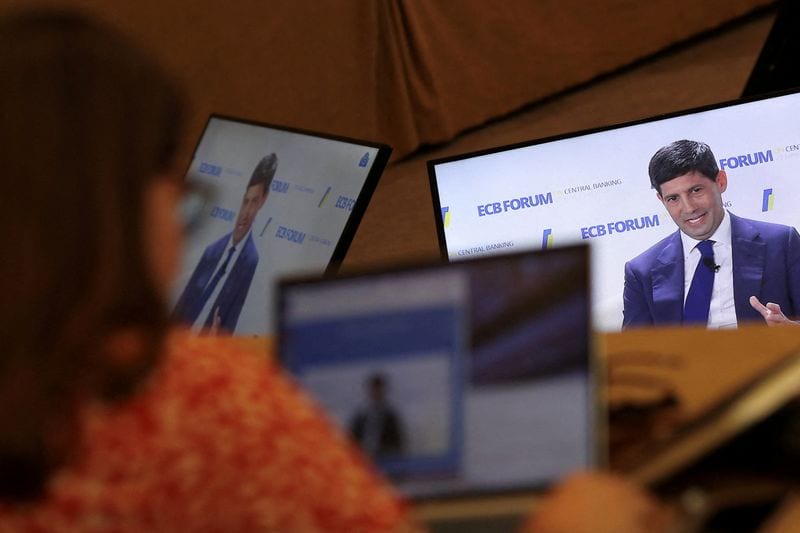
Federal Reserve Chair Kevin Warsh signaled a steadfast commitment to the central bank's 2% inflation target, stating he would "disappoint" any expectations of accommodating higher inflation or loose monetary policy. Speaking at a European Central Bank panel in Sintra, Portugal, Warsh emphasized the Fed's independence, particularly in light of President Donald Trump's calls for interest rate cuts.
Warsh directly addressed the potential for disappointment, stating that if anyone believed the central bank would be comfortable with inflation above 2%, they would indeed be disappointed. He affirmed the Fed's long-standing independence, asserting that no changes would occur in this regard. This stance comes shortly after a Supreme Court ruling affirmed the central bank's standing and the president's power to remove members of other ostensibly independent bodies.
In his remarks, Warsh also indicated a departure from traditional central banking communication strategies, expressing a reluctance to provide "forward guidance" on future monetary policy decisions or the economic outlook. He suggested that the Fed would revert to "first principles," making decisions when they "shut the door" at the end of their meetings and potentially relying more on real-time data rather than backward-looking surveys.
Warsh's comments led traders to slightly trim their rate-hike bets, though a 70% probability of a rate hike in September remained. Economists noted that the assumption of a Warsh-led Fed quickly cutting rates was unlikely to play out, with the balance of risks shifting. He also touched upon the potential inflationary impact of artificial intelligence, stating it was the central bank's role to ensure it does not become a persistent issue, while acknowledging AI's potential to boost productivity and create jobs.
Sharing the stage with other global central bankers, Warsh noted a growing willingness among his colleagues worldwide to return to "first principles" in central banking, moving away from policies enacted after the 2008 financial crisis. He announced that task forces would be named to review these policies, with an aspiration for the Fed to shift to real-time data within a year. Warsh described the current era as the "first or second inning" of an AI revolution, predicting greater jobs and prosperity but emphasizing the importance of timing and delivering on both employment and price stability mandates.