Key facts
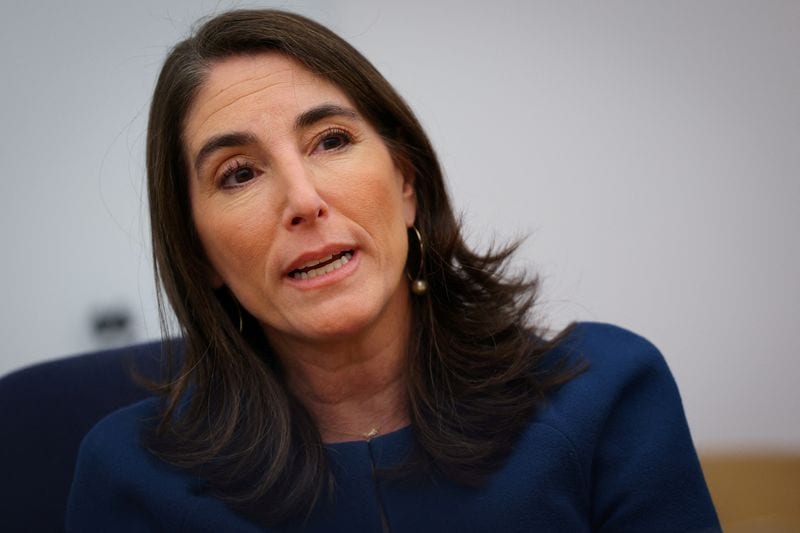
- Federal Reserve Bank of Cleveland President Beth Hammack indicated that higher interest rates might be necessary if inflation pressures do not decrease.
- Hammack stated that inflation has been too high for the past five years.
- She expressed an open-minded approach to future FOMC meetings, emphasizing data dependence.
- Hammack's comments were her first since the recent FOMC meeting where rates were held steady.
- Fed Chairman Kevin Warsh favors market reactions to data over explicit forward guidance.
Federal Reserve Bank of Cleveland President Beth Hammack indicated on Tuesday that higher interest rates may be required if inflation does not moderate, a stance she reiterated in her first public comments since the Federal Open Market Committee's recent meeting.
Hammack stated in a CNBC interview that inflation has remained elevated for five years and that continued high inflation could necessitate increased interest rates to bring it back to the Federal Reserve's target. She emphasized her open-minded approach to upcoming meetings, stressing the importance of analyzing incoming economic data.
While declining to provide specific guidance on the timing of potential rate hikes, Hammack explained her "reaction function" to help the public understand the monetary policy outlook. Her comments follow the FOMC's decision to maintain the target interest rate range at 3.5% to 3.75%.
Fed Chairman Kevin Warsh, who presided over the meeting, expressed his view that financial markets function best when reacting to data rather than relying on explicit forward guidance from the central bank. He believes this approach allows markets to price in the outlook more effectively.
Other Fed officials have also recently shared their views on monetary policy. New York Fed leader John Williams stated that current monetary policy is well-positioned to achieve the 2% inflation target, suggesting no immediate need for rate adjustments. Hammack also noted the economy's current strength, with a job market consistent with full employment and households managing well despite rising gas prices.