Key facts
- Bond yields have surged to multi-year highs, with 10-year yields at 4.71% and 30-year yields nearing 5.19%.
- Real yields have led the increase, indicating traders are repricing the terminal Fed funds rate and economic growth outlook.
- Market expectations now point to a peak Fed funds rate near 4.23% by June, a significant increase from current levels.
- Geopolitical tensions, particularly concerning Iran and rising oil prices, are fueling inflation fears and market uncertainty.
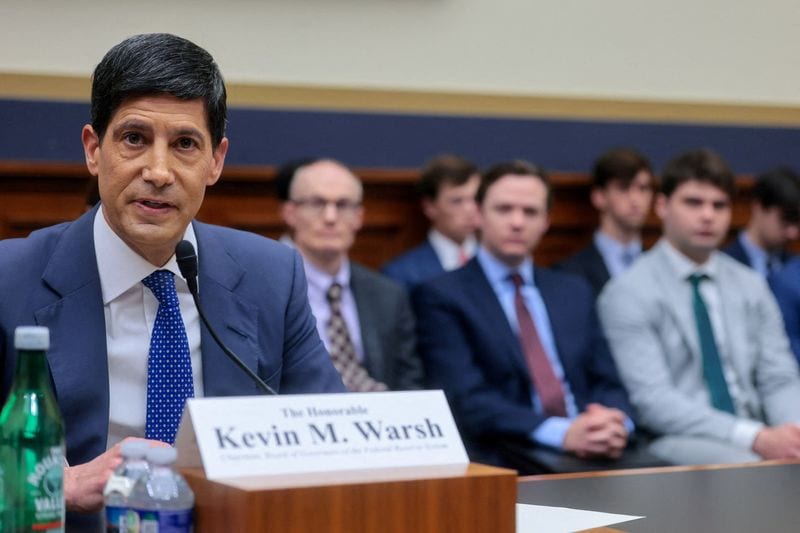
- Fed Chairman Kevin Warsh's data-dependent approach, with less forward guidance, is contributing to increased market volatility.
Federal Reserve Chairman Kevin Warsh's preference for a data-driven central bank that communicates less is contributing to significant market volatility as bond yields spike. A sharp selloff in Treasuries has pushed longer-dated yields to their highest levels since the financial crisis, raising questions about whether these elevated levels will become the norm.
Two-year yields have reached their highest point since February 2025 at 4.37%, while benchmark 10-year yields were at 4.71% on Thursday, the highest since January 2025. Thirty-year yields, at 5.19%, are nearing a threshold not seen since 2007, and 30-year real yields, which exclude inflation expectations, hit 2.98%, their highest since 2008.
Analysts attribute the selloff to a rapid repricing of Federal Reserve expectations, fueled by rising oil prices and uncertainty surrounding the duration of the Iran conflict, which are stoking inflation fears. The resilience of the U.S. economy, coupled with Warsh's less communicative approach to guiding markets, is exacerbating the situation. Gennadiy Goldberg, head of U.S. rates strategy at TD Securities, noted that this is partly due to the Fed's deliberate lack of forward guidance and partly due to firm economic data and geopolitical ambiguity.
Real yields have been the primary driver of the increase, signaling that traders are adjusting their expectations for the Fed's policy path and the terminal federal funds rate, given the solid growth outlook. Markets now anticipate the Fed's benchmark rate to peak near 4.23% next June, a notable increase from its current range of 3.50%-3.75%. While odds of further hikes had diminished after a ceasefire in June, renewed fighting has reversed those bets, adding to uncertainty.
This uncertainty is amplified by Warsh's strategy, which aims to reduce market reliance on Fed forecasts in favor of incoming data, a departure from former Chairman Jerome Powell's more communicative style. This shift has led to significant market whiplash, with fed funds futures now pricing in a 38% chance of a rate hike at the upcoming meeting, up from just 12% a week earlier. Even holding rates steady would represent a substantial gap between market expectations and Fed policy, while an actual hike would be the largest mispricing in a decade.
Beyond the Fed and oil prices, fiscal concerns are also impacting longer-dated debt, with the cost of the Iran conflict climbing. The Treasury Department's upcoming quarterly funding update will be closely watched for any signals of increased debt issuance. Thin economic data and investor positioning are also contributing to the bond market's weakness.
However, strategists like Leslie Falconio of UBS Global Wealth Management suggest that growth and inflation are the main drivers, and that current yields are attractive given the unlikelihood of oil-driven supply inflation prompting further Fed hikes. The contained term premium also suggests that fears of debt supply have not overwhelmed the long end of the curve. This points to the economy and Fed policy remaining the primary drivers of market movement, potentially leading to continued volatility.