Key facts
- Asian stocks rose on Friday, poised for their strongest week in two months.
- Benign U.S. inflation data has dented expectations of an imminent U.S. rate hike.
- The yen was trading near the 160 level against the U.S. dollar, a level that could trigger intervention.
- Brent crude futures were set for a 4% weekly gain.
- Markets are focusing on the AI theme amid strong earnings reports.
Asian stocks rose on Friday, poised for their strongest week in two months as benign inflation data dented expectations of an imminent U.S. rate hike. The yen hovered near the crucial 160 level against the U.S. dollar, a point traders believe could trigger another bout of yen buying from Tokyo.
Brent crude futures steadied at $87.03 per barrel, set for a 4% weekly gain. Markets have largely focused on the broad AI theme, buoyed by strong earnings that have placated investor concerns about significant AI spending. European stock futures indicated a higher open, while Nasdaq futures dipped slightly.
U.S. inflation reports this week suggested pricing pressure remained under control, lowering the odds of a rate increase from the Federal Reserve next month. Charu Chanana, chief investment strategist at Saxo, noted that risk appetite can hold for now due to the repriced lower immediate Fed hike risk and softer oil prices. However, she cautioned that this is a headline-driven rally and that clarity on the Middle East situation is needed to prevent another oil price spike from reviving inflation and Fed concerns.
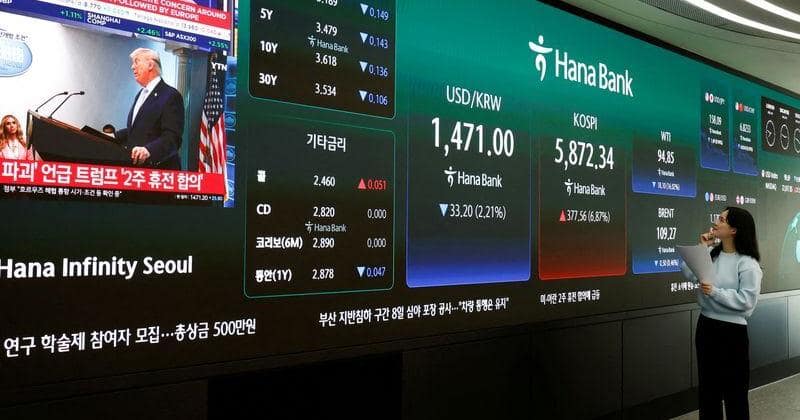
MSCI's broadest index of Asia-Pacific shares outside Japan rose 0.16%, heading for a 2.6% weekly gain. Japan's Nikkei was 1.5% higher. South Korea's KOSPI, seen as a barometer for investor sentiment on the AI trade, rose 1.8%, on course to snap a seven-week losing streak with gains of nearly 11%.
John Sidawi, senior portfolio manager for fixed income at Federated Hermes, commented on the disconnect between geopolitical uncertainty and asset price volatility, suggesting that while markets are currently tolerating uncertainty, this equilibrium is unlikely to be permanent. He noted that a meaningful escalation in conflict could trigger a larger volatility response.
The yen was at 159.36 per U.S. dollar. Traders believe the Bank of Japan may begin supporting the yen, pricing in a potential rate hike next month, though disappointment is possible if the BOJ is not perceived as hawkish enough. Padhraic Garvey, head of global rates and debt strategy at ING, attributed the yen's weakness to a cautious Bank of Japan and a policy rate that remains too low, suggesting rate hikes are needed to protect the yen.