Key facts
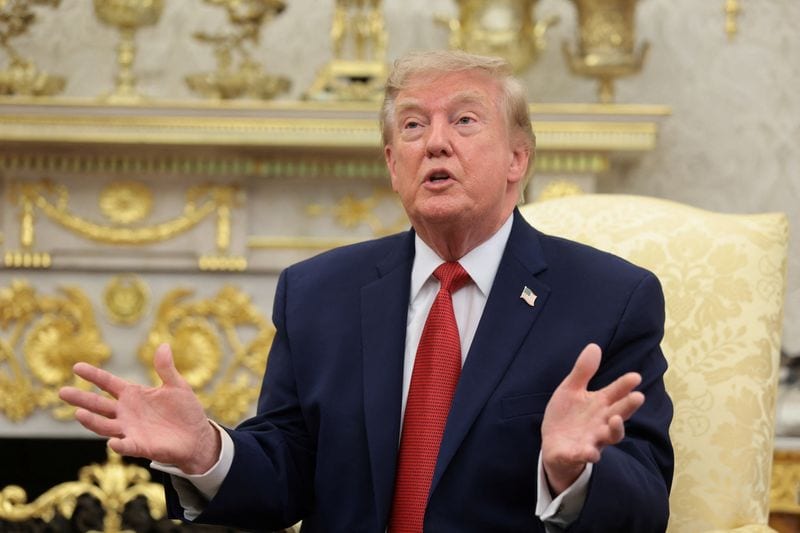
- President Donald Trump's approval rating has fallen to 33%.
- A majority of Americans believe the U.S. war with Iran will be prolonged.
- Iran's foreign ministry spokesman Esmail Baghaei stated a 60-day negotiation window with the US has expired.
- The 60-day window was agreed upon in mid-June for negotiating an end to the war and a nuclear deal.
- Iran cited alleged US violations for the expiration of the negotiation window.
- The IRGC dismissed claims of backchannel talks with the US as 'fantasies' and 'delusions'.
- The IRGC cited broken US promises and violations of agreements for the lack of dialogue.
- An Iranian military official warned shipping companies supporting US military operations against Iran of consequences.
- Saudi Arabia, Turkey, and Pakistan signed a joint defense pact in Mecca.
- Iranian fishermen are facing financial hardship due to a fishing ban near the Strait of Hormuz.
- The fishing ban was imposed following U.S. strikes.
President Donald Trump's approval rating has fallen to 33%, the lowest of his presidency, according to a Reuters/Ipsos poll. This decline coincides with a significant majority of Americans believing the U.S. war with Iran will be prolonged. Iran's foreign ministry spokesman Esmail Baghaei announced that a 60-day window, agreed upon in mid-June for negotiating an end to the war and a nuclear deal, is no longer relevant. Baghaei cited alleged U.S. violations as the reason for the expiration of this negotiation period. Further complicating potential dialogue, Iran's Islamic Revolutionary Guard Corps (IRGC) has dismissed claims made by President Donald Trump regarding backchannel talks. The IRGC labeled these claims as 'fantasies' and 'delusions,' attributing their stance to broken U.S. promises and violations of previous agreements. In a related development, an Iranian military official issued a warning to shipping companies supporting U.S. military operations against Iran. The official stated that such companies will face consequences, including legal and economic sanctions, as Tehran considers these activities to be more than commercial, viewing them as direct support for Washington's actions.
Adding another layer to regional dynamics, a new joint defense pact has been signed in Mecca by Saudi Arabia, Turkey, and Pakistan. This agreement has reportedly surprised and concerned the UAE and Israel, who have been strengthening their security cooperation. The Mecca Defence Agreement is seen by some as a counterweight to the burgeoning UAE-Israel security cooperation, potentially leading to a deepening of regional rivalries. Meanwhile, Iranian fishermen are experiencing severe financial hardship. A prolonged ban on fishing near the Strait of Hormuz, imposed following U.S. strikes, has made it impossible for them to earn a living.
The ongoing tensions and diplomatic stalemates highlight the complex geopolitical landscape in the Middle East. The expiration of negotiation windows, mutual accusations of broken promises, and the formation of new defense alliances underscore the deep-seated mistrust between the U.S. and Iran, as well as shifting regional power balances. The economic impact on ordinary citizens, such as the fishermen near the Strait of Hormuz, further illustrates the far-reaching consequences of these international disputes.