Key facts
- Taiwan's military conducted annual war games.
- The war games simulated a defense against a Chinese assault.
- Communication resilience was tested by throttling mobile internet speeds during the drills.
- China deployed an advanced anti-drone laser weapon.
- The weapon is aboard a People's Liberation Army Navy amphibious assault ship.
- The ship was observed in the South China Sea.
- The deployment raises concerns about regional military capabilities.
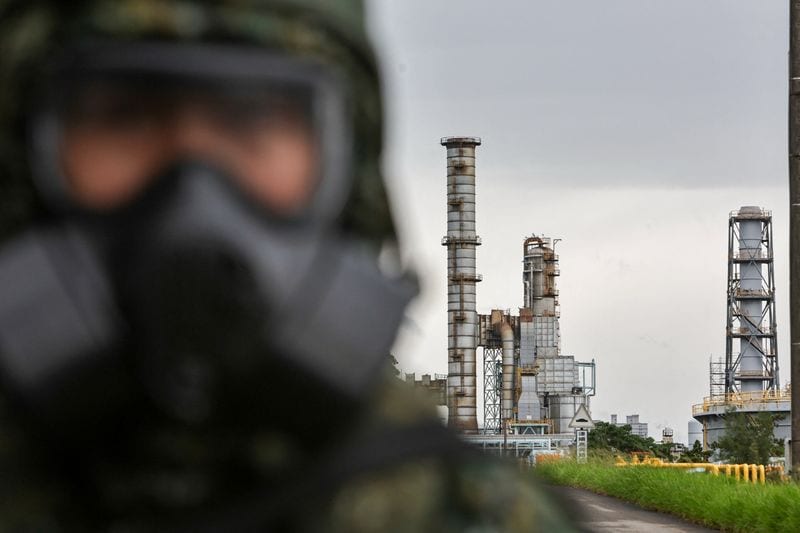
Taiwan's military has conducted its annual war games, simulating a defense against a potential Chinese assault. A key component of these exercises involved testing the resilience of communication networks by throttling mobile internet speeds. This measure is designed to prepare for scenarios where civilian communication infrastructure might be compromised during an attack.
In parallel developments, China has equipped a People's Liberation Army Navy amphibious assault ship with a powerful anti-drone laser weapon. This advanced military hardware was observed operating in the South China Sea. The deployment of such a weapon system on an amphibious assault vessel signifies an escalation in China's regional military capabilities and has prompted concerns among neighboring countries and international observers regarding potential future conflicts and the security of maritime trade routes in the strategically important South China Sea.
The exercises in Taiwan and the deployment of advanced weaponry by China highlight the ongoing military tensions in the Indo-Pacific region. Taiwan's drills are a demonstration of its defensive posture and preparedness against a significant military threat, while China's actions underscore its growing assertiveness and technological advancements in military hardware. The presence of anti-drone laser systems on naval vessels suggests a focus on countering aerial threats, including drones, which have become increasingly prevalent in modern warfare.