2 storiesGeopolitics & Global RiskShipping lane security (Hormuz, Bab-el-Mandeb, Red Sea, South China Sea)Middle East conflict (Israel-Gaza, Lebanon, Iran)China Belt & Road Initiative & debt diplomacy
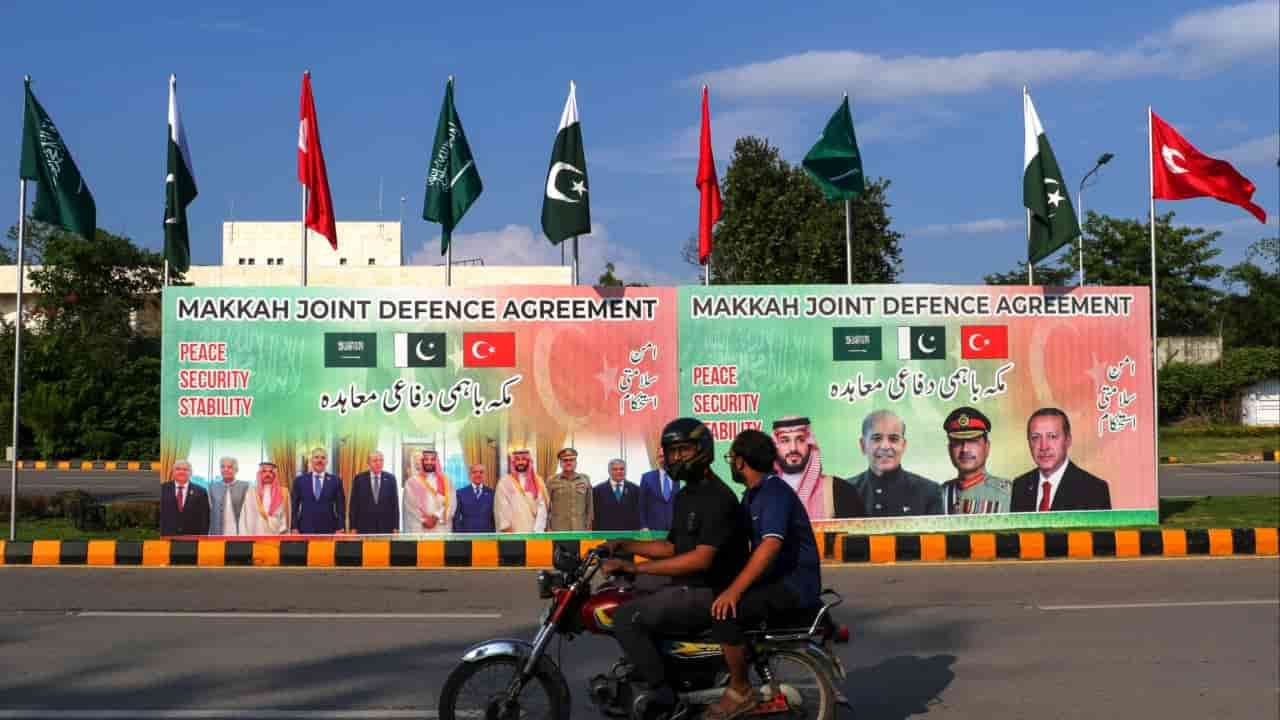
Pakistan, Saudi Arabia, and Turkey have signed a defense pact in Mecca, signaling a potential regional security shift. Described as purely defensive, the agreement is open to other nations and could indicate a move away from U.S. influence, potentially creating opportunities for China. Meanwhile, the United States and the Philippines are celebrating 75 years of their Mutual Defense Treaty, but face questions about the alliance's adaptability amidst China's increasing assertiveness in the region.
✉Newsletter
PiQ Daily
Pick your topics. Get only what matters, on your cadence.
Pakistan, Saudi Arabia, and Turkey signed a defense agreement.
The defense pact was signed in Mecca.
The agreement is described as 'purely defensive'.
The defense pact is open to other nations.
The move signals a potential regional security shift.
The shift may be away from the U.S.
The shift may create opportunities for China.
The United States and the Philippines mark 75 years of their Mutual Defense Treaty.
Questions exist about the alliance's ability to adapt to regional security challenges.
China's growing assertiveness is a key regional challenge.
Pakistan, Saudi Arabia, and Turkey have entered into a defense agreement signed in Mecca. This pact is characterized as 'purely defensive' and has been extended as an open invitation to other nations to join. The agreement is seen as a significant signal of a potential realignment in regional security dynamics. Observers suggest this could represent a move away from reliance on the United States and may open avenues for increased influence by China in the region.
In parallel, the United States and the Philippines are commemorating 75 years of their Mutual Defense Treaty. This milestone is accompanied by discussions and questions regarding the enduring strength and adaptability of their alliance. The core of these concerns revolves around the capacity of the U.S.-Philippines alliance to effectively address the evolving security landscape in the region, particularly in light of China's escalating assertiveness.
↳ Why This Matters
Pakistan, Saudi Arabia, and Turkey have entered into a defense agreement signed in Mecca. This pact is characterized as 'purely defensive' and has been extended as an open invitation to other nations to join. The agreement is seen as a significant signal of a potential realignment in regional security dynamics. Observers suggest this could represent a move away from reliance on the United States and may open avenues for increased influence by China in the region.
Frequently asked questions
The Mecca accord is a 'purely defensive' defense agreement signed by Pakistan, Saudi Arabia, and Turkey, which Pakistan has stated is open to other nations.
The article mentions Gulf states exploring new alliances, with Pakistan, Saudi Arabia, and Turkey as signatories to a new defense pact.
The shift away from traditional U.S. security pacts by Gulf states could create openings for China to increase its geopolitical and economic influence in the region.
What Happens Next
01Further indications of Gulf states' security alliance diversification.
02China's response to potential new partnerships in the Gulf.
Get the newsletter.
Pick the topics you actually care about. We'll email when there's news worth your time, on the cadence you choose. Cancel any time from your account.