Nato Leaders Gather Amid US Pressure on Defence Spending and Hormuz Tensions | PiQ Markets
2 storiesGeopolitics & Global RiskRussia-Ukraine war (frontline, weapons, peace talks)NATO military aid to UkraineShipping lane security (Hormuz, Bab-el-Mandeb, Red Sea, South China Sea)
Nato Leaders Gather Amid US Pressure on Defence Spending and Hormuz Tensions
window 24h
IN SHORT
NATO leaders convene amid significant US pressure on defense spending and heightened tensions in the Strait of Hormuz. Foreign ministers from NATO and Gulf Arab nations will discuss the Hormuz stalemate, potentially including a Franco-British proposal for a multinational maritime mission. Concurrently, President Donald Trump is expected to support the sale of F-35 fighter jets to Turkey, a move aimed at improving relations ahead of the summit. European allies are hopeful that President Erdoğan's relationship with Trump will mitigate public criticism during the gathering.
✉Newsletter
PiQ Daily
Pick your topics. Get only what matters, on your cadence.
Who's Involved
NATO
military alliance holding a summit and discussing defense spending and regional security
US
nation exerting pressure on NATO members for increased defense spending
Donald Trump
U.S. President expected to support F-35 sale to Turkey
Turkey
nation potentially purchasing F-35 fighter jets
European allies
nations hoping President Erdoğan's rapport with Trump will prevent public criticism
President Erdoğan
leader of Turkey whose rapport with President Trump is seen as beneficial
Gulf Arab nations
counterparts meeting with NATO foreign ministers to discuss Hormuz
France
nation proposing a multinational maritime mission for Hormuz
Key facts
NATO leaders are gathering amid US pressure for increased defense spending.
NATO foreign ministers will meet with Gulf Arab counterparts.
Discussions will include the Strait of Hormuz stalemate.
A Franco-British proposal for a multinational maritime mission in Hormuz is under consideration.
President Donald Trump is expected to support the sale of F-35 fighter jets to Turkey.
European allies hope President Erdoğan's rapport with Trump will prevent public criticism.
The summit aims to improve relations with Turkey.
The gathering addresses broader strategic challenges for NATO.
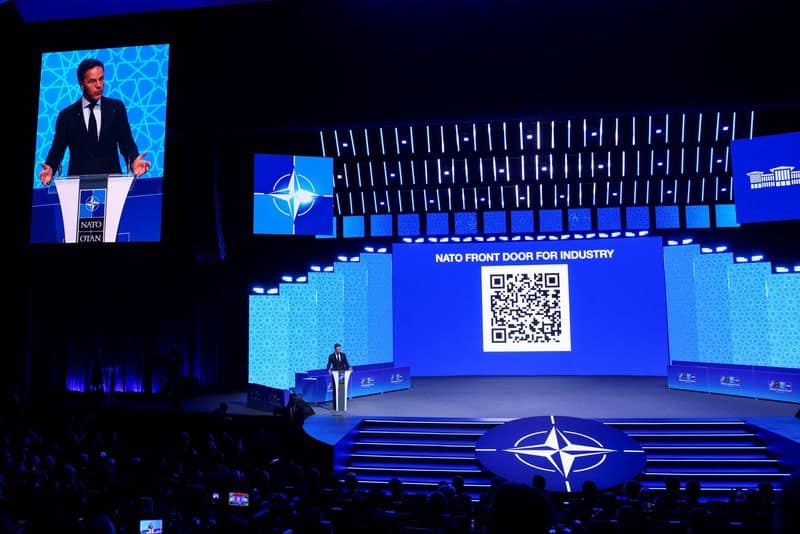
NATO leaders are gathering for a summit that is marked by considerable US pressure on member states to increase defense spending. Alongside this, discussions will address rising tensions in the Strait of Hormuz, with NATO foreign ministers set to meet with their Gulf Arab counterparts. A key topic of conversation will be the stalemate in the Strait of Hormuz, where a Franco-British proposal for a multinational maritime mission is on the table for discussion. This meeting occurs as the alliance grapples with broader strategic challenges and the need for greater burden-sharing.
Adding another layer to the summit's agenda is the reported expectation that U.S. President Donald Trump will support the potential sale of F-35 fighter jets to Turkey. This potential move is seen as a diplomatic effort to smooth relations with Turkey, a NATO member, as the summit commences. European allies are reportedly pinning hopes on President Erdoğan's existing rapport with President Trump to prevent any public airing of grievances or criticism during the high-level meetings. The sale of advanced military hardware like the F-35 is often a sensitive issue, particularly given Turkey's recent geopolitical alignments and defense procurement decisions.
The confluence of these issues highlights the complex geopolitical landscape NATO is navigating. The call for increased defense spending by the US is a long-standing demand, aimed at ensuring the alliance's collective security capabilities are robust enough to meet evolving threats. Simultaneously, the situation in the Strait of Hormuz, a critical global oil transit route, demands coordinated international attention to ensure freedom of navigation and de-escalate regional tensions. The F-35 sale to Turkey, if it proceeds, would represent a significant diplomatic maneuver within the alliance, attempting to balance security interests with political considerations.
↳ Why This Matters
NATO leaders are gathering for a summit that is marked by considerable US pressure on member states to increase defense spending. Alongside this, discussions will address rising tensions in the Strait of Hormuz, with NATO foreign ministers set to meet with their Gulf Arab counterparts. A key topic of conversation will be the stalemate in the Strait of Hormuz, where a Franco-British proposal for a multinational maritime mission is on the table for discussion. This meeting occurs as the alliance grapples with broader strategic challenges and the need for greater burden-sharing.
Frequently asked questions
The primary pressure comes from Donald Trump, who is demanding that all Nato allies increase their defense spending to 5% of their GDP and demonstrate urgency in meeting these targets.
The summit is expected to agree on approximately €70 billion in military aid for Ukraine for the upcoming two years, largely reflecting existing commitments.
A Franco-British proposal for a multinational maritime mission to guarantee safe passage through the strait is being discussed, though Iran has dismissed it.
A tanker was struck east of Oman, and Iran's Revolutionary Guards reportedly fired missiles at commercial ships transiting the Strait of Hormuz.
What Happens Next
01Nato leaders will finalize and issue a joint communique.
02Allies will present new arms contracts and defense spending plans.
03Bilateral meetings between leaders will take place.
04A decision on the multinational maritime mission for the Strait of Hormuz is anticipated.
Get the newsletter.
Pick the topics you actually care about. We'll email when there's news worth your time, on the cadence you choose. Cancel any time from your account.