Key facts
- Hundreds of migrants are protesting on a beach in Ceuta, Spain.
- The migrants demand asylum.
- The migrants reject repatriation to Morocco.
- Migrants recently entered Spain's North African enclave of Ceuta.
- Many migrants are living in precarious conditions.
- Local health services are strained by the influx of migrants.
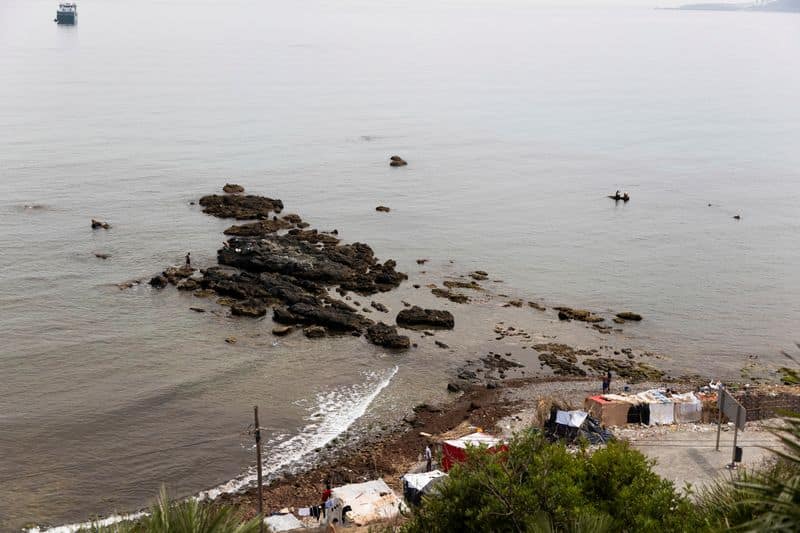
Hundreds of migrants who recently entered Spain's North African enclave of Ceuta have staged a protest on a beach, voicing their demands for asylum and rejecting any attempts at repatriation to Morocco. These individuals, having recently arrived in the territory, are now living in precarious conditions. The surge in migrant arrivals has placed a significant strain on local health services, which are struggling to cope with the increased demand. The protest underscores the ongoing humanitarian and logistical challenges faced by Ceuta in managing irregular migration flows from North Africa.
The migrants' demonstration on the beach signifies their refusal to be sent back to Morocco, emphasizing their desire to pursue asylum claims within Spanish territory. The situation highlights the complex realities of migration routes through North Africa and the subsequent pressures on Spanish territories like Ceuta. Local authorities are grappling with how to address the immediate needs of the migrants while also managing the broader implications of their presence.
Ceuta, along with the Spanish enclave of Melilla, serves as a primary entry point into Europe for many migrants seeking to escape poverty, conflict, and instability in various African nations. The geographical proximity to Morocco means that these enclaves are often the first point of contact for those attempting to cross into the European Union. The challenges are compounded by the limited resources available to manage such arrivals, leading to humanitarian concerns and security considerations.