Key facts
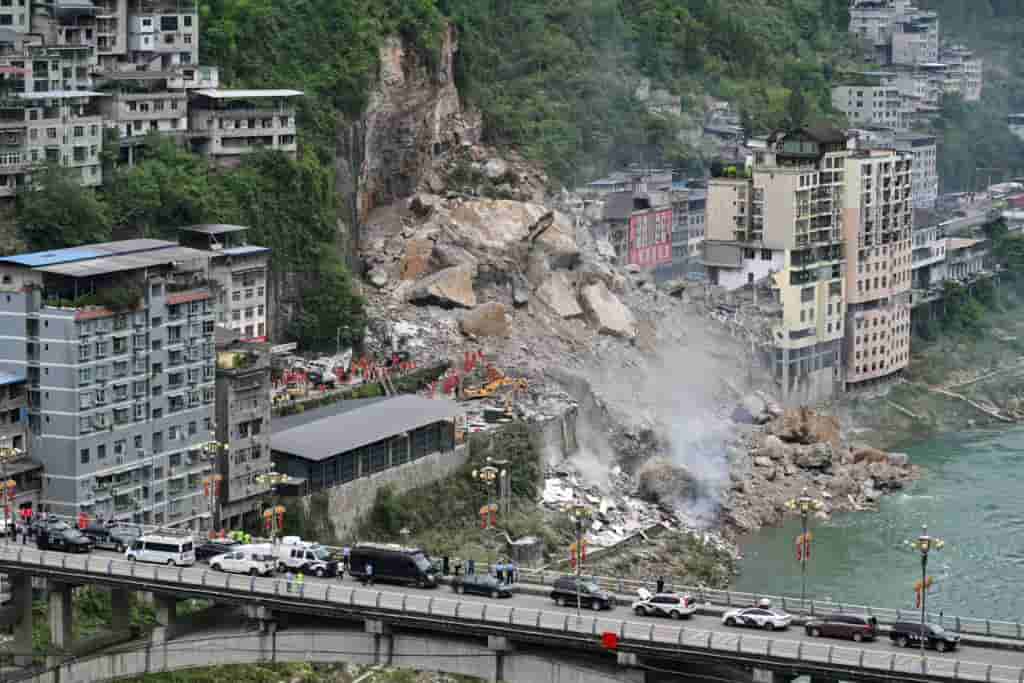
- A landslide in Pengshui County, Chongqing, China, killed at least eight people.
- 34 people are missing following the landslide in Chongqing.
- Over 1,100 people were evacuated due to the Chongqing landslide.
- Residential buildings were buried by the landslide in Chongqing.
- President Xi Jinping called for determining the cause and identifying geological risks.
- A landslide in Geoje, South Korea, killed one person.
- Three people were injured in the South Korean landslide.
- Torrential rains caused the landslide in Geoje, South Korea.
- Heavy monsoon rains caused flooding in the Philippines.
- Government work and classes were suspended in the Philippines due to flooding.
A significant landslide in Pengshui County, Chongqing, China, has claimed the lives of at least eight people, with an additional 34 individuals reported missing. The disaster struck residential buildings, leading to the evacuation of over 1,100 residents. President Xi Jinping has called for an immediate investigation to determine the cause of the landslide and to identify potential geological risks in the region. This event underscores the vulnerability of communities to natural disasters exacerbated by environmental factors.
In a separate incident, South Korea experienced a deadly landslide in Geoje, a consequence of torrential rainfall. This event resulted in one fatality and left three people injured. The heavy rains that triggered the landslide in Geoje are part of a broader pattern of severe weather affecting the region.
Meanwhile, the Philippines is grappling with extensive flooding due to heavy monsoon rains. The deluge has inundated streets, causing significant traffic disruptions across the country. In response to the severe weather conditions, the government has suspended official work, and educational institutions have canceled classes to ensure public safety. These widespread weather-related events highlight the ongoing challenges faced by communities in Asia due to extreme rainfall and its cascading effects.