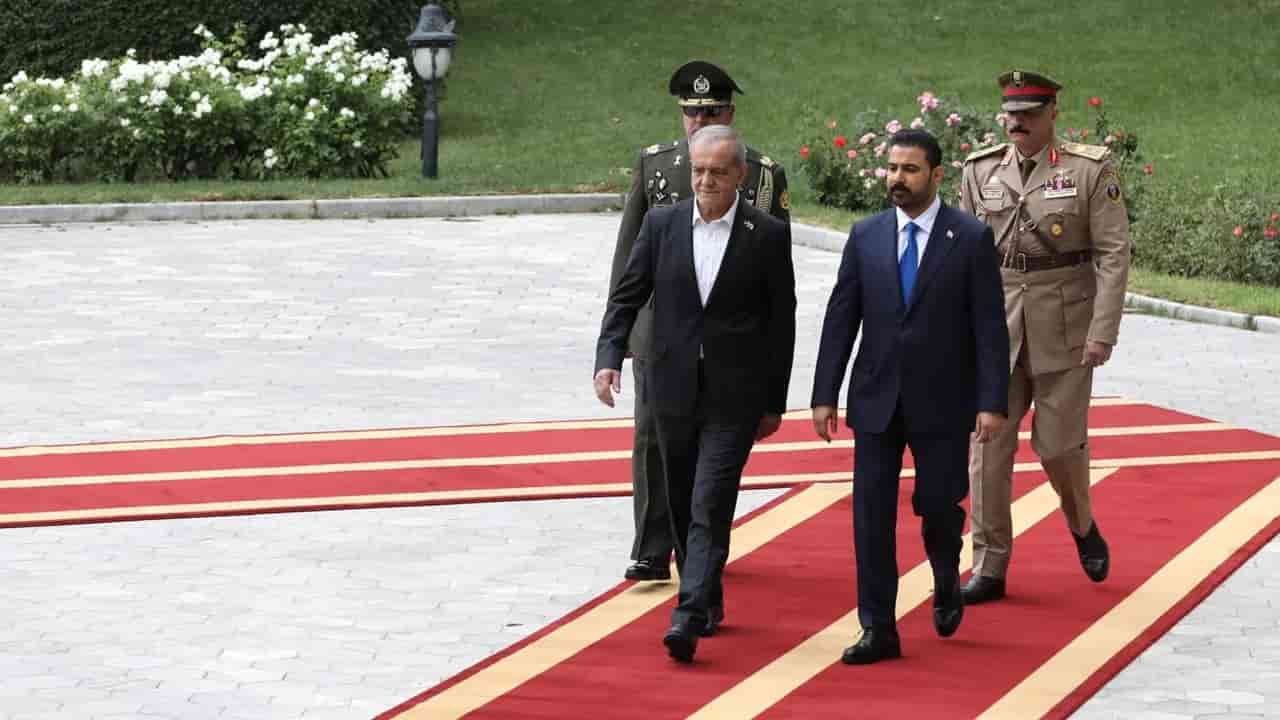
Iraq is pursuing a new foreign policy direction, aiming to strengthen state institutions and reduce reliance on balancing between the US and Iran, according to Prime Minister Ali al-Zaidi. This shift includes prioritizing institutional reforms in banking and energy, and setting a deadline for militia disarmament. Meanwhile, Ukraine's Foreign Ministry has denied Iraqi national security advisor claims that Ukrainian cells were behind bombings of Iraqi government facilities, calling the allegations baseless and potentially aligned with Russian propaganda.

Iraq is embarking on a new foreign policy path, seeking to bolster its state institutions and establish a more autonomous stance that moves beyond its historical balancing act between the United States and Iran. Prime Minister Ali al-Zaidi is spearheading this initiative, with a focus on implementing institutional reforms across key sectors such as banking and energy. A significant component of this strategy involves setting a deadline for the disarmament of militias operating within the country. This move signals a desire to consolidate state authority and reduce the influence of non-state armed groups.
Concurrently, a dispute has emerged regarding alleged Ukrainian involvement in bombings against Iraqi government facilities. An Iraqi national security advisor put forth claims implicating Ukrainian cells in these attacks. However, Ukraine's Foreign Ministry has vehemently denied these allegations, stating that no evidence supports such assertions. Kyiv has suggested that these claims may be part of a broader disinformation campaign, potentially aligning with Russian propaganda efforts. This denial underscores Ukraine's position that it is not involved in destabilizing activities within Iraq.
The Iraqi government's push for a more independent foreign policy comes at a time of shifting geopolitical dynamics. The withdrawal of US troops from Iraq, though not explicitly detailed in terms of timeline or scope in this context, provides a backdrop for Baghdad's efforts to assert greater control over its domestic and international affairs. The emphasis on strengthening state institutions and disarming militias is a direct response to internal security challenges and a desire to reduce external influences, whether from the US or Iran.
Ukraine's swift and firm denial of the Iraqi allegations highlights its sensitivity to accusations that could be used to undermine its international standing or justify further aggression. By framing the claims as potential Russian propaganda, Kyiv aims to deflect responsibility and cast doubt on the credibility of the source of these accusations. The situation presents a complex interplay of internal Iraqi politics, regional security concerns, and the ongoing international implications of the conflict in Ukraine.
Iraq is embarking on a new foreign policy path, seeking to bolster its state institutions and establish a more autonomous stance that moves beyond its historical balancing act between the United States and Iran. Prime Minister Ali al-Zaidi is spearheading this initiative, with a focus on implementing institutional reforms across key sectors such as banking and energy. A significant component of this strategy involves setting a deadline for the disarmament of militias operating within the country. This move signals a desire to consolidate state authority and reduce the influence of non-state armed groups.