Key facts
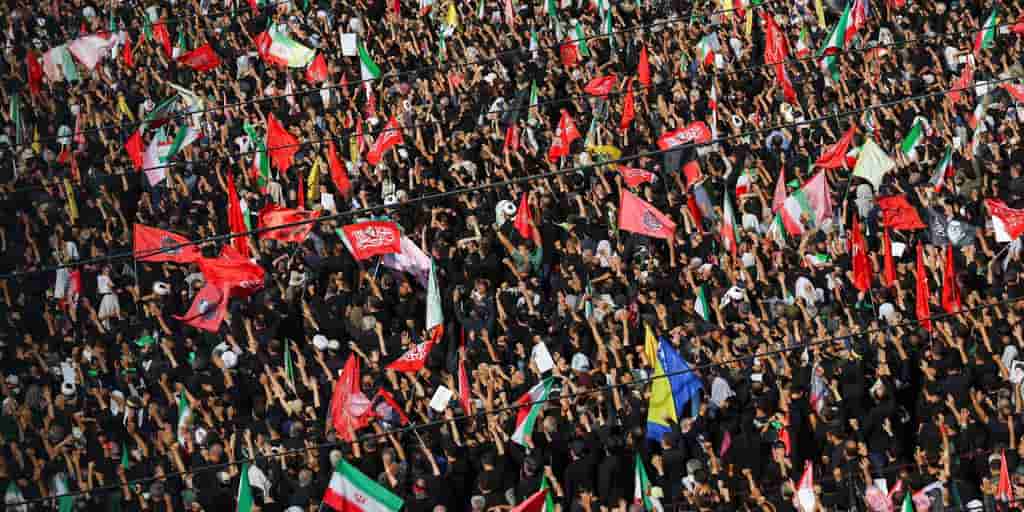
- Iran began weeklong funeral ceremonies for Supreme Leader Ayatollah Ali Khamenei.
- Ayatollah Ali Khamenei died on February 28.
- Khamenei's death followed U.S. and Israeli airstrikes.
- Thousands gathered for prayers in Tehran.
- Millions are expected to attend funeral events in Iran and Iraq.
- Mourners chanted 'death to America' and 'revenge, revenge.'
- Iran's embassy in Armenia criticized U.S. President Donald Trump.
- Trump was criticized for his comments regarding Khamenei's funeral.
- Pakistan is reportedly set to host new US-Iran talks on July 11.
- Khamenei's death marks a significant leadership transition for Iran.
Iran has begun six days of funeral ceremonies for its Supreme Leader Ayatollah Ali Khamenei, who died on February 28 in airstrikes attributed to the U.S. and Israel. Thousands gathered for initial prayers in Tehran, and authorities anticipate millions will attend events throughout Iran and neighboring Iraq. During the ceremonies, mourners chanted slogans including 'death to America' and 'revenge, revenge,' reflecting ongoing tensions in the region.
The death of Ayatollah Khamenei signifies a major leadership transition for Iran, following a period described as a devastating war with the U.S. and Israel. This event is seen as paving the way for a new generation of post-revolutionary leaders who are perceived as more decisive and focused on state preservation. This transition could potentially reshape the geopolitical landscape of the Middle East.
Amidst these developments, Iran's embassy in Armenia issued a rebuke against U.S. President Donald Trump. The embassy criticized Trump for his comments made regarding Ayatollah Khamenei's funeral, accusing him of lacking civilization, history, and honor. Separately, reports indicate that Pakistan is scheduled to host new U.S.-Iran talks on July 11, suggesting potential diplomatic engagements despite the heightened regional conflict.