Key facts
- A 7.4 magnitude earthquake has struck Colombia.
- At least 265 people have died in the earthquake.
- Hundreds of people are missing following the earthquake.
- Rescue efforts are shifting from search-and-rescue to debris removal.
- Colombia's newly inaugurated president, Abelardo de la Espriella, organized disaster relief.
- Colombia's response is contrasted with Venezuela's delayed response to its own tremors.
- U.S. Defense Secretary Pete Hegseth welcomed Colombia to a counter-narcotics coalition.
- Joint military operations against terrorists are planned.
- President Abelardo de la Espriella requested U.S. collaboration against narco-terrorism.
- China has offered humanitarian aid to Colombia following the earthquake.
- Colombia's new president is shifting foreign policy towards the United States.
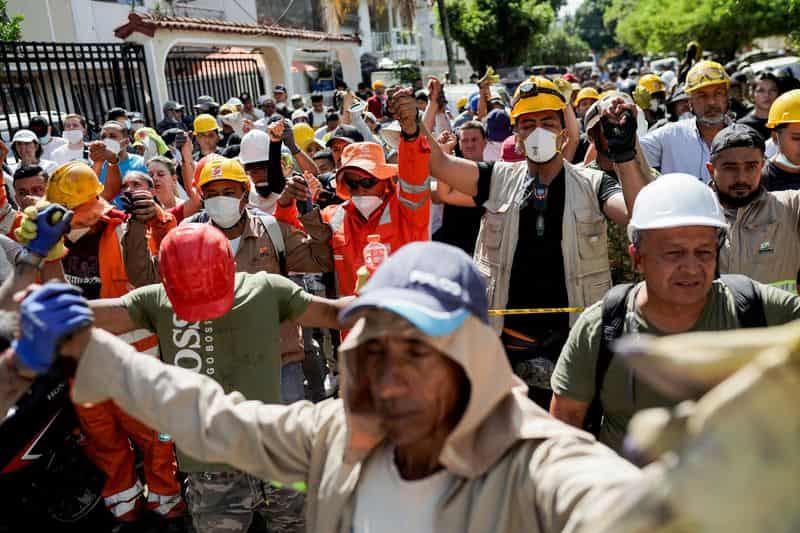
Colombia is grappling with the aftermath of a significant 7.4 magnitude earthquake that has claimed the lives of at least 265 people, with hundreds still unaccounted for. Rescue operations are ongoing, though the focus is gradually shifting from searching for survivors to clearing debris as the critical window for finding those trapped narrows. The disaster has highlighted the institutional capacity of Colombia's government, with its newly inaugurated president, Abelardo de la Espriella, swiftly organizing disaster relief efforts. This response contrasts with Venezuela's more delayed and less effective handling of its own recent seismic events, underscoring a perceived divide between democratic and authoritarian systems.
In parallel with the earthquake response, Colombia is deepening its security ties with the United States. U.S. Defense Secretary Pete Hegseth welcomed Colombia to a counter-narcotics coalition, announcing plans for joint military operations targeting terrorists. This development follows a specific request from President Abelardo de la Espriella for U.S. collaboration in combating narco-terrorism. Concurrently, China has extended an offer of humanitarian aid to Colombia in the wake of the earthquake. This Chinese gesture is being viewed within the context of Colombia's new president reorienting foreign policy towards the United States, a shift that could potentially diminish Beijing's influence in the region.
The differing responses to natural disasters and the evolving geopolitical alignments underscore the distinct approaches of neighboring nations and their international partnerships. Colombia's proactive engagement with the U.S. on security matters, particularly in counter-narcotics and counter-terrorism, signals a strategic pivot. The earthquake's impact, while devastating, has also served as a backdrop for these significant diplomatic and security developments, influencing regional dynamics and international relations.