Key facts
- President Volodymyr Zelensky visited Lublin, Poland, on July 29, 2026.
- This marks Zelensky's first trip to Poland since relations were strained by a dispute over the Ukrainian Insurgent Army (UPA).
- The dispute led to the revocation of Zelensky's honorary Order of the White Eagle by President Karol Nawrocki.
- Zelensky is scheduled to meet with Polish Prime Minister Donald Tusk.
- Historical grievances, particularly the UPA's role in the Volyn massacres, have resurfaced and complicated bilateral relations.
- There has been a rise in violence targeting Ukrainians in Poland, coinciding with the diplomatic strain.
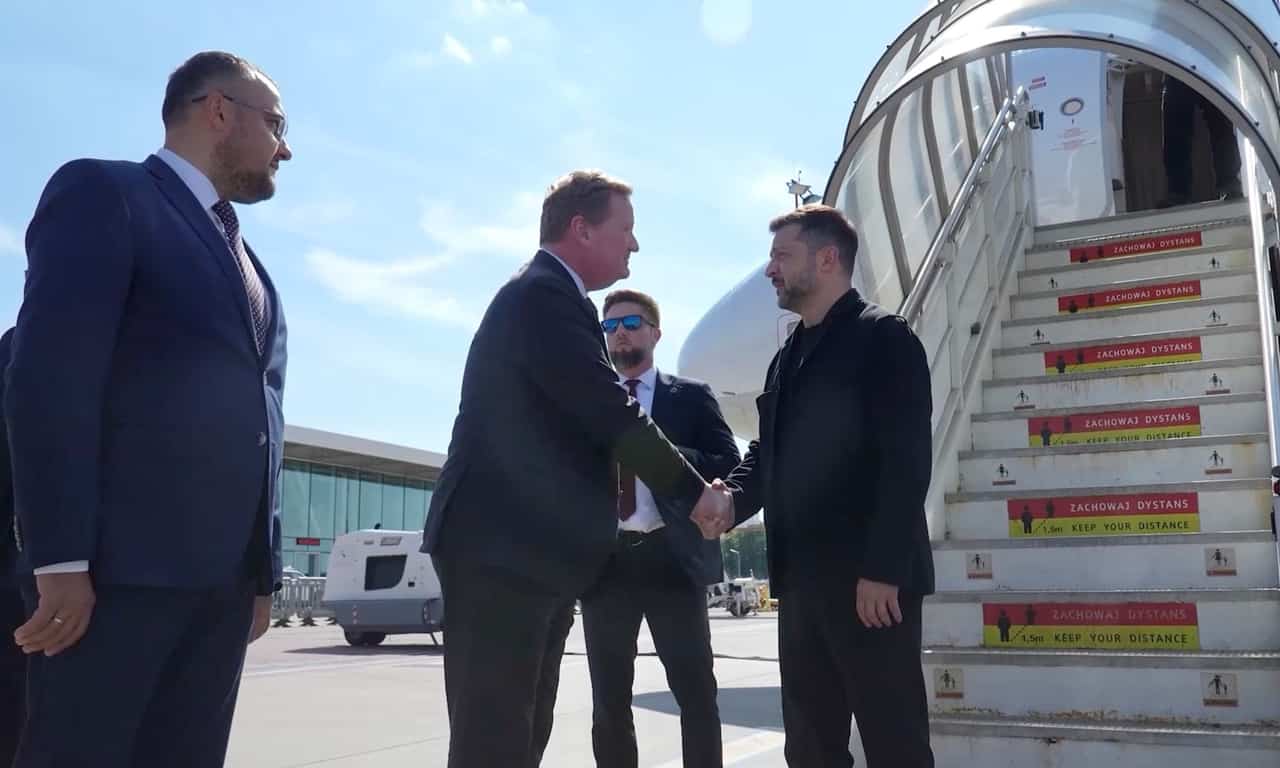
President Volodymyr Zelensky arrived in Lublin, Poland, on July 29, 2026, for his first visit to the country since bilateral relations were strained by a dispute over historical memory. The visit aims to stabilize ties between Ukraine and Poland, which have become close allies since Russia's full-scale invasion in 2022.
The diplomatic friction stems from President Karol Nawrocki's decision on June 19 to revoke Zelensky's honorary Order of the White Eagle. This action followed backlash over Zelensky's decision to name a serving Ukrainian military unit after the Ukrainian Insurgent Army (UPA). The UPA, active during World War II, is remembered in Poland primarily for its involvement in the Volyn massacres, a deeply painful episode in Ukrainian-Polish history where tens of thousands of Poles were killed.
Zelensky's meeting with Polish Prime Minister Donald Tusk comes as historical grievances have increasingly resurfaced in political discourse, complicating the relationship. Nawrocki has adopted a firmer stance on these issues compared to his predecessor, Andrzej Duda.
The visit also occurs amid a rise in violence targeting Ukrainians in Poland. According to Rzeczpospolita, Polish police received 180 reports of hate crimes against Ukrainians in the first half of 2026, a more than 30% increase from the same period last year. Recent polling indicates a growing skepticism among Poles regarding Ukraine and a reduced willingness to accept Ukrainian refugees.